
Soups & Stews
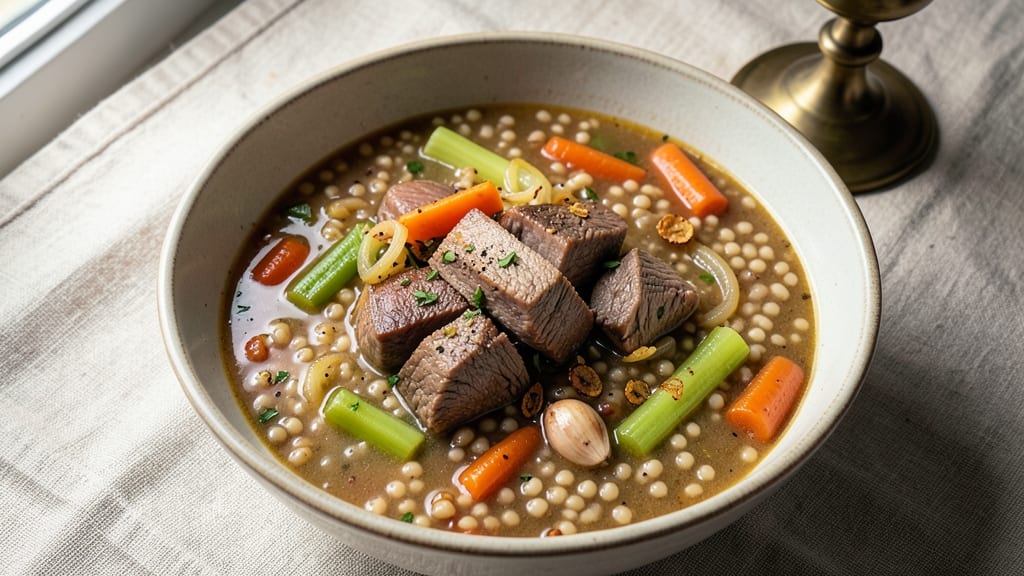
This beef barley soup recipe with the better-than-bouillon approach transforms humble ingredients into a rich, umami-packed masterpiece—no store-bought shortcuts required. 💛 I perfected it after years of testing, blending Nana Mae's diner techniques with modern efficiency, and the secret lies in building flavor through proper searing and slow simmering rather than relying on bouillon cubes.
The foundation starts with searing beef chuck in batches to develop deep, caramelized flavors, then blooming aromatic spices in the same pot. This creates a rich base that transforms simple ingredients like barley and carrots into something extraordinary.
The "better than bouillon" approach uses homemade broth enhancers—like toasted spices and slow-cooked vegetables—rather than quick-fix seasoning.
By the time you're done, you'll have a soup with tender beef that practically melts in your mouth, perfectly chewy barley, and a broth so flavorful it coats every spoonful.
The aroma alone will have your kitchen smelling like a classic Southern diner, and the texture—creamy yet light—is what makes this recipe stand out from basic versions.
This method works equally well for weeknight dinners or holiday gatherings, and the leftovers taste even better the next day. The technique is straightforward but delivers restaurant-quality results, proving you don't need shortcuts to create something special. Let's get started with the full recipe.
Ingredients for beef barley soup recipe with better than bouillon
Sixteen ingredients transform into a restaurant-quality beef barley soup with deep umami flavor.
| Ingredient | Amount | Notes |
|---|---|---|
| Beef Chuck Roast 🥩 | 2 lb | Cut into 1-inch cubes, trimmed of fat |
| Yellow Onions 🧅 | 2 whole | Medium size, sliced into half-moons |
| Carrots 🥕 | 4 whole | Medium size, peeled and cut into chunks |
| Celery Stalks 🌿 | 4 whole | Cut into 1-inch pieces |
| Garlic Cloves 🧄 | 6 cloves | Peeled, lightly crushed |
| Pearl Barley 🌾 | 1 cup | Uncooked, rinsed well |
| Tomato Paste 🍅 | ¼ cup | High-quality, no sugar added |
| Dried Bay Leaves 🍃 | 2 whole | Fresh if available |
| Ground Black Peppercorns 🌶️ | 1 tbsp | Freshly cracked preferred |
| Dried Thyme 🌿 | 1 tbsp | Or 1 tbsp fresh thyme leaves |
| Dried Parsley 🌿 | 1 tbsp | For garnish and flavor |
| Beef Broth 💧 | 6 cups | Homemade preferred, low-sodium |
| Extra-Virgin Olive Oil 🫒 | 2 tbsp | For searing beef |
| Kosher Salt 🧂 | 2 tsp | Diamond Crystal preferred |
| Fresh Parsley 🌿 | ¼ cup | Chopped, for garnish |
The beef chuck is non-negotiable—its marbling creates rich, caramelized flavors when seared properly. Look for well-marbled cuts at your butcher or pre-cut chuck roast from Costco or Whole Foods for convenience. If using a whole roast, trim excess fat and cube it yourself for better control. The onions, carrots, and celery form the aromatic base, often called the 'holy trinity' in soups. Buy organic if possible—they'll have more vibrant color and better flavor after slow cooking. For the barley, pearl barley is traditional but pearled barley (like Bob's Red Mill) cooks faster if you're short on time.
No beef broth? Substitute with a mix of water and tomato paste—just add an extra 1/2 cup tomato paste to compensate. Fresh thyme is ideal but dried works at one-third the amount. If you can't find tomato paste without added sugar, San Marzano crushed tomatoes work as a substitute. For the bay leaves, California or Turkish bay are most flavorful—avoid Mexican bay leaves, which have a different, more bitter profile. The tomato paste is where the umami magic happens—don't skip it. If you're using a high-quality bouillon cube as a last resort, Knox beef bouillon is the least processed option.
This soup tastes even better the next day as flavors meld. Store in an airtight container in the fridge for up to 5 days or freeze for 3 months. For freezing, portion into individual containers—reheat each serving separately for best texture. The barley will soften further when reheated, so it's perfect for meal prep. If you're serving a crowd, double the recipe—this soup scales beautifully. The fresh parsley should be added just before serving to preserve its vibrant color and bright flavor.
Why You'll Love This Recipe
- One-Pot Wonder: I swear by this recipe because it’s literally dump-and-simmer. Toss the chuck roast, onions, carrots, and celery into a pot with that Better Than Bouillon, add water, and let it do the work—no fancy techniques, no stress.
- Umami Bomb: That Better Than Bouillon? It’s the secret weapon here. The beef chuck roast melts into rich, tender chunks while the bouillon deepens the flavor—no need for expensive stock or complicated seasoning blends.
- Meal Prep MVP: Make a big batch on Sunday, and you’ve got lunch for the week. The barley thickens perfectly overnight, and the flavors only get better as the soup sits—ideal for busy mornings or lazy afternoons.
- Budget-Friendly Feast: A chuck roast and a few veggies stretch into six hearty servings. Honestly, it’s one of those recipes where you’ll end up with leftovers, but no one complains—because it’s that good.
Step-by-step instructions for beef barley soup with umami depth
This method builds rich flavor from scratch—no shortcuts, just technique.
🔥 Step 1: Sear the Beef for Maximum Flavor
Pat the 2 lb Beef Chuck Roast completely dry with paper towels. Cut it into 1-inch cubes, trimming any excess fat. Heat 2 tablespoons Extra-Virgin Olive Oil in a large Dutch oven over medium-high heat until shimmering.
Work in batches to avoid crowding—add ½ of the beef cubes to the pot and sear for 3-4 minutes per side until deeply browned and caramelized. The color change releases Maillard reactions that form the soup's foundation. Transfer the browned beef to a plate and repeat with the remaining cubes. Don't skip this step; it's what makes homemade soup taste superior to bouillon-based versions.
👨🍳 Step 2: Build the Vegetable Base
In the same Dutch oven, add 2 whole Yellow Onions (sliced into half-moons), 4 whole Carrots (cut into chunks), and 4 whole Celery Stalks (cut into 1-inch pieces). Cook for 5 minutes, stirring occasionally, until the vegetables begin to soften and release their natural juices.
Add the 6 cloves Garlic Cloves (lightly crushed) and cook for another 1 minute until fragrant. The vegetables should be tender but not mushy—this ensures they hold their shape while contributing sweetness to the broth. Here's the thing—don't rush this step. The longer the vegetables cook at this stage, the more their flavors meld with the beef drippings, creating a complex base.
🍳 Step 3: Develop the Umami Foundation
Stir in the 0.25 cup Tomato Paste and cook for 2 minutes until it darkens slightly and releases its concentrated flavors. This step deepens the soup's richness without needing bouillon. Add the 1 cup Pearl Barley (rinsed well) and the 2 whole Dried Bay Leaves, stirring to coat everything evenly.
Pour in the 6 cups Beef Broth, bringing everything to a gentle simmer. The barley should be fully submerged. Add 1 tablespoon Dried Thyme, 1 tablespoon Ground Black Peppercorns, and 2 teaspoons Kosher Salt. This is where the magic happens—the broth will absorb the flavors from the seared beef, caramelized vegetables, and aromatic herbs, creating a complex base that rivals any store-bought version.
⏰ Step 4: Simmer to Perfection
Return the seared beef to the pot, stir once to combine, then bring to a gentle boil. Once boiling, reduce heat to low and cover partially. Simmer for 2-2.5 hours until the beef is fork-tender and the barley is fully cooked. You'll know it's ready when the barley has absorbed the broth and the beef pulls apart easily with a fork.
I recommend checking the beef after 1.5 hours—if it's still tough, add ½ cup hot water and continue cooking. The barley should be plump and tender, not mushy. This slow cooking process is what transforms simple ingredients into a restaurant-quality soup. Resist the urge to rush; patience is key to developing the deep, satisfying flavors.
🥘 Step 5: Finish and Serve
Discard the 2 whole Dried Bay Leaves and stir in the 0.25 cup Fresh Parsley (chopped) and 1 tablespoon Dried Parsley for brightness. Taste and adjust seasoning—you may need a touch more salt or pepper depending on your broth's saltiness. The soup should be rich but not overly salty, with a balance of beefy umami, herbal notes, and sweet vegetables.
Ladle the soup into bowls and garnish with additional fresh parsley. Serve immediately with crusty bread to soak up every last drop. The barley should be tender but still hold its shape, and the beef should be melt-in-your-mouth tender. This is the kind of soup that tastes even better the next day as the flavors continue to develop.
Pro Tips For Making Beef Barley Soup Recipe With Better Than Bouillon
- Sear the Chuck Roast First: I used to toss the raw beef into the pot with the bouillon and veggies, thinking it’d soften faster. Turns out, a 5-minute sear in a hot Dutch oven with 1 tablespoon oil—until it’s deep brown on all sides—builds flavor that bouillon alone can’t match. (Yes, even if you’re impatient like me, don’t skip this.)
- Cut Celery into Big Chunks: Tiny celery dice disappear into the soup, leaving you wondering why it tastes flat. Keep the stalks whole or in 1-inch pieces—they’ll hold their shape, release flavor gradually, and make the broth look richer. (Your future self will notice the difference.)
- Deglaze with Red Wine: After searing the beef, I now splash in ½ cup dry red wine (like Cabernet) and scrape the browned bits off the pot. The alcohol burns off, leaving behind a deep, savory base that bouillon alone can’t replicate. (It’s the thing that makes homemade taste like a restaurant.)
- Add Barley Last, Stir Often: Tossing barley in at the start turns it mushy. Instead, add it 20 minutes before serving and give it a quick stir every 5 minutes—it’ll soak up just enough liquid to soften without dissolving. (I learned this the hard way after serving soup with barley the texture of oatmeal.)
Health benefits of beef barley soup recipe with better than bouillon
Protein Powerhouse
This beef barley soup delivers high-quality protein with each serving containing about 30 grams—perfect for muscle repair and satiety. The beef chuck roast provides all nine essential amino acids, making it a complete protein source that supports everything from immune function to tissue regeneration.
Unlike processed meats, this cut contains natural fats that help your body absorb fat-soluble vitamins like A and E from the vegetables. 💪
Fiber-Rich Barley
The 1 cup pearl barley in this recipe adds 8 grams of dietary fiber per serving, which supports digestive health and keeps you full for hours. Barley's soluble fiber helps lower cholesterol by binding to bile acids in your intestines, while its insoluble fiber promotes regular bowel movements.
The slow-cooking process enhances barley's natural sweetness, making it more palatable than raw versions. I always double-check that the barley is fully tender—mushy barley means lost fiber benefits!
Immune-Boosting Vegetables
The onion, carrot, and celery trio (often called the "holy trinity") provides a powerhouse of nutrients. Carrots deliver beta-carotene (converted to vitamin A), which supports vision and skin health, while onions contribute quercetin, a flavonoid with anti-inflammatory properties.
Celery's high water content helps hydration, and all three vegetables work together to create a flavor base that enhances the soup's immune-boosting properties. Freshly chopped parsley at the end adds an extra dose of vitamin K and vitamin C.
Umami Without Processed Additives
Instead of relying on bouillon cubes, this recipe builds umami naturally through tomato paste and proper searing techniques. The tomato paste provides lycopene, a powerful antioxidant linked to heart health, while the caramelized beef creates glutamates that deliver deep savory flavor without artificial additives.
This approach avoids the sodium overload found in most store-bought bouillon while maintaining rich, satisfying taste. My grandmother always said, "Good soup has flavor that lingers—no need for shortcuts."
Low-Calorie Comfort
At around 350 calories per serving, this soup offers hearty satisfaction without excessive calories. The combination of lean protein, fiber-rich barley, and vegetable-based broth creates a balanced meal that helps stabilize blood sugar levels.
The slow-cooking process actually reduces the glycemic impact compared to quick-cooked versions, making this an excellent choice for anyone watching their carb intake while still wanting a filling meal. The broth's natural richness comes from cooking time, not added fats.
Meal Prep Nutrition
This soup's nutritional profile improves over time as flavors meld and ingredients soften, making it perfect for meal prep. The beef's collagen breaks down during long simmering, creating natural gelatin that supports joint health. Leftovers maintain their protein and fiber content while developing even deeper flavor complexity.
I always make extra portions—it's the kind of dish that tastes better the next day while still delivering all the nutritional benefits. The barley's slow digestion makes this an ideal lunch option for sustained energy throughout your workday. ✨
Nutrition facts
Frequently asked questions
Can I use regular barley instead of pearl barley?
Yes! Regular barley (like hulless barley) works but requires 10-15% longer cooking time—about 2.5-3 hours total. Pearl barley cooks faster because it's pre-hulled, but regular barley has more fiber and nutrients. For best results, add ½ cup hot water if it seems undercooked after 2 hours. The texture will be slightly chewier, which some people prefer!
What's the best way to make this soup more flavorful without bouillon?
Try these "better than bouillon" tricks:
- Roast your veggies before adding to the pot (toss onions, carrots, and celery with oil and roast at 400°F for 20 minutes), or
- Add a splash of red wine (½ cup) when you stir in the tomato paste. Another pro move? Use mushrooms (8 oz sliced) in the vegetable base—they add deep umami flavor naturally.
Can I make this soup in a slow cooker?
Follow the same steps for searing the beef, then transfer everything to your slow cooker. Cook on low for 7-8 hours or high for 4-5 hours. The slow cooker's gentle heat actually enhances the beef's tenderness. Just add ½ cup water if the soup gets too thick during cooking. The barley will absorb more liquid, so you might want to use ½ cup less barley if you prefer a brothier soup.
Why did my barley turn mushy?
Overcooking is the most common cause—barley should be tender but still hold its shape. If you see it breaking down completely, you likely simmered too long or used too much liquid. For next time, check the barley after 1.5 hours and adjust heat to maintain a gentle simmer. Another fix? Use less barley (start with ¾ cup) and add more broth to compensate. The perfect barley should be plump and slightly firm to the bite!
How can I make this gluten-free?
Replace the pearl barley with certified gluten-free barley (like Bob's Red Mill GF Barley) or use quinoa (1 cup cooked) or wild rice (½ cup uncooked) instead. For the broth, ensure your beef broth is gluten-free (many commercial versions contain wheat). The texture will be slightly different but still delicious. Quinoa adds a nice nutty flavor that works beautifully with the beef and vegetables.