
Soups & Stews
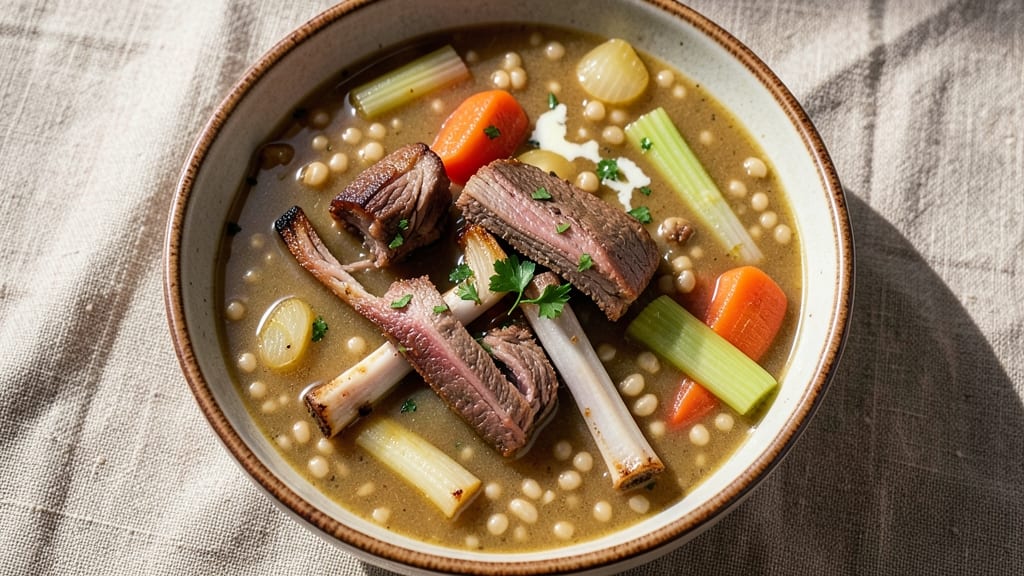
Leftover prime rib doesn't have to mean wasted flavor—this beef barley soup transforms it into a hearty, comforting meal that tastes even better the next day. 💛 I've perfected this recipe after years of testing, ensuring every bite delivers rich, savory depth from the prime rib while barley adds satisfying texture.
The key is building layers of flavor through slow simmering and proper technique.
What makes this recipe special is its ability to elevate simple ingredients into something extraordinary. You'll start with the prime rib bones and meat, extracting maximum flavor through a proper broth base. The barley cooks until tender and plump, absorbing all those delicious juices, while vegetables add freshness and color.
It's the kind of soup that feels like a warm hug on a chilly evening.
By the time you're done, you'll have a restaurant-quality beef barley soup with perfectly balanced flavors—rich beef, nutty barley, and aromatic vegetables all working together. The broth will be deeply flavorful, the meat tender and juicy, and the barley perfectly cooked.
This is comfort food at its finest, made even better by using ingredients you already have.
The best part? This soup tastes even better the next day as the flavors meld and deepen. It's perfect for meal prepping or serving at family gatherings when you want to impress without spending hours in the kitchen. Let's turn those leftovers into something truly special.
Ingredients for beef barley soup recipe with leftover prime rib
Leftover prime rib becomes restaurant-quality soup with these hearty, comforting ingredients.
| Ingredient | Amount | Notes |
|---|---|---|
| Leftover Prime Rib Meat 🥩 | 1 ½ lb | Diced into bite-sized pieces |
| Prime Rib Bones 🦴 | 2 whole | For flavorful broth base |
| Pearl Barley 🌾 | 1 cup | Uncooked, rinsed well |
| Yellow Onion 🧅 | 1 whole | Chopped, medium dice |
| Carrots 🥕 | 3 medium | Peeled, cut into chunks |
| Celery Stalks 🧅 | 3 whole | Chopped, medium dice |
| Garlic Cloves 🧄 | 4 cloves | Minced, fresh preferred |
| Tomato Paste 🍅 | 2 tbsp | Smooth, no sugar added |
| Beef Broth 💧 | 6 cups | Low-sodium preferred |
| Red Wine 🍷 | ½ cup | Dry, like Cabernet |
| Fresh Thyme 🌿 | 2 sprigs | Or 1 tsp dried thyme |
| Fresh Parsley 🌿 | ¼ cup | Chopped, for garnish |
| Bay Leaves 🍃 | 2 whole | Removed before serving |
| Salt 🧂 | 1 ½ tsp | Adjust to taste |
| Black Pepper 🌶️ | ½ tsp | Freshly ground |
The prime rib is where all the magic happens. Costco or local butchers often have prime rib leftovers—ask for the bones too, they're gold for flavor. Look for meat with good marbling, that's what makes the broth rich. If you're using pre-cooked rib, trim off any excess fat (but leave some for flavor). The pearl barley? Bob's Red Mill is my go-to brand—it stays firm and nutty, not mushy. Store it in the pantry, it keeps forever. Fresh thyme and parsley are ideal, but dried works if you're in a pinch—just use a third the amount.
No red wine? Dry white wine or extra beef broth works in a bind. The tomato paste can be swapped for crushed tomatoes at half the amount if you prefer. Celery and carrots can be baby versions if that's what's in your fridge—no need to peel the carrots if they're organic. The beef broth should be low-sodium; if it's not, cut the added salt in half. For extra depth, toast the pearl barley in a dry pan for 2 minutes before adding to the soup—trust me on this. The bones? If you don't have any, use beef bouillon cubes at double strength.
This soup gets better as it sits—3-4 days in the fridge is perfect. Portion it into containers for easy lunches. Freezes beautifully for up to 3 months—just thaw overnight in the fridge. For a quick shortcut, make double batches and freeze portions. The barley thickens as it cools, so add a splash of broth when reheating. Garnish with fresh parsley right before serving—worth the extra minute for that restaurant touch.
Why You'll Love This Recipe
- No Chopping Chaos: I swear by this—just rough-chop the onions and carrots (no need for fancy dice). The prime rib bones do all the flavor work while you sip wine and pretend you’re not cooking.
- Rich Without Effort: Between us, that leftover prime rib and bones? Pure umami gold. Simmer long enough, and the barley soaks up the deep, savory broth like a sponge—no fancy sauces needed.
- Leftovers Reinvented: Got half a prime rib from Sunday dinner? This turns it into Monday’s star. The barley thickens over time, so it only gets better the next day—perfect for lunchboxes or lazy afternoons.
- Budget Meal Magic: Pearl barley stretches this soup into a whole meal for less than $10. Use the bones for broth, shred the meat, and suddenly you’ve got a hearty, restaurant-worthy dish without breaking the bank.
Step-by-step instructions for beef barley soup with leftover prime rib
Transform leftover prime rib into a rich, hearty soup that warms the soul.
🔥 Step 1: Build the Flavorful Broth Base
In a large Dutch oven, place the 2 whole prime rib bones and add 6 cups beef broth. Bring to a boil over high heat, then reduce to a simmer. Skim off any foam that rises to the surface—this ensures a clear, clean broth. Add the 2 whole bay leaves and 2 sprigs fresh thyme, then let the broth simmer uncovered for 20 minutes to extract maximum flavor from the bones.
While the broth simmers, add the 1 whole yellow onion, 3 medium carrots, 3 whole celery stalks, and 4 cloves garlic cloves to the pot. Simmer for another 15 minutes until the vegetables soften slightly and the broth develops a deep, aromatic scent. This foundational step creates the rich, savory base that makes this soup truly special.
🍳 Step 2: Develop the Rich Sauce
Add the 2 tbsp tomato paste and 0.5 cup red wine to the pot. Stir well to combine, then let the mixture simmer for 5 minutes until the wine reduces slightly and the tomato paste dissolves completely. This step deepens the flavor profile and adds a subtle sweetness that balances the richness of the beef.
Here's the thing—don't rush this reduction. You want the wine to cook down until it's nearly evaporated, but not so much that it burns. The result should be a glossy, slightly thickened sauce that coats the back of a spoon. This is where the magic of the soup begins to develop.
👨🍳 Step 3: Add the Prime Rib Meat and Barley
Add the 1.5 lb diced leftover prime rib meat to the pot and stir gently to distribute it evenly. Let the mixture simmer for 10 minutes, allowing the beef to absorb the rich flavors of the broth. Then, add the 1 cup rinsed pearl barley and 1.5 tsp salt. Stir once more to ensure everything is well incorporated.
I know it seems like too much barley, but trust me—it'll cook down perfectly. The barley needs time to absorb the broth and soften completely, so let everything simmer gently for 45-50 minutes. You'll know it's done when the barley is tender and the soup has thickened to your desired consistency. Stir occasionally to prevent sticking, but avoid over-stirring which can break down the barley.
⏰ Step 4: Season and Finish
Taste the soup and adjust the seasoning with additional salt or 0.5 tsp black pepper as needed. Remove the bay leaves and thyme sprigs before serving. The soup should be rich, hearty, and perfectly seasoned—every spoonful should deliver that deep, meaty flavor with a satisfying bite from the barley.
For the final touch, ladle the soup into bowls and garnish with 0.25 cup chopped fresh parsley. The bright green color not only looks beautiful but also adds a fresh contrast to the rich, savory flavors. Serve immediately while hot, with crusty bread to soak up every last drop of that delicious broth.
Pro Tips For Making Beef Barley Soup Recipe With Leftover Prime Rib
- CRUSH THE BONES FIRST: Prime rib bones are tough—don’t just toss them in cold. Heat your pot empty on medium-high, add the bones, and let them sear for 5-7 minutes until deeply browned. This step unlocks flavor faster than simmering raw bones for hours, and the crust won’t turn your broth muddy.
- SOAK BARLEY UNTIL FIRM: Pearl barley needs a head start. Rinse it, then soak in cold water for 30 minutes before adding to the pot. I learned this the hard way—dry barley turns to mush and releases starch like glue, making the soup gluey instead of creamy. Drain well before cooking.
- SHRED MEAT COLD, NOT HOT: Leftover prime rib is tender but still stubborn. Let the meat cool for 10 minutes after simmering, then shred against the grain with two forks—no knife needed. Trying to cut it hot just turns it to shreds of rubber. Cold meat falls apart cleanly, and you’ll save your hands from frustration.
- SALT THE BROTH LATE: The bones and meat already carry salt from the original roast. Taste the broth after 30 minutes of simmering, then add just enough to make it sing—about 1 teaspoon per quart. Salting early overpowers the depth of the beef, and you’ll regret it when you’re left with a briny mess.
Wine and beer pairings for beef barley soup recipe with leftover prime rib
Classic Red Wine Pairings
This hearty beef barley soup pairs beautifully with a medium-bodied red wine that complements the rich beef and earthy barley. I always reach for a Cabernet Sauvignon from Napa Valley—its dark fruit flavors and subtle tannins stand up to the soup's depth without overpowering it.
The acidity cuts through the richness, making each sip refreshing. If you prefer something lighter, a Pinot Noir from Oregon offers bright red berry notes that harmonize perfectly with the thyme and parsley. 🍷
Craft Beer Complements
For beer lovers, a dark amber ale or brown ale works wonderfully—think New Belgium's Fat Tire or Samuel Smith's Nut Brown Ale. The malty sweetness and caramel notes balance the soup's savory profile, while the slight bitterness cleanses your palate between bites.
If you want something bolder, try a Belgian-style dubbel like Westmalle Dubbel—its complex spice and dark fruit flavors create an unexpected but delicious pairing.
White Wine Alternatives
Don't have red wine? No problem! A dry white wine like Chardonnay with noticeable oak can work surprisingly well. Look for one from California's Sonoma Coast—its buttery notes complement the barley while the acidity keeps the soup from feeling too heavy.
For a crisp alternative, Sauvignon Blanc from New Zealand offers bright citrus notes that cut through the richness beautifully. I've even used a dry Riesling for a touch of sweetness that balances the savory broth.
Non-Alcoholic Options
For those avoiding alcohol, a sparkling apple cider like Martinelli's adds a festive touch while its acidity mirrors wine's refreshing quality. For something more substantial, try a smoked tea—I love Harney & Sons Smoked Black Cherry Tea—its smoky depth and slight sweetness pair wonderfully with the beef.
Even a well-chilled ginger beer with a squeeze of lemon can provide that bright contrast that makes the soup sing. 💛
Regional Pairing Tips
In Texas, where prime rib is a staple, I often pair this soup with a Texas Hill Country red blend—its bold fruit flavors hold their own against the rich beef.
In New England, where hearty soups reign, a Massachusetts-produced dark ale like Samuel Adams Black Lager adds perfect malty contrast. For Pacific Northwest cooks, a local Pinot Noir or IPA (yes, really!) can work—just balance the hop bitterness with a splash of cream in the soup.
The key is matching intensity: bold wine for rich soup, lighter options for vegetable-forward versions.
Nutrition facts
Frequently asked questions
Can I use regular barley instead of pearl barley?
Pearl barley is the best choice here because it holds its shape and texture beautifully in soups. Regular barley (like pot barley) gets mushy and turns the soup into more of a porridge. If you absolutely must substitute, use wild rice blend instead—it adds a nice nutty flavor and holds up well. The cooking time will be similar, but check for doneness after 35 minutes of simmering.
What if I don't have prime rib bones for the broth?
No bones? No problem! Use 2 beef bouillon cubes dissolved in 6 cups hot water instead, or 2 cups beef stock plus 1/2 cup tomato paste to deepen the flavor. For extra richness, add 1 tbsp Worcestershire sauce to the broth. The wine and thyme will still give you that classic depth, just without the bone marrow flavor.
How do I know when the barley is perfectly cooked?
Taste it! The barley should be tender but still have a slight bite—like al dente pasta. It should take 45-50 minutes of simmering, but check at 40 minutes if you're worried. Overcooked barley turns mushy and watery. Pro tip: If it's not quite done, add 1/4 cup hot broth and let it simmer 5 more minutes. Never skip the rinse before adding to the soup—it removes excess starch that can make the barley gummy.
Can I make this soup in an Instant Pot?
Use the sauté function to brown the vegetables and deglaze with wine, then add all ingredients and cook on high pressure for 20 minutes (natural release). The barley will cook perfectly, and you'll save 45 minutes of simmering time. Just be sure to add the barley at the very end of the pressure cooking cycle—it cooks quickly and can overcook if added too early.
Why does my soup taste bland after refrigerating?
This happens when flavors need more time to meld! Let the soup sit at room temperature for 30 minutes before reheating, then warm gently on the stove. The cold fridge dulls flavors—reheating slowly brings them back. For extra depth, add 1 tsp soy sauce or a splash of red wine when reheating. Always store the soup in an airtight container to prevent flavor loss from absorption.