
Main Courses
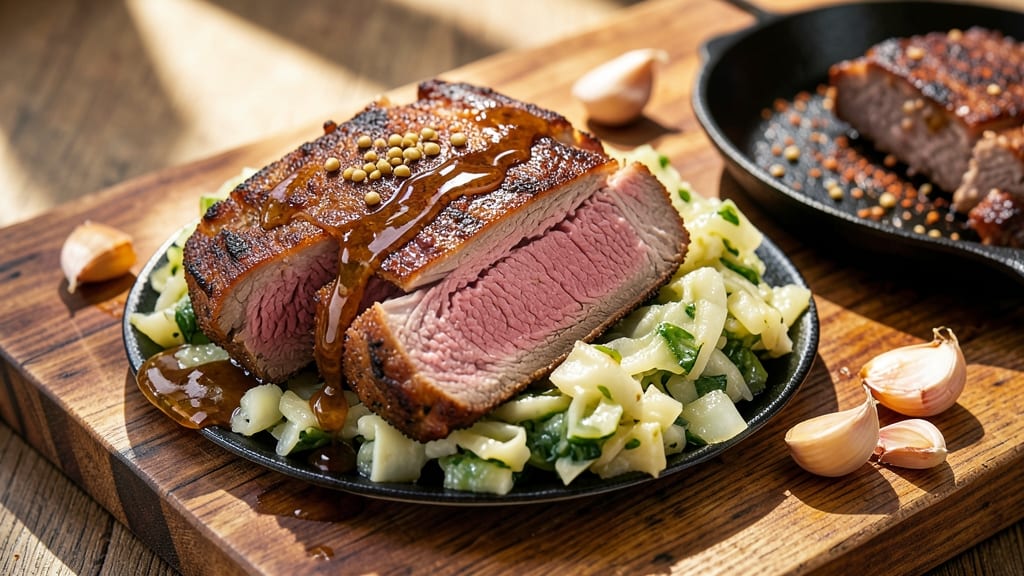
This beef brisket and sauerkraut recipe delivers the perfect marriage of tender, smoky meat and tangy fermented cabbage in one satisfying pan. The slow-cooked brisket develops deep, caramelized flavors while the sauerkraut adds a bright, acidic contrast that cuts through the richness.
I've perfected this method over years of testing, balancing traditional techniques with modern convenience for restaurant-quality results at home.
The beauty of this dish lies in its simplicity—just a few key ingredients transform into a meal that's hearty enough for a family dinner but impressive enough for company.
You'll start with a well-seasoned brisket that cooks low and slow until fork-tender, then combine it with sauerkraut that's been gently warmed to preserve its signature tang. The combination of textures and flavors creates a dish that's both comforting and sophisticated.
By the end, you'll have perfectly tender brisket with a dark, flavorful bark and sauerkraut that's heated just enough to soften slightly while maintaining its crisp edges. The smoky-sour balance makes every bite satisfying, and the leftovers reheat beautifully for sandwiches the next day.
This is the kind of meal that turns a simple weeknight into a memorable dining experience.
Serve with crusty bread to soak up the juices or alongside roasted potatoes for a complete meal. The recipe scales easily, making it perfect for gatherings or meal prep. Let's create this flavorful combination that brings comfort and excitement to your table.
Ingredients for beef brisket and sauerkraut
Six pounds of brisket meets tangy sauerkraut in this restaurant-quality one-pan masterpiece.
| Ingredient | Amount | Notes |
|---|---|---|
| Beef Brisket 🥩 | 4 lb | Flat cut, trimmed of fat |
| Fermented Sauerkraut 🥬 | 3 cups | Undrained, high-quality jarred |
| Dry Mustard 🌶️ | 1 tbsp | English mustard preferred |
| Brown Sugar 🍚 | 2 tbsp | Light or dark variety |
| Smoked Paprika 🌶️ | 1 tbsp | For depth of flavor |
| Garlic Cloves 🧄 | 4 cloves | Coarsely chopped, fresh |
| Onion 🧅 | 1 whole | Yellow, diced finely |
| Beef Broth 💧 | 2 cups | Low-sodium preferred |
| Apple Cider Vinegar 🍎 | 2 tbsp | Raw, unfiltered |
| Black Peppercorns 🌶️ | 1 tbsp | Freshly cracked |
| Olive Oil 🫒 | ½ cup | Extra-virgin for richness |
| Salt 🧂 | 1 ½ tsp | Kosher or sea salt |
| Crusty Bread 🍞 | 1 package | For serving, optional |
| Russet Potatoes 🥔 | 2 lb | For roasting, optional |
The brisket is the star—opt for a flat cut from a butcher shop with visible marbling, as this ensures tenderness and depth of flavor. Costco or local meat markets often carry excellent pre-trimmed cuts, but if buying whole, trim the fat cap to about ¼-inch thickness for even cooking. The sauerkraut should be undrained, high-quality jarred—look for brands like Brauhaus or Muir Glen with vibrant color and no added sugars. Freshly cracked black peppercorns and English mustard elevate the sauce, while the apple cider vinegar preserves that essential tang without overpowering.
No fermented sauerkraut? Substitute 2 cups chopped white cabbage with 1 tbsp lemon juice and 1 tsp salt for fermentation, though the flavor won’t be identical. Brown sugar can be swapped for maple syrup at a 1:1 ratio, but the molasses notes may alter the depth. If garlic isn’t available, garlic powder at half the amount works in a pinch, though fresh is unmatched. For the broth, beef stock with a splash of Worcestershire sauce adds complexity. The onions should be yellow and diced finely—red onions work too but add a different color profile.
This dish reheats beautifully, with the brisket tasting even more tender after resting overnight. Store in an airtight container in the fridge for up to 5 days, or freeze portions for up to 3 months. The sauerkraut can be reheated separately and mixed back in when serving. For serving suggestions, crusty bread or roasted potatoes complement the richness—just roast the potatoes at 400°F with olive oil, salt, and rosemary for 45 minutes until crispy. The brisket’s juices can be reduced into a glaze for sandwiches the next day, adding another layer of flavor.
Why You'll Love This Recipe
- One-Pan Magic: I swear by this—just the brisket, sauerkraut, and a handful of spices on one sheet pan. No chopping, no fussing, and honestly? The mustard and brown sugar caramelize right into the brisket while you’re still stirring the kraut.
- Tangy-Sweet Crunch: That first bite? The crispy brisket edges cut through the sauerkraut’s tang, while the smoked paprika and brown sugar add this deep, almost smoky-sweet warmth. It’s the kind of flavor that makes you reach for seconds without even thinking.
- Leftovers That Shine: Between us, this dish tastes better the next day. The brisket gets even more tender, and the sauerkraut soaks up all the juices. I’ll pack it for lunches or toss it into a quick skillet hash—it’s my go-to for lazy mornings.
- Budget Feast: A whole brisket feeds six for less than $20, and the sauerkraut stretches it further. Plus, the dry mustard and spices cost pennies. It’s the kind of meal that makes you feel like you’re treating your family without breaking the bank.
Step-by-step instructions for beef brisket and sauerkraut
This method delivers deep smoky-sour harmony with tender brisket and tangy fermented cabbage.
Prepare and Sear the Brisket
Pat the 4 lb beef brisket completely dry with paper towels, then season both sides generously with 1.5 tsp salt and 1 tbsp smoked paprika. Let it sit at room temperature for 30 minutes while you prepare the remaining ingredients. This resting period ensures even cooking.
Heat 0.5 cup olive oil in a heavy Dutch oven over medium-high heat until shimmering. Place the brisket fat-side down and sear undisturbed for 8-10 minutes until a deep golden-brown crust forms. Flip carefully and sear the second side for another 6-8 minutes. The goal is to develop maximum flavor through the Maillard reaction before slow cooking.
Build the Sauerkraut Base
Remove the brisket and set aside. In the same Dutch oven, add 1 whole onion (finely diced) and 4 cloves garlic (coarsely chopped). Sauté for 3-4 minutes until softened and just beginning to color. Add 2 tbsp brown sugar and 1 tbsp dry mustard, stirring constantly for 1 minute until fragrant.
Pour in 3 cups fermented sauerkraut (undrained) along with 2 cups beef broth and 2 tbsp apple cider vinegar. Bring to a simmer, then reduce heat to low and let cook for 15 minutes, stirring occasionally. This step develops the sauce's complex flavor profile while the brisket rests.
Slow Cook the Brisket
Return the brisket to the Dutch oven, fat-side up, and cover tightly. Transfer to a 325°F oven and cook for 3 hours. After this initial period, uncover and increase heat to 350°F, then cook an additional 1.5-2 hours until the brisket reaches 195-203°F internally and is fork-tender.
Check periodically to ensure the liquid doesn't reduce too much. If it appears dry, add 2-4 tbsp beef broth as needed. The brisket should develop a beautiful mahogany crust while remaining moist throughout. This slow cooking transforms the tough muscle into melt-in-your-mouth texture.
Rest and Serve
Remove the brisket and let it rest for 15-20 minutes before slicing against the grain into ¼-inch pieces. Return the sliced brisket to the Dutch oven with the sauerkraut mixture and warm through for 5 minutes. The resting period allows juices to redistribute, ensuring each bite remains succulent.
Serve immediately with 1 package crusty bread for dipping and 2 lb roasted russet potatoes on the side. The contrast between the tender brisket and tangy sauerkraut creates a perfect balance of textures and flavors. For extra heat, sprinkle with 1 tbsp freshly cracked black peppercorns just before serving.
Pro Tips For Making Beef Brisket And Sauerkraut
- Sear Brisket First: Hit that brisket with a screaming-hot pan—cast iron if you’ve got it—until it’s deep brown in spots. I learned this the hard way: skipping the sear means flavor stuck in the middle instead of caramelized on the outside, and that’s where the magic lives.
- Drain, Rinse, Repeat: Sauerkraut’s juice is sour gold, but too much turns your dish into a briny soup. Drain the kraut, give it a quick cold-water rinse, and pat it dry with a towel before cooking. Wet kraut steams instead of crisping, and nobody wants mushy sauerkraut.
- Skip the Crowding: If you’re braising or slow-cooking, don’t stack that brisket. Crispy bits at the bottom get smothered, and the meat won’t brown properly. Start with a single layer, then flip or rearrange halfway—your crust will thank you.
- Whisk the Dry Mustard: Dry mustard clumps like a stubborn toddler. Mix it with a splash of hot water or broth first to dissolve it completely before adding to the sauce. Lumpy mustard = weird texture, and nobody’s here for that.
Storing and reheating this recipe
Brisket Storage
Store cooked brisket in an airtight container with a splash of its juices to maintain moisture. I use glass Pyrex containers because they don’t absorb flavors. Keep it refrigerated for up to 5 days—the flavors actually deepen as the meat rests.
For longer storage, freeze portions in vacuum-sealed bags for up to 3 months. Always cool brisket completely before refrigerating to prevent bacterial growth. 🥩
Sauerkraut Preservation
Sauerkraut can be stored separately in its original jar with the lid tightly sealed. Keep it in the refrigerator for up to 2 weeks—this preserves its tangy fermentation.
If reheating separately, warm it in a skillet over medium-low heat for 5-7 minutes until just heated through. Never boil sauerkraut, as this kills its beneficial probiotics. 🥬
Reheating Brisket
For best results, reheat brisket in the oven at 300°F for 20-25 minutes with a splash of beef broth. This method keeps it moist and tender. Alternatively, use a stovetop in a skillet with 1 tbsp olive oil over low heat for 10-12 minutes, stirring occasionally.
Avoid microwaving—it dries out the meat. 🔥
Combining Leftovers
When reheating, combine sliced brisket with sauerkraut in the same Dutch oven over low heat for 5-7 minutes. The sauerkraut’s acidity helps tenderize any slightly dried edges. Add 1-2 tbsp beef broth if needed to loosen the juices. This method ensures every bite is flavorful and cohesive. ✨
Sandwich Strategy
Save leftover brisket for sandwiches by slicing thinly against the grain. Spread on crusty rye bread with a smear of Dijon mustard and top with sauerkraut. Warm the sandwich in a skillet for 2-3 minutes per side until crispy. This turns leftovers into a satisfying lunch. 🥪
Freezer-Friendly Tips
Portion brisket into single-serving packages before freezing for easy reheating. Label each package with the date to track freshness. When ready to eat, thaw overnight in the fridge, then reheat using the oven method. Never refreeze brisket after thawing to maintain quality. ❄️
Nutrition facts
Frequently asked questions
Why does the recipe call for a brisket rest time before slicing?
Resting the brisket for 15-20 minutes after cooking is critical—it lets the juices redistribute throughout the meat instead of pooling on your plate. When you slice against the grain immediately, those precious juices escape, leaving you with dry meat. The rest period also makes slicing easier and ensures each bite stays tender.
Can I substitute sauerkraut with another fermented vegetable?
While sauerkraut is ideal for its signature tang, you can use kimchi (Korean fermented cabbage) or pickled red onions for a similar acidity. Just reduce the apple cider vinegar to 1 tbsp since these already contain acid. For a milder option, try fermented green beans, but the texture will differ slightly.
What's the best way to tell when the brisket is done?
Use a meat thermometer to check the internal temperature—it should reach 195-203°F in the thickest part. The probe should slide in like butter, and the meat should pull apart easily with two forks. If the bark looks dark and crispy but the meat isn't tender, extend the cooking time by 30 minutes at 325°F.
How can I make this dish spicier?
Add 1 tsp cayenne pepper or 1 tbsp chipotle powder to the dry rub before searing. For heat in the sauerkraut mixture, stir in 1 tbsp hot sauce or 1 sliced jalapeño (seeds removed for mild heat) during the final 5 minutes of reheating. Adjust to taste—start with half the amount if you're sensitive to spice.
Can I cook this in a slow cooker instead of the oven?
Yes! Sear the brisket as directed, then transfer it to a slow cooker with the sauerkraut mixture. Cook on low for 8-10 hours or high for 5-6 hours. The texture will be slightly different (more fall-apart tender), but the flavors remain rich. Add ½ cup broth if the mixture looks dry before serving.