
Soups & Stews
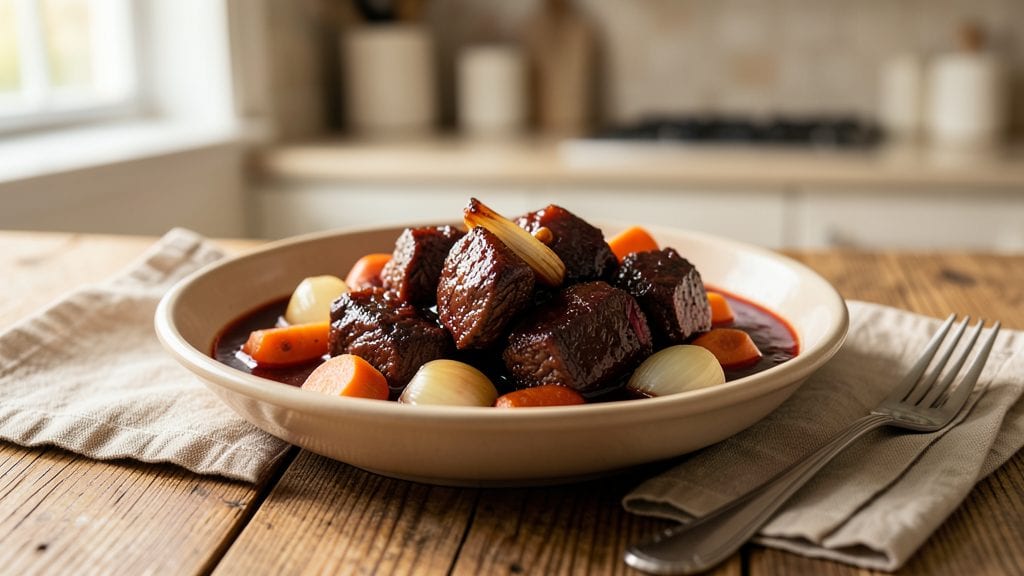
This beef daube recipe transforms tough beef into melt-in-your-mouth tenderness through slow braising and red wine magic—a technique I perfected after years of experimenting with French classics.
The key lies in marinating the beef overnight, then simmering it low and slow until it practically falls apart, all while building layers of depth from aromatic herbs and rich wine.
What makes this dish special is how the flavors meld together over time, creating a sauce that's both elegant and deeply satisfying.
The process begins with a 24-hour marinade in red wine, garlic, and thyme, which tenderizes the beef and infuses it with flavor.
Then, the slow braising—typically 3 to 4 hours—allows the collagen to break down, resulting in meat that's so tender it nearly dissolves at the touch of a fork. The red wine reduction ties everything together, balancing acidity with richness while highlighting the natural beefy notes.
This isn't just a stew; it's a restaurant-quality dish you can make at home.
By the time you serve it, you'll have a dish that's restaurant-worthy—deeply flavorful, richly sauced, and perfectly tender. The aroma alone will have everyone gathering around the table, and the first bite delivers on that promise of slow-cooked perfection.
Serve it with boiled potatoes or crusty bread to soak up every last drop of that velvety sauce. Here's how to make it.
While traditional recipes call for a Dutch oven and stovetop braising, modern adaptations—like using an Instant Pot—can cut cooking time significantly without sacrificing flavor. Whether you follow the classic method or take a shortcut, the result is the same: a dish that feels like a celebration on a plate.
Let's get started.
Ingredients for beef daube
Sixteen ingredients. One overnight marinade. Restaurant-quality beef daube at home.
| Ingredient | Amount | Notes |
|---|---|---|
| Beef Chuck Roast 🥩 | 3 lb | Center-cut, 1.5-inch thick slices |
| Dry Red Wine 🍷 | 2 cups | Bold Cabernet Sauvignon or Merlot |
| Garlic Cloves 🧄 | 8 whole | Smash slightly for deeper flavor |
| Fresh Thyme Sprigs 🌿 | 6 whole | Stems intact for easy removal |
| Fresh Rosemary Sprigs 🌿 | 4 whole | Woody stems for aromatic infusion |
| Yellow Onion 🧅 | 1 whole | Large, peeled and quartered |
| Carrots 🥕 | 4 whole | Medium, peeled and halved |
| Tomato Paste 🍅 | 2 tbsp | Squeeze tube preferred for convenience |
| Beef Broth 💧 | 2 cups | Homemade or high-quality low-sodium |
| Olive Oil 🫒 | 2 tbsp | Extra-virgin for richness |
| Salt 🧂 | 2 tsp | Diamond Crystal kosher preferred |
| Black Peppercorns 🌶️ | 1 tsp | Freshly cracked for intensity |
| Bay Leaves 🍃 | 2 whole | Dried, standard size |
| All-Purpose Flour 🌾 | 1 tbsp | For thickening sauce |
| Fresh Parsley 🌿 | ¼ cup | Chopped, for garnish |
The beef is non-negotiable—chuck roast with good marbling is your best bet. Costco or Whole Foods carry excellent cuts, but any well-stocked grocery store's butcher section should have it. Look for bright red color and visible fat streaks; that's where the flavor hides. If you're buying a whole roast, ask for it to be cut into 1.5-inch slices—thicker pieces braise better. The red wine? Cabernet Sauvignon or Merlot works best—avoid sweet or fruity varieties. I always grab a bottle I'd actually drink, then use the rest for cooking. The herbs? Fresh is ideal, but if you're in a pinch, dried thyme and rosemary work at one-third the amount.
No fresh thyme? Dried works in a bind—just use a third as much. Short on red wine? Beef broth with 1 tbsp balsamic vinegar mimics the acidity. The tomato paste can be swapped for a crushed can of tomatoes if you prefer, but the squeeze tube is foolproof. For the carrots? Baby carrots or whole peeled carrots both work—no need to fuss. The beef broth matters too—homemade or high-quality low-sodium keeps the flavors pure. And if you're using an Instant Pot, add 1 cup extra broth to account for steam loss. The flour at the end is just for thickening—don't skip it, but don't overdo it either.
This dish tastes even better the next day, so make it ahead if you can. The beef keeps 4-5 days in the fridge, and the sauce freezes beautifully for up to 3 months. I like to portion the beef into containers with some sauce, then reheat just the portions I need. The herbs? Wrap fresh thyme and rosemary in damp paper towels in a baggie—they'll stay fresh for a week. And if you've got leftovers, transform them into beef daube sandwiches the next day with crusty bread and a sprinkle of parsley. Trust me, it's magic.
Why You'll Love This Recipe
- Let’s be real: You’ll make this twice in a week because the leftovers are that good. Slice the tender beef into sandwiches, toss it into a grain bowl, or reheat it with a splash of broth for a quick stew. The sauce thickens beautifully, so every bite feels like the first.
- One-Pot Magic: Between us, this dish is basically hands-off after the initial sear. Toss in the wine, herbs, and garlic, then let it slow-cook while you handle the rest of dinner—or just relax. The chuck roast practically melts into itself, and the aromatics infuse effortlessly.
- Wine-Infused Magic: Honestly, the red wine isn’t just for flavor—it’s the secret weapon. That deep, savory richness from the chuck roast gets lifted by the wine’s acidity, while the thyme and rosemary add a fragrant earthiness. It’s the kind of dish that makes you want to pour another glass just to taste the sauce.
- Leftovers That Shine: Let’s be real: You’ll make this twice in a week because the leftovers are that good. Slice the tender beef into sandwiches, toss it into a grain bowl, or reheat it with a splash of broth for a quick stew. The sauce thickens beautifully, so every bite feels like the first.
Step-by-step instructions for beef daube recipe
Here's how to transform tough beef chuck into melt-in-your-mouth tenderness using slow braising.
Sear the Beef Chuck Roast Until Deeply Browned
Pat the 3 lb beef chuck roast dry with paper towels to remove any surface moisture. Heat 1 tablespoon of the olive oil in a heavy Dutch oven over medium-high heat until shimmering. Place the beef in the pot and sear on all sides for 5-6 minutes total, pressing down gently with a spoon to prevent curling. You're looking for deep brown coloration—this creates the flavor foundation for your daube.
The reason we sear first is to develop the Maillard reaction, which builds rich, caramelized flavors. If the meat releases easily from the pan after 2-3 minutes on a side, it's ready to flip. Don't rush this step—the deeper the color, the more complex the final dish will taste. Once seared, remove the beef and set it aside on a plate.
Build the Flavor Base with Aromatics and Wine
In the same Dutch oven, add the remaining 1 tablespoon olive oil and place over medium heat. Add the quartered yellow onion and halved carrots, cooking for 5 minutes until they begin to soften. Add the smashed garlic cloves, fresh thyme sprigs, fresh rosemary sprigs, and bay leaves, stirring for 30 seconds until fragrant.
Pour in the 2 cups dry red wine, scraping up any browned bits from the bottom of the pot. These bits, called fond, contain concentrated flavor that dissolves into the wine. Let the mixture simmer for 5 minutes until the wine reduces by about half and the aromatics are tender. This reduction intensifies the wine's flavor and removes some of its alcohol content.
Create the Braising Liquid and Return the Beef
Add the 2 tablespoons tomato paste and stir for 1 minute to cook out its raw taste. Sprinkle the 1 tablespoon all-purpose flour over the mixture and stir vigorously for 2 minutes to create a light roux. This will help thicken the braising liquid slightly and add body to the sauce.
Pour in the 2 cups beef broth, stirring constantly to incorporate. Return the seared beef chuck roast to the pot, along with the 2 teaspoons salt and 1 teaspoon freshly cracked black peppercorns. The liquid should come about halfway up the sides of the beef. Bring the mixture to a gentle simmer, then reduce heat to low to maintain a bare bubble at the surface.
Braise Until Fork-Tender
Cover the Dutch oven with a tight-fitting lid and transfer to a 325°F oven. Braise for 3 to 3.5 hours, turning the beef occasionally and adding 2-3 tablespoons of water if the liquid level gets too low. The beef is done when it easily pulls apart with two forks and the internal temperature reaches 200°F on an instant-read thermometer.
Here's the thing—this long, slow cook time is what transforms tough beef into tender slices. The collagen in the meat breaks down into gelatin, creating that luxurious mouthfeel. I know it's tempting to check early, but resist—patience is key. The beef will continue cooking slightly after removal from the oven due to carryover heat.
Finish and Garnish the Daube
Once the beef is perfectly tender, remove it from the pot and transfer to a serving platter. Skim any excess fat from the surface of the braising liquid, then increase heat to medium-high to reduce the sauce until it coats the back of a spoon. The sauce should be rich and slightly thickened but still pourable.
Return the beef to the pot, spooning the reduced sauce over the top. Sprinkle with the chopped fresh parsley just before serving. The parsley adds a bright contrast to the deep, wine-infused flavors. Let the daube rest for 5 minutes before serving to allow the juices to redistribute throughout the meat, ensuring each bite is moist and flavorful.
Pro Tips For Making Beef Daube
- Brown the Meat First: Don’t skip the sear—get that chuck roast screaming hot in a dry pan before adding wine. I used to rush this, and the sauce ended up thin and pale. A deep, dark crust locks in flavor and thickens the reduction later.
- Smash Those Garlic Cloves: Peel the garlic but leave the cloves whole—then crush them lightly with the flat side of your knife. This releases flavor without turning bitter. (Yes, even if you’re impatient like me, don’t mince them.)
- Deglaze Aggressively: After browning, pour in the red wine and scrape every bit of fond from the pan with a wooden spoon. That’s where the magic lives—skip it, and your sauce will taste flat. (Trust me, I’ve done it both ways.)
- Simmer Low and Long: Cover the pot and cook on low heat for at least 2.5 hours, stirring occasionally. I learned the hard way—high heat makes the wine evaporate too fast, leaving a harsh, alcohol-heavy sauce. Patience pays off.
Creative variations of this beef daube
Classic French Twist
For an authentic French experience, swap the beef chuck for beef flanken or beef silverside, two traditional cuts used in classic daube recipes. These leaner cuts benefit from the long braise, absorbing the wine and herbs beautifully.
I recommend marinating them for 24 hours in a mix of 1 cup red wine, 2 tbsp olive oil, 4 garlic cloves, 2 sprigs thyme, and 1 sprig rosemary. Serve with crusty baguette and a simple green salad with Dijon vinaigrette. 🍷
Italian-Inspired Version
Transform this into a rustic Italian stracotto by replacing red wine with dry white wine or broth, and add 1 tbsp tomato paste and 1 crushed can of San Marzano tomatoes to the braising liquid.
Swap thyme for oregano and rosemary for bay leaves, then finish with fresh basil instead of parsley. Pair it with creamy polenta or eggplant parmigiana for a full Italian feast. 🍝
Spicy Cajun Daube
Add 1 tbsp Cajun seasoning (like Tony Chachere's) to the marinade and sprinkle ½ tsp smoked paprika into the braising liquid. For extra heat, stir in 1 tbsp hot sauce (like Crystal or Tabasco) at the end.
Serve over steamed jasmine rice or with cornbread to soak up the bold flavors. This version is perfect for game day or a cozy weekend dinner. 🌶️
Vegetarian Adaptation
Swap the beef for extra-firm tofu or mushroom medley (portobello, shiitake, and cremini). Marinate the tofu in the same red wine mixture for 12 hours, then braise with 2 tbsp soy sauce and 1 tbsp maple syrup for depth.
Use 1 cup vegetable broth instead of beef broth. Garnish with sesame seeds and serve with quinoa or roasted sweet potatoes. 🌱
Instant Pot Shortcut
For a quicker version, sear the beef in a skillet first, then transfer it to an Instant Pot with all the braising ingredients. Cook on high pressure for 60 minutes, then let the pressure release naturally for 15 minutes.
The result is tender beef with a rich sauce—just reduce it further on the stovetop if needed. This method cuts cooking time in half while keeping the flavors intact. ⏱️
Winter Comfort Version
Boost the dish for cold weather by adding 1 cup pearl onions and 2 parsnips to the braising liquid. Stir in 1 tsp ground allspice and ½ cup apple cider for warmth.
Serve with mashed potatoes and roasted Brussels sprouts—the sweetness of the apples and onions pairs perfectly with the hearty beef. This version feels like a hug in a bowl. ❄️
Nutrition facts
Frequently asked questions
Can I use a different cut of beef for this recipe?
While chuck roast is ideal for its marbling and flavor, you can substitute with beef flanken, silverside, or even brisket. Lean cuts like flanken benefit from the long braise, while fattier cuts like brisket add extra richness. Just adjust cooking time—leaner cuts may need 1-2 extra hours to reach tenderness.
What if I don't have red wine? Can I substitute?
Use 2 cups beef broth with 1 tbsp balsamic vinegar or 1 tbsp red wine vinegar for acidity. For depth, add 1 tsp soy sauce or 1 crushed bay leaf. The dish will still taste rich and flavorful, just with a slightly different profile.
How do I know when the beef is fully tender?
Use two forks to gently pull the beef apart—if it separates easily, it's done. A 200°F internal temperature (measured with an instant-read thermometer) is also a reliable indicator. The beef will continue cooking slightly after removal from the oven, so don't overcook it.
Can I make this in a slow cooker or Instant Pot?
Yes! For a slow cooker, sear the beef first, then transfer everything to the pot and cook on low for 8 hours or high for 5 hours. For an Instant Pot, sear the beef separately, then cook on high pressure for 60 minutes with a natural release. Both methods work beautifully—just reduce the sauce further if needed.
Why does my sauce look too thin or too thick?
If the sauce is too thin, simmer it uncovered for 5-10 minutes to reduce. For a thicker sauce, mix 1 tbsp cornstarch with 2 tbsp water, stir into the sauce, and simmer until it thickens. Pro tip: Skim excess fat from the surface before reducing to avoid greasiness.