
Soups & Stews
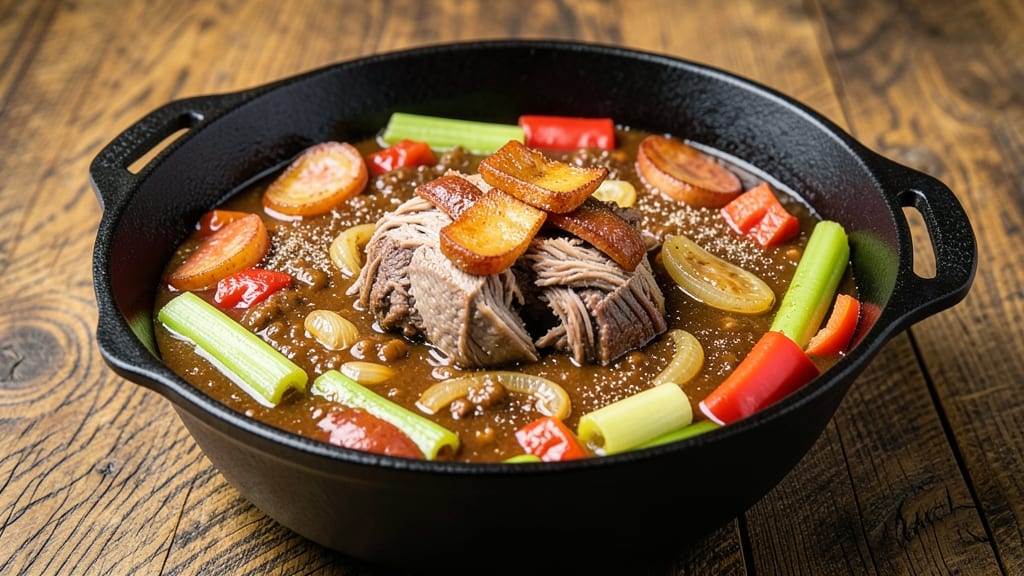
A beef gumbo recipe built on a dark, smoky roux transforms simple ingredients into a rich, soul-warming stew that tastes like a Louisiana bayou in your kitchen. The key lies in patience—letting that roux develop its deep, nutty flavor before adding the "holy trinity" of onions, celery, and bell peppers.
I've perfected this method over years of testing, ensuring every bite delivers that perfect balance of smokiness, spice, and tender beef.
This gumbo starts with a 30-minute roux that forms the foundation, followed by layers of flavor from sausage, chicken, and okra. The slow simmer allows the stock to meld with the spices, creating a broth so rich it coats every spoonful.
While traditional gumbo can be complex, this version simplifies without sacrificing depth—ideal for both beginners and seasoned cooks.
By the time you serve it, you'll have a steaming bowl of gumbo with tender beef chunks, crisp sausage, and vegetables swimming in a velvety, spiced broth. The aroma alone will draw everyone to the table, while the first bite delivers that signature gumbo experience—smoky, savory, and impossible to resist.
Serve with crusty bread to soak up every last drop.
This recipe serves 6-8 and can be easily doubled for gatherings. The roux technique is the heart of the dish, but the layering of flavors—from the initial saute to the final simmer—is what makes it truly special. Let's create a gumbo that tastes like home.
Ingredients for beef gumbo
Rich, smoky flavors start with a dark roux and Louisiana-inspired ingredients.
| Ingredient | Amount | Notes |
|---|---|---|
| All-Purpose Flour 🌾 | 1 cup | Unbleached preferred for authentic flavor |
| Unsalted Butter 🧈 | ¾ cup | Cold, cubed for roux development |
| Dark Brown Sugar 🍬 | 1 tbsp | Enhances smoky depth in roux |
| Chuck Roast 🥩 | 2 lb | Trimmed of excess fat, cut into 1-inch cubes |
| Andouille Sausage 🌭 | 1 lb | Fresh or high-quality smoked |
| Yellow Onion 🧅 | 2 whole | Medium, diced for holy trinity |
| Celery Stalks 🥬 | 4 whole | Stringy, diced for holy trinity |
| Green Bell Pepper 🌶️ | 1 whole | Medium, diced for holy trinity |
| Garlic Cloves 🧄 | 6 cloves | Fresh, minced for aromatic base |
| Dried Thyme 🌿 | 1 tbsp | Or 1 tbsp fresh thyme leaves |
| Dried Oregano 🍃 | 1 tbsp | Mexican oregano preferred |
| Ground Black Pepper 🌶️ | 1 tsp | Freshly ground for best flavor |
| Cayenne Pepper 🔥 | ½ tsp | Adjust for desired heat level |
| Beef Stock 💧 | 6 cups | Homemade or high-quality store-bought |
| Okra Pods 🌱 | 1 lb | Fresh, trimmed and sliced |
| Green Onions 🧅 | ¼ cup | Sliced for garnish |
| Hot Sauce 🌶️ | 2 tbsp | Crushed red pepper sauce |
| Salt 🧂 | 1 ½ tsp | Adjust to taste |
| Filé Powder 🌿 | 2 tbsp | Sifted for smooth texture |
The roux is where this gumbo's soul lives. All-purpose flour and unsalted butter create the foundation, but the dark brown sugar adds that signature smoky depth. For the best roux, use a heavy-bottomed pot and stir constantly—it should darken to a chocolate color over 30 minutes. Bob's Red Mill flour works beautifully, but any unbleached variety will do. The chuck roast is key; look for well-marbled cuts at your butcher or grocery store's meat counter. Andouille sausage should have that distinct smoky flavor—Johnsonville is a reliable brand, but fresh from a specialty shop is ideal. The holy trinity (onion, celery, bell pepper) should be finely diced for even cooking.
No filé powder? Cornstarch at half the amount works in a pinch, but it won't have that earthy gumbo flavor. Short on thyme? Dried marjoram at the same quantity is a decent swap, though it won't be identical. The cayenne can be adjusted—start with less if you're sensitive to heat. For the okra, frozen works fine if fresh isn't available, but trim any tough ends. The beef stock should be rich and flavorful—Homemade or high-end brands like Pacific Foods make all the difference. If you're making this ahead, the roux can be prepped and refrigerated for up to 3 days, saving you time on cooking day.
This gumbo tastes even better the next day as flavors meld. Store in an airtight container in the fridge for up to 5 days, or freeze portions for 3 months. The roux can be made ahead and kept at room temperature for up to 2 days if sealed tightly. For serving, bring to a simmer before adding the filé powder—it thickens dramatically when hot. Garnish with green onions and hot sauce to taste, and always serve with crusty bread to soak up that rich broth.
Why You'll Love This Recipe
- One-Pot Magic: I swear by this recipe because it’s literally one pot—no chopping vegetables into oblivion, no last-minute pan scrubbing. Just brown the chuck and sausage, toss in the roux (flour + butter—that’s the secret), and let it simmer. My hands stay clean, and my kitchen stays quiet.
- Deep, Smoky Hug: That dark brown sugar? It’s not just sweet—it caramelizes into the roux, giving the gumbo this unexpected depth that makes it taste like a Sunday dinner, not a weeknight shortcut. The andouille sausage adds smokiness, and the chuck roast? It falls apart like it’s been cooking all day (even though it’s not).
- Leftover Goldmine: Between us, this gumbo only gets better the next day. The flavors meld, the meat gets even more tender, and I’ve got a freezer-friendly meal for lazy Mondays. (Yes, even when I forget to eat leftovers.)
- Budget-Friendly Feast: Chuck roast and andouille stretch for a crowd without breaking the bank. I’ve fed six people for under $20, and everyone leaves happy—no sad, half-empty Tupperware here. Plus, the brown sugar and butter make it feel fancy, so you can pretend it’s a splurge.
Step-by-step instructions for beef gumbo
Mastering the roux is where this dish truly comes alive—rich, smoky, and full of depth.
Develop the Dark Roux
In a heavy-bottomed Dutch oven, melt the 0.75 cup unsalted butter over medium-low heat. Add the 1 cup all-purpose flour all at once and stir constantly with a wooden spoon. The mixture will thicken into a paste within 2-3 minutes. Here's the critical part: keep stirring relentlessly as it darkens from golden to chocolate brown—this takes 20-25 minutes and requires your full attention.
I like to set a timer and check every 5 minutes to ensure even cooking. The roux should smell nutty and toasty, not burnt. If it starts to smoke excessively, reduce the heat slightly. The 1 tablespoon dark brown sugar enhances the smoky depth—add it when the roux reaches a deep mahogany color, stirring for another 2 minutes to fully incorporate. This roux is the flavor foundation; don't rush it.
Build the Holy Trinity and Brown the Meat
With the roux still in the Dutch oven, add the 2 whole yellow onion, 4 whole celery stalks, and 1 whole green bell pepper, all diced. Stir to coat evenly, then increase heat to medium-high. Cook for 8-10 minutes until the vegetables soften and begin to caramelize. This step develops their natural sweetness, which balances the gumbo's richness.
Push the vegetables to the side of the pot and add the 2 lb chuck roast cut into 1-inch cubes and 1 lb andouille sausage sliced into ½-inch rounds. Brown the meat thoroughly on all sides—this takes about 10 minutes. The meat should release easily from the bottom of the pot when done. Remove the meat with a slotted spoon and set aside temporarily.
Add Aromatics and Liquid
Return the browned meat to the pot and stir in the 6 cloves garlic cloves (minced), 1 tablespoon dried thyme, 1 tablespoon dried oregano, 1 teaspoon ground black pepper, and 0.5 teaspoon cayenne pepper. Cook for 1 minute until fragrant. Pour in the 6 cups beef stock and bring to a gentle simmer. The mixture should bubble softly—this prevents the roux from breaking.
Partially cover the pot and simmer for 1 hour, stirring occasionally. This allows the meat to tenderize and the flavors to meld. If the gumbo reduces too much, add ½ cup water to maintain consistency. The okra pods will be added later to thicken naturally, so no need to adjust the liquid now. The gumbo should smell deeply aromatic with notes of smoky roux and savory meat.
Incorporate Okra and Finish
Slice the 1 lb okra pods into ½-inch rounds and stir them into the gumbo. Simmer uncovered for 30-40 minutes, stirring occasionally. The okra will break down and create a natural thickening—this is what gives gumbo its signature texture. Taste and adjust seasoning with the 1.5 teaspoons salt and 2 tablespoons hot sauce if needed. The gumbo should be rich, slightly spicy, and deeply flavorful.
Stir in the 2 tablespoons filé powder just before serving—this thickens the gumbo instantly and adds a distinct earthy note. The filé powder must be sifted first to avoid clumps. Ladle the gumbo into bowls, garnish with 0.25 cup sliced green onions, and serve immediately with hot rice.
Pro Tips For Making Beef Gumbo
- Brown the Butter First: That nutty, caramelized butter flavor is what ties the whole gumbo together—don’t skip it. Melt the butter over medium heat until it turns golden brown and smells like toasted nuts, then immediately whisk in the flour. (Yes, it’ll look weird and lumpy at first, but that roux is the backbone of your gumbo.)
- Cut Chuck Roast Thin: Thick chunks of chuck roast turn into chewy, sad bites in gumbo. Slice it against the grain into ¼-inch thick strips before searing—this keeps it tender and ensures every bite melts. (I used to skip this, and the texture suffered every time.)
- Don’t Rush the Roux: Watch the heat like a hawk—this isn’t the time to walk away. A dark brown roux (like peanut butter) is non-negotiable for gumbo, but if it gets past chocolate brown, it’ll taste bitter. Keep the pot moving and lower the heat if it starts to smoke aggressively.
- Slice Sausage Before Browning: Whole andouille sausages release flavor slowly and unevenly. Slice them into ½-inch rounds before searing—this guarantees they cook through and infuse the gumbo with that smoky, spicy punch from the start. (No more half-raw sausage lurking at the bottom.)
Troubleshooting this recipe
Roux Gone Wrong
If your roux turns burnt instead of chocolate brown, you've lost the delicate balance of flavors. This happens when heat gets too high or you lose focus. Solution: Immediately remove the pot from heat, stir in 2 tablespoons cold water, and restart with medium-low heat.
I’ve saved many a roux this way—just keep stirring! 🔥
Meat Too Tough
Overcooked beef ruins gumbo. If your chuck roast is rubbery after 1 hour, you likely simmered too long. Fix it: Use a meat thermometer—pull the beef at 195°F (it’ll finish cooking in the hot broth).
For extra tenderness, sear the cubes in the Dutch oven first, then add them to the pot after the roux stage.
Broth Too Thin
A watery gumbo means the roux didn’t thicken properly. If this happens, simmer uncovered for 10-15 extra minutes to reduce. For immediate help, mix 1 tablespoon cornstarch with 2 tablespoons cold water, stir into the gumbo, and simmer 2 minutes until thickened. Avoid over-thickening—okra will add natural body later.
Okra Not Thickening
If your gumbo stays soupy after adding okra, the pods weren’t cooked long enough. Solution: Simmer another 20 minutes until the okra breaks down. For a shortcut, blend ½ cup okra with ½ cup broth, strain, and stir the slurry into the gumbo. This ensures thickening without waiting.
Filé Powder Clumping
Filé powder forms lumps if not sifted or added to cold gumbo. Prevent it: Sift the powder through a fine-mesh strainer before stirring. Add it off-heat to hot gumbo—this avoids clumps and lets it dissolve smoothly. If lumps appear, whisk vigorously or strain the gumbo before serving. 💫
Overpowering Spice
Too much cayenne or hot sauce makes gumbo unbearably spicy. Balance it: Stir in 1 tablespoon honey or apple cider vinegar to mellow the heat. For a smoky fix, add 1 teaspoon smoked paprika to deepen flavor without extra spice. Taste as you go—gumbo should be bold, not fiery.
Nutrition facts
Frequently asked questions
Can I make this gumbo without okra?
Okra adds natural thickening, but you can substitute 1 tablespoon cornstarch mixed with 2 tablespoons cold water during the final simmer. For a traditional texture without okra, simmer the gumbo 10-15 extra minutes uncovered to reduce the broth naturally. Just remember that okra contributes a unique, slightly slimy texture that many gumbo lovers adore.
How do I know when my roux is done?
The perfect roux should be a deep, chocolate-brown color with a nutty aroma—not burnt or smoky. It takes about 20-25 minutes of constant stirring over medium-low heat. The mixture should coat the back of a spoon smoothly without being grainy. If it starts smoking excessively, reduce the heat immediately to avoid burning.
Can I use ground beef instead of chuck roast?
Ground beef works in a pinch, but chuck roast is ideal because it stays tender during the long simmer. If you must use ground beef, brown it thoroughly first and add 1 extra tablespoon tomato paste to deepen the flavor. For best results, stick with 1-inch cubes of chuck roast—they hold up better and absorb the rich gumbo flavors beautifully.
What’s the best way to store leftovers?
Store gumbo in an airtight container in the fridge for up to 5 days, or freeze portions for 3 months. When reheating, warm over low heat and stir in 1 tablespoon water or broth per cup to restore thickness. Never microwave directly from the fridge—this can make the gumbo watery. For best flavor, reheat slowly on the stovetop.
Why does my gumbo taste bland?
Bland gumbo often means the roux didn’t develop enough flavor or the stock wasn’t rich enough. Boost flavor by adding 1 extra tablespoon smoked paprika or a bay leaf during simmering. For a quick fix, stir in 1 teaspoon fish sauce or 2 tablespoons Worcestershire sauce before serving. Always use high-quality stock—homemade or premium brands make a world of difference.