
Sauces & Condiments
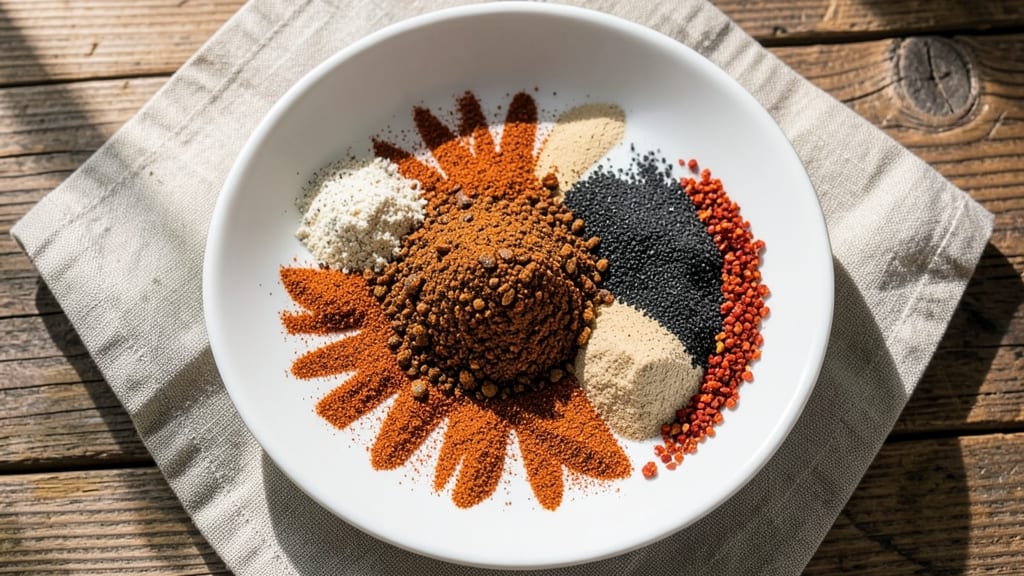
A beef jerky dry rub recipe transforms plain cuts of meat into smoky, chewy perfection with just a few simple spices. This blend of precise seasonings creates a flavorful crust that locks in moisture while delivering bold, restaurant-quality taste—no fancy equipment required.
I developed this mix after testing countless variations to find the perfect balance of heat, sweetness, and depth.
The foundation of this dry rub is a smoky-sweet base with just the right kick, using only 6 ingredients measured in tablespoons and teaspoons for foolproof results. Each component plays a critical role: paprika adds color and warmth, while garlic and onion powder build savory depth.
The blend stays potent for months, making it ideal for bulk prep or gifting to fellow jerky enthusiasts.
What makes this rub truly perfect is its versatility—use it on beef, venison, or even turkey for consistent results every time. The spices adhere beautifully to meat during the curing process, ensuring every bite delivers that satisfying crunch and rich flavor.
Whether you're a seasoned jerky maker or just starting, this blend simplifies the process without sacrificing quality.
Store the mix in an airtight container for up to 6 months, and adjust the heat level to suit your taste by tweaking the cayenne or smoked paprika. For extra depth, toast the spices lightly before mixing. Let’s get started on creating your signature jerky flavor profile!
Ingredients for beef jerky dry rub
Six spices. One perfect blend. The secret to restaurant-quality beef jerky in your kitchen.
| Ingredient | Amount | Notes |
|---|---|---|
| Smoked Paprika 🌶️ | 3 tbsp | High-quality smoked variety for depth |
| Sweet Paprika 🌶️ | 2 tbsp | For vibrant color and mild sweetness |
| Garlic Powder 🧄 | 1 ½ tbsp | Freshly ground preferred for intensity |
| Onion Powder 🧅 | 1 ½ tbsp | Enhances savory base without overpowering |
| Ground Black Pepper 🌶️ | 1 tbsp | Freshly cracked for maximum heat |
| Cayenne Pepper 🔥 | ½ tbsp | Adjust for desired heat level |
The smoked paprika is non-negotiable—it's what gives jerky that signature campfire aroma. Penzeys or McCormick Gourmet smoked paprika deliver the deepest flavor, but any high-quality brand works. For extra intensity, toast the spices in a dry skillet for 30 seconds before mixing. The cayenne is where you control the heat: reduce to 0.25 tbsp for mild, double it for serious kick. I always buy spices in bulk from Costco or Trader Joe's—cheaper per ounce and stays fresh longer.
No smoked paprika? Substitute with 1 tbsp sweet paprika plus 1 tsp liquid smoke—it won't be identical, but close. Running low on cayenne? Red pepper flakes at half the amount works in a pinch. The garlic and onion powders are the savory backbone—don't skimp here. For a sweeter profile, add 1 tsp brown sugar to the mix. Freshly ground spices make all the difference: if your powders smell stale, toast them briefly to revive the flavor. This blend works on beef, venison, or even turkey—just adjust curing times per meat type.
Store in an airtight container away from light for up to 6 months. I portion mine into small jars for gifting—one jar makes about 2 lbs of jerky. For extra potency, vacuum-seal the mix. If you're making a big batch, divide the spices into smaller containers to prevent clumping. The blend gets better with age, so make extra—you'll want to keep some on hand for your next jerky project.
Why You'll Love This Recipe
- Five-Minute Mix: I swear, this rub comes together faster than you can say "smoked paprika." Just toss those five ingredients in a bowl—no sifting, no measuring cups—just eyeball it. My kids even "help" stir it now (mostly they lick the spoon, but hey, progress).
- Smoky Depth Magic: That combo of smoked and sweet paprika? It’s like a flavor explosion in your mouth. The garlic and onion powders add warmth, but the black pepper gives it this little kick that makes it dangerously addictive. Honestly, I’ve caught myself eating it straight from the bag.
- Snack Attack Ready: This isn’t just for jerky—slap it on steak strips, chicken thighs, or even roasted potatoes. I keep a jar in my pantry for last-minute game-day wings or a quick weeknight charcuterie board. (Yes, even on a Tuesday night.)
- Budget-Friendly Crunch: A little goes a long way, and these spices don’t break the bank. I’ve made enough rub to last months, and it turns cheap cuts of beef into something that tastes like a fancy cut. Plus, it’s way cheaper than buying pre-packaged jerky seasoning. Win-win.
Step-by-step instructions for crafting the perfect beef jerky dry rub
Here's how to blend these spices into a flawless, smoky-sweet crust that transforms tough cuts into chewy perfection.
Measure All Ingredients Precisely
Gather all six ingredients on a clean surface or in a small bowl. I always use a digital scale for accuracy with spices, but measuring spoons work too. The smoked paprika should be a rich, deep red with visible flecks of wood smoke—this is your flavor foundation. The sweet paprika adds vibrant color and balances the smokiness.
For the garlic powder and onion powder, I prefer freshly ground varieties—they release more aroma during the curing process. The ground black pepper should be coarsely cracked for maximum heat impact, while the cayenne adds just enough fiery kick without overpowering. Measure out the 3 tablespoons smoked paprika first, followed by the 2 tablespoons sweet paprika, then the 1.5 tablespoons each of garlic powder and onion powder. Finally, add the 1 tablespoon ground black pepper and 0.5 tablespoon cayenne pepper.
This exact ratio creates a harmonious balance where the smoky depth carries through while the sweet and savory notes enhance the beef's natural flavor. If you're sensitive to heat, reduce the cayenne by half a teaspoon—this blend is flexible but precise.
Combine Spices Thoroughly
Transfer all measured spices to a medium mixing bowl. Here's where the magic happens: use a whisk to break up any clumps and distribute the spices evenly. I like to start by whisking in circular motions for about 30 seconds, then switch to back-and-forth strokes to ensure every particle of cayenne and black pepper is fully incorporated.
The goal is to create a uniform, fine powder with no visible streaks of individual spices. This ensures an even coating on your beef slices. If you're using a food processor or spice grinder, pulse briefly—just 3-4 seconds—to avoid creating a paste. The texture should resemble coarse sandpaper when rubbed between your fingers.
Real talk: Don't skip this step. Uneven distribution leads to patchy flavor—some slices will be bland, others scorching hot. Take your time here, and your jerky will reward you with consistent, restaurant-quality taste in every bite.
Test and Adjust the Blend
Before applying to your beef, taste a small pinch of the dry rub. You should detect a complex flavor profile: smoky warmth from the paprika, subtle sweetness, underlying garlic and onion depth, and a gentle heat from the black pepper and cayenne. This is your baseline for perfect balance.
If the blend tastes too mild, add a pinch more cayenne or black pepper. Need more depth? Increase the smoked paprika by a quarter teaspoon. The sweet paprika should enhance, not overpower—the blend should taste like a sophisticated spice crust, not a candy coating. Adjust in small increments, tasting after each addition.
This testing phase guarantees you'll achieve that signature smoky-sweet crust that makes homemade jerky stand out. Once satisfied, transfer the rub to an airtight container. Store in a cool, dark place for up to 3 months, though I find it's best used within 2 weeks for maximum flavor impact.
Pro Tips For Making Beef Jerky Dry Rub
- Mix the Rub Fine: Pulse your spices in a food processor for 10 seconds—just enough to break up any clumps in the smoked and sweet paprika. I learned this the hard way after finding gritty bits in my jerky, and it makes the rub cling better to the meat.
- Prep Meat at Room Temp: Let your beef slices sit uncovered on a plate for 20-30 minutes before applying the rub. Cold meat absorbs flavors unevenly, and you’ll end up with patchy seasoning—especially with the onion and garlic powders, which need time to work their magic.
- Avoid Overcrowding Trays: Leave at least 1 inch between slices when arranging on your dehydrator or oven rack. I used to stack them like lasagna, and the jerky would steam instead of dry, turning soggy. Airflow is non-negotiable here.
- Toast the Rub First: Heat a dry skillet over medium for 30 seconds, then add your dry rub mix and stir for 1 minute until fragrant. This deepens the paprika’s smokiness and mellows the garlic/onion powders’ sharpness—trust me, it’s worth the extra 60 seconds.
Troubleshooting perfect results
Uneven Seasoning
If your jerky tastes patchy with some slices bland and others too spicy, the issue is likely uneven spice distribution. I’ve found that most home cooks rush the mixing step—whisk for at least 1 minute to ensure every particle of cayenne and black pepper blends uniformly.
For extra insurance, sift the rub through a fine-mesh strainer before applying to beef slices. This breaks up any stubborn clumps that might form during storage. 🌶️
Rub Not Sticking
A dry rub that won’t adhere to meat is usually due to low humidity or excessive moisture on the beef. First, pat your beef slices bone-dry with paper towels—no wet spots. Then, lightly mist them with apple cider vinegar (just a spray bottle) before applying the rub.
The acid helps the spices cling better. For tough cuts like flank steak, let the slices sit in the fridge for 30 minutes uncovered to dry out further.
Too Much Heat
If your jerky is scorching hot but you didn’t add extra cayenne, check your spices first—old cayenne loses potency and can taste more intense. The fix? Reduce the cayenne by half a teaspoon in future batches.
For immediate relief, balance the heat by adding 1 teaspoon of brown sugar to the rub or serving with cooling sides like pickled jalapeños or cool ranch dressing. A splash of honey glaze during the dehydrating process also mellows the spice.
Bland Flavor Profile
Bland jerky often means the rub wasn’t toasted or the spices were stale. Toast your spices in a dry skillet over medium heat for 30 seconds before mixing—this awakens their flavors.
If your rub tastes flat, boost the smoked paprika by ½ teaspoon or add ¼ teaspoon of ground coriander for warmth. For extra depth, let the beef slices marinate in the rub for 12 hours before dehydrating. This gives the spices time to penetrate the meat.
Clumping in Storage
Spice clumps are usually caused by moisture exposure or improper storage. Always store your dry rub in an airtight container with a silica gel packet to absorb humidity. If clumps form, break them up with a fork or sift through a fine mesh strainer before use.
For long-term storage, divide the rub into smaller containers (like 1-ounce jars) to minimize air exposure. I keep mine in the freezer for up to 6 months—the cold preserves freshness.
Jerky Too Dry
If your jerky is brittle or crumbly, the issue is likely over-dehydrating or low humidity during the process. Aim for an internal temperature of 160°F—use a meat thermometer to check.
For chewier jerky, tent the slices with parchment paper during the last 30 minutes of dehydrating to trap moisture. Adding 1 teaspoon of Worcestershire sauce to the rub before applying also helps retain moisture during the process.
Nutrition facts
Frequently asked questions
Can I use this dry rub on meats other than beef?
This blend works beautifully on venison, turkey, or even chicken for jerky. For game meats like venison, reduce the cayenne slightly (0.25 tbsp) since they're naturally leaner. Always adjust curing times based on the meat type—venison typically needs 12-24 hours longer than beef.
How do I store the dry rub for long-term use?
Keep your rub in an airtight container away from light and moisture for up to 6 months. For extra protection, add a silica gel packet to absorb humidity. Divide into smaller portions (like 1-ounce jars) to prevent clumping. Freezing extends freshness to 12 months while preserving maximum flavor intensity.
What's the best way to adjust the heat level?
Start with the 0.5 tbsp cayenne as written, then adjust in ¼ teaspoon increments. For mild heat, reduce to 0.25 tbsp; for extra kick, increase to 1 tbsp. Pro tip: Replace cayenne with ½ tbsp red pepper flakes for a different heat profile. Always taste-test the rub before applying to meat.
Can I make this rub without smoked paprika?
Yes, but the flavor will differ. Substitute with 1 tbsp sweet paprika + 1 tsp liquid smoke for depth. For a smokier alternative, try ½ tsp chipotle powder (mild) instead of cayenne. The blend will lose some complexity, but it's still delicious—just less authentic to traditional jerky flavors.
How much rub should I use per pound of meat?
Use about 2 tablespoons of rub per pound of beef. For thicker cuts, apply generously to both sides and let sit for 10-15 minutes before dehydrating. This ensures maximum flavor penetration while preventing clumping during the drying process.