
Main Courses
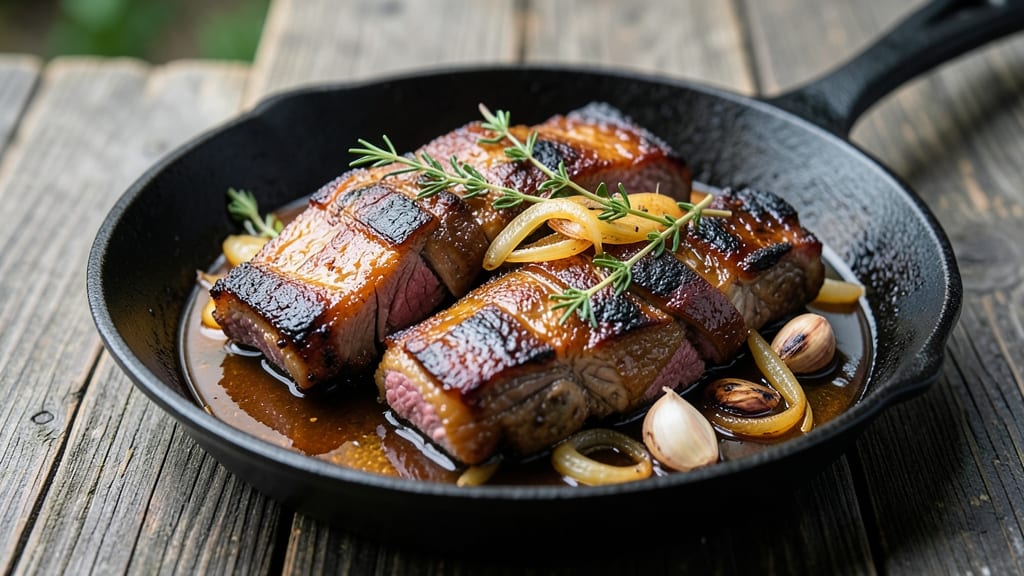
This beef short ribs Guinness recipe transforms tough cuts into melt-in-your-mouth perfection through slow braising and the rich, malty depth of stout. The key lies in the interplay of time and liquid—where Guinness doesn’t just flavor but tenderizes the meat, creating a sauce so velvety it clings to every bite.
After years of perfecting this technique, I’ve found the 3-hour braise at 300°F is non-negotiable for achieving that fall-apart texture while preserving the beef’s natural richness.
The process starts with a dry rub of salt, pepper, and garlic powder to build a flavorful crust before the ribs hit the pot. Then, the Guinness—along with beef broth, onions, and herbs—creates a symphony of flavors that deepens as it simmers.
The stout’s bitterness balances the beef’s richness, while its carbonation helps break down collagen for unmatched tenderness. This isn’t just a recipe; it’s a foolproof method for restaurant-quality results at home.
By the time you’re done, you’ll have ribs so tender they slide off the bone, bathed in a glossy, malty sauce that’s perfect for drizzling over creamy mashed potatoes or roasted root vegetables.
The aroma alone—smoky, savory, with hints of caramel—will have everyone at the table anticipating the first bite. This dish is worth the wait, and the leftovers? Even better the next day.
Pair with a fresh Guinness on the side and crusty bread to soak up every last drop of that luxurious sauce. Whether you’re feeding a crowd or treating yourself to a Sunday supper, this recipe delivers professional-level satisfaction with minimal fuss. Let’s get braising—your taste buds will thank you.
Ingredients for beef short ribs guinness
Four pounds of beef short ribs and a few simple pantry staples transform into restaurant-worthy richness.
| Ingredient | Amount | Notes |
|---|---|---|
| Beef Short Ribs 🥩 | 4 lb | Bone-in, 2-3 inches thick |
| Guinness Stout 🍺 | 2 cups | Freshly chilled, full-bodied |
| Beef Broth 💧 | 2 cups | Low-sodium, homemade preferred |
| Yellow Onions 🧅 | 2 whole | Chopped, medium dice |
| Garlic Cloves 🧄 | 6 cloves | Peeled, smashed |
| Fresh Thyme 🌿 | ¼ cup | Leaves only, stems removed |
| Fresh Rosemary 🌿 | ¼ cup | Needles only, chopped |
| Kosher Salt 🧂 | 1 ½ tbsp | Diamond Crystal preferred |
| Freshly Ground Black Pepper 🌶️ | 1 tsp | Coarse grind |
| Garlic Powder 🧄 | 1 tsp | Freshly ground preferred |
| Olive Oil 🫒 | 2 tbsp | Extra-virgin, for searing |
| Tomato Paste 🍅 | 2 tbsp | Squeeze tube preferred |
| All-Purpose Flour 🌾 | 1 tbsp | For thickening sauce |
The short ribs are non-negotiable—look for bone-in cuts with good marbling for that melt-in-your-mouth texture. I always grab mine from the butcher counter if possible, asking for 2-3 inch thick slices. The thicker the cut, the more collagen it releases during braising, which turns into that irresistible sauce. Costco or Whole Foods usually have pre-cut beef short ribs, but if you're buying a whole packer, ask for the bone-in, chuck roll section. The Guinness? Freshly chilled is key—it should have that rich, malty aroma. If you can't find it, Guinness Draught works too, but avoid the light versions.
No Guinness? Dry red wine plus a splash of soy sauce mimics the depth, though nothing beats the real thing. Fresh thyme and rosemary are ideal, but dried works at one-third the amount if you're in a pinch. The tomato paste can be skipped if you're sensitive to acidity, but it adds a subtle sweetness that rounds out the sauce. For the beef broth, homemade is best, but even the good-quality low-sodium store-bought stuff (like Pacific Foods) will work. The olive oil should be extra-virgin—you'll taste the difference when searing. And if you're short on time, pre-minced garlic from a jar is fine, though freshly smashed cloves have more punch.
This dish tastes even better the next day—3-4 days in the fridge, actually. The sauce thickens and deepens as it sits, so plan ahead. For leftovers, reheat gently on low with a splash of broth to loosen the sauce. Freezes beautifully for up to 3 months—just thaw overnight in the fridge before reheating. I like to portion the ribs and sauce separately so I can reheat just what I need. And trust me, the aroma alone will have your whole house anticipating dinner.
Why You'll Love This Recipe
- Slow Cooker Magic: I swear by this recipe when I don’t want to babysit the stove. Toss everything in—ribs, Guinness, onions—and let it braise while I handle the rest of dinner. The rich, caramelized sauce practically falls apart when you pull it out.
- Rich Without Effort: That deep, malty Guinness transforms tough ribs into melt-in-your-mouth perfection. The onions and garlic mellow into a sweet, savory base, while the broth keeps it luscious. It’s the kind of flavor that makes you pause mid-bite.
- Leftovers That Shine: This dish only gets better the next day. I freeze portions for lazy nights or serve them cold in sandwiches with crusty bread. My kids actually ask for it, which is saying something.
- Budget-Friendly Feast: Short ribs are cheaper than steak, and a bottle of Guinness stretches farther than you’d think. With just a few pantry staples, you’re feeding a crowd for less than takeout. Plus, the leftovers stretch across multiple meals.
Step-by-step instructions for slow-braised beef short ribs
Here's how to transform tough beef short ribs into melt-in-your-mouth perfection using Guinness stout.
Sear the Short Ribs for Maximum Flavor
Pat the 4 lb beef short ribs dry with paper towels—this ensures a proper sear. Heat a heavy Dutch oven over medium-high heat and add the 2 tbsp olive oil. Once shimmering, place the ribs bone-side down and sear for 4-5 minutes until deeply browned. Flip and sear the meaty side for another 3-4 minutes, pressing gently with a spatula to prevent curling. You're building that rich, caramelized crust that will dissolve into the sauce later.
Remove the ribs and set them aside. The goal is to develop maximum flavor in that browned fond—don't wipe out the pan yet. This initial searing step is non-negotiable for depth of flavor in your finished dish.
Build the Guinness-Braised Foundation
In the same Dutch oven, add the 2 whole yellow onions and cook for 5 minutes until softened. Add the 6 smashed garlic cloves, 0.25 cup chopped fresh rosemary, and 0.25 cup fresh thyme, stirring for 30 seconds until fragrant. Pour in the 2 cups Guinness stout, scraping up all those browned bits from the bottom—this is where all the flavor lives. Let it simmer for 5 minutes until reduced by half.
Stir in the 2 tbsp tomato paste and cook for 2 minutes until it darkens slightly. This creates a rich base that will carry the malty depth of the Guinness throughout the braising process. The tomato paste adds complexity that balances the beer's bitterness perfectly.
Create the Braising Liquid
Add the 2 cups beef broth, 1.5 tbsp kosher salt, 1 tsp freshly ground black pepper, and 1 tsp garlic powder to the pot. Stir well to combine all ingredients. Return the seared short ribs to the pot, bone-side up, and bring the liquid to a gentle simmer. The liquid should come about halfway up the ribs—if it's too shallow, add a splash of water.
Here's the thing—this is where patience pays off. Cover the pot and transfer to a preheated 300°F oven. Braise for 2 hours, then flip the ribs and continue cooking for another 1-2 hours until the meat is fork-tender and pulls away from the bone easily. The ribs are done when they reach 205°F internally and the sauce has thickened beautifully.
Thicken the Guinness Sauce
Once the ribs are perfectly tender, remove them from the pot and set aside. Place the Dutch oven back on the stovetop over medium heat. Sprinkle the 1 tbsp all-purpose flour over the sauce and whisk vigorously for 2-3 minutes until it thickens to a rich, velvety consistency. This step transforms your braising liquid into a luscious sauce that clings perfectly to each bite.
The sauce should coat the back of a spoon and have a glossy sheen. If it's too thick, whisk in 1-2 tablespoons of the braising liquid to reach your desired consistency. Taste and adjust seasoning with additional salt or pepper if needed—this is your chance to perfect the balance of flavors.
Rest and Serve the Short Ribs
Return the short ribs to the sauce and let them simmer uncovered for 10 minutes to absorb all those glorious flavors. Transfer the ribs to a serving platter and spoon the rich Guinness sauce over the top. Let the ribs rest for 5 minutes before serving—this allows the juices to redistribute throughout the meat, ensuring each bite is moist and flavorful.
Serve immediately with the sauce ladled generously over each portion. The result should be fall-off-the-bone tender beef short ribs with a deep, malty Guinness sauce that coats every bite. Pair with crusty bread or buttery mashed potatoes to soak up every last drop of that incredible sauce.
Pro Tips For Making Beef Short Ribs Guinness
- SEAR THE FAT FIRST: Don’t rush this—pat those ribs dry and let the fat render in a screaming-hot pan for 5-6 minutes per side. I used to skimp here, and the sauce always tasted flat. The Maillard reaction with that rendered fat is what makes the Guinness sing.
- BLOOM THE ONIONS LOW: After searing the ribs, drop in sliced onions and garlic at medium-low heat. Let them cook for 10 minutes until soft and golden—no need to rush. I learned this the hard way: burning them turns the sauce bitter, and you’ll regret it when you’re tasting the final dish.
- DEGLAZE WITH GUINNESS NOW: As soon as the onions are soft, pour in the full can of Guinness immediately while the pan is still hot. Let it bubble for 2 minutes before adding broth—this pulls all those caramelized bits off the bottom. Skipping this step means a thinner sauce, and nobody wants that.
- SIMMER COVERED, THEN UNCOVER: After adding broth, bring to a boil, then reduce to a gentle simmer, cover, and cook for 2 hours. The last 30 minutes? Uncover and let the liquid reduce by half. This isn’t just for flavor—it thickens the sauce naturally. Trust me, your ribs will thank you.
Health benefits of this dish
Protein Powerhouse
Beef short ribs deliver a substantial protein punch—about 40 grams per 4-ounce serving—packed with all nine essential amino acids. This slow-braised preparation preserves protein integrity while making tough cuts tender.
The Guinness stout adds depth without compromising nutritional value, unlike heavy cream-based sauces that can spike saturated fat. 💪
Iron-Rich Cut
Short ribs are an excellent source of heme iron (the most bioavailable form), with about 2.5mg per 3-ounce serving. This iron supports oxygen transport in your blood, helping prevent fatigue—especially valuable after intense workouts. The slow cooking process actually enhances iron absorption compared to quick grilling methods.
Collagen Benefits
The long braising time breaks down connective tissue into gelatin and collagen peptides, which support joint health and gut integrity. These compounds also contribute to the dish's signature velvety sauce. Studies show regular consumption of collagen-rich foods can improve skin elasticity and reduce joint inflammation over time.
Low-Carb Advantage
Compared to other beef cuts, short ribs are relatively low in carbohydrates—just 0 grams per serving—making them ideal for keto or low-carb diets. The Guinness adds minimal carbs (1 gram per cup), keeping this dish under 5g net carbs per serving when prepared properly.
Perfect for those tracking macros without sacrificing flavor.
Antioxidant Boost
Guinness contains flavonoids and polyphenols that act as antioxidants, helping combat oxidative stress. The slow cooking process preserves these beneficial compounds while developing the dish's rich flavors. This makes your beef short ribs not just delicious, but also packed with cellular-protective benefits.
Nutrition facts
Frequently asked questions
Can I substitute Guinness with another beer or wine?
While nothing replaces the authentic malty depth of Guinness, you can use 2 cups of dry red wine (like Cabernet Sauvignon) plus 1 tablespoon soy sauce for a similar umami profile. For beer alternatives, opt for a full-bodied stout or porter—just avoid light beers or lagers, which won't provide enough richness. The key is balancing the liquid's bitterness with the beef's natural sweetness.
Why do my short ribs turn out tough instead of tender?
Tough ribs usually result from insufficient cooking time or incorrect temperature. Braise at 300°F for a total of 3-4 hours (not rushing it), and ensure the internal temp reaches 205°F. Another common mistake is overcrowding the pot—leave space between ribs so heat circulates evenly. The Guinness must cover at least half the ribs to work its magic.
How far ahead can I prepare this dish?
This recipe actually tastes better the next day! Store ribs and sauce in an airtight container in the fridge for 3-4 days. The flavors meld further, and the sauce thickens beautifully. For freezing, portion sauce separately—it reheats best when thawed gradually. Reheat gently on low with a splash of broth to restore moisture.
What sides pair best with Guinness beef short ribs?
Classic pairings include creamy mashed potatoes (to soak up sauce) and roasted root vegetables (carrots, parsnips). For a lighter option, try a crisp green salad with a mustard vinaigrette. The bitterness of Guinness cuts through rich sides perfectly. Don't forget crusty bread—it's essential for sauce absorption!
Can I make this in an Instant Pot or slow cooker?
Yes! For an Instant Pot, sear ribs first, then cook on high pressure for 60 minutes with all braising ingredients. For slow cookers, use low heat for 6-8 hours. The key difference is monitoring liquid levels—add broth if needed to prevent drying. The sauce may need thickening with cornstarch slurry after cooking.