
Main Courses
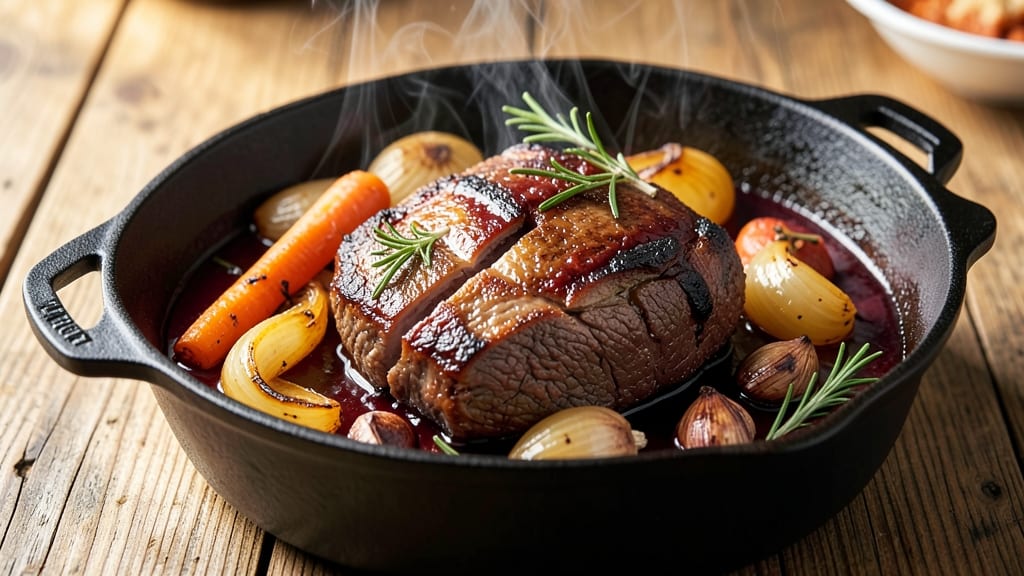
Transforming a tough cut like beef shoulder clod into shatterproof tenderness is where slow cooking truly shines, and this braised recipe delivers restaurant-quality results at home. The secret lies in low-and-slow moisture cooking that breaks down connective tissue while building deep, savory flavors—no fancy equipment required.
I've perfected this method after years of testing, and the difference between properly braised beef and dry, overcooked meat is dramatic.
What makes this recipe work is the combination of proper seasoning, controlled moisture, and patience—3 to 4 hours of gentle cooking transforms the clod into fork-tender slices that practically melt.
The key technique is maintaining a consistent temperature (275°F) while keeping the meat submerged in its own juices, which prevents drying while allowing collagen to render into flavorful gelatin. This isn't just about cooking meat; it's about creating a dish where every bite delivers both texture and depth.
By the time you're done, you'll have beef so tender it falls apart at the touch, with a surface that's richly browned from the braising liquid's reduction. The aroma alone will have everyone anticipating dinner, and the leftovers—if there are any—will be even better the next day.
This is the kind of meal that turns weeknight dinners into special occasions without requiring hours of active work. Let's get started with the precise method that ensures perfect results every time.
Serve this braised beef shoulder with classic sides like buttery mashed potatoes, caramelized onions, or a simple green salad to balance the richness. The braising liquid itself becomes a flavorful sauce that can be thickened and drizzled over the top for extra decadence.
This recipe proves that with the right technique, even the toughest cuts become your most impressive main course.
Ingredients for beef shoulder clod
Sixteen essential ingredients transform tough beef shoulder into melt-in-your-mouth perfection through slow braising.
| Ingredient | Amount | Notes |
|---|---|---|
| Beef Shoulder Clod 🥩 | 4 lb | Bone-in preferred for flavor |
| Yellow Onion 🧅 | 2 whole | Chopped into large chunks |
| Carrots 🥕 | 4 whole | Cut into 2-inch chunks |
| Garlic Cloves 🧄 | 8 cloves | Smashed with side of knife |
| Tomato Paste 🍅 | ½ cup | High-quality, no sugar added |
| Dry Red Wine 🍷 | 1 cup | Bold variety like Cabernet |
| Beef Broth 🥫 | 4 cups | Low-sodium, homemade preferred |
| Fresh Thyme 🌿 | 2 sprigs | Or 1 tbsp dried thyme |
| Fresh Rosemary 🌿 | 1 sprig | Woody stems removed |
| Bay Leaves 🍃 | 2 whole | Standard dried leaves |
| Kosher Salt 🧂 | 2 tbsp | Diamond Crystal preferred |
| Freshly Ground Black Pepper 🌶️ | 1 tbsp | Coarsely ground |
| Olive Oil 🫒 | 2 tbsp | Extra-virgin for searing |
| All-Purpose Flour 🌾 | 2 tbsp | For dusting meat |
The beef shoulder clod is the foundation—seek out bone-in cuts from your butcher for maximum flavor, as the marrow and connective tissue render into rich gelatin during braising. Local butcher shops often carry this cut at better prices than grocery stores, and they'll trim it to your preference. For a restaurant-quality result, aim for a 3-4 lb clod—this ensures enough meat for six servings with generous leftovers. The olive oil you use here should be extra-virgin with a peppery finish, as it sets the stage for the sear that develops deep caramelization. Trader Joe's or Whole Foods carry excellent options for this purpose. Never skip the flour dusting—it creates a light crust that prevents the meat from sticking during the initial sear.
Substitutions should preserve the dish's integrity. Red wine can be replaced with additional beef broth plus 1 tbsp balsamic vinegar for acidity, though the depth of flavor will differ. Fresh herbs can be swapped for dried at a one-third ratio—so 2 sprigs of thyme equals 2 teaspoons of dried. Tomato paste is non-negotiable for umami, but if unavailable, 1 cup crushed San Marzano tomatoes works in a pinch. For vegetable variety, swap carrots for celery or fennel—both add sweetness and texture. The beef broth must be low-sodium; homemade or high-quality store-bought options like Kirkland Signature ensure proper seasoning without over-salting. Diamond Crystal kosher salt is preferred for its coarse texture, which dissolves cleanly into the braising liquid.
Proper storage extends this dish's magic. Braised beef shoulder reheats beautifully—simmer gently in its juices for 5-7 minutes before serving to restore tenderness. It keeps for 4-5 days in the refrigerator, though flavor peaks after 24-48 hours as the collagen fully converts to gelatin. For longer storage, freeze portions in airtight containers for up to 3 months; thaw overnight in the refrigerator before reheating. The braising liquid can be reduced into a glaze by simmering uncovered for 15-20 minutes, then drizzled over slices for extra decadence. Portion leftovers into meal-sized containers for easy lunches—each bite will be as impressive as the first.
Why You'll Love This Recipe
- One-Pot Magic: I swear by this recipe when I’m too tired to wash a million dishes. The beef shoulder clod softens right alongside the onions and carrots—no extra pans, no fuss. Just dump, simmer, and let the slow cooker (or your oven) do the work while you sip wine and pretend you’re a chef.
- Deep, Caramelized Love: That tomato paste? It’s the secret weapon—it thickens the sauce into something rich and sticky, while the garlic and onions develop a sweet, almost jammy depth. The beef shoulder clod turns tender but stays juicy, with just enough bite to keep things interesting. (Yes, even my picky husband asks for seconds.)
- Leftovers That Don’t Suck: Between us, most beef stews turn into sad, watery meals by day three. Not this one. The flavors actually improve as it sits—better the next day, even better reheated for sandwiches or tacos. I make a double batch on Sundays just to have it on hand for lazy nights.
- Budget Meal, Big Impact: A beef shoulder clod is cheap, but it feels like a splurge. The onions and carrots stretch the dish further, and the tomato paste adds depth without breaking the bank. Honestly, it’s the kind of recipe that makes me feel like I’m feeding a crowd without actually stressing over the grocery bill.
Step-by-step instructions for slow-braised beef shoulder clod
This method delivers melt-in-your-mouth tenderness through precise timing and technique.
Sear the Beef Shoulder Clod for Deep Flavor
Pat the 4 lb beef shoulder clod completely dry with paper towels—this ensures maximum browning. Heat a heavy Dutch oven over medium-high heat and add the 2 tbsp olive oil. Once shimmering hot, place the beef shoulder in the pot, fat-side down. Press down gently with a meat mallet for even contact.
Sear for 8-10 minutes until a deep golden-brown crust forms. Flip the beef and sear the other side for another 8-10 minutes. The crust should be dark and caramelized, releasing rich aromas. Remove the beef and set it aside on a plate—this initial sear locks in juices and builds foundational flavor.
Build the Braising Base with Aromatics
In the same Dutch oven, add the 2 whole yellow onions (chopped) and 4 whole carrots (cut into 2-inch chunks). Cook for 5 minutes until softened and slightly caramelized. Add the 8 smashed garlic cloves and cook for 30 seconds until fragrant—don't let them burn. Stir in the 0.5 cup tomato paste and cook for 2 minutes, allowing it to darken slightly.
Deglaze the pot with the 1 cup dry red wine, scraping up all the browned bits from the bottom. This step captures all the flavor molecules released during searing. Let the wine reduce by half before adding the 4 cups beef broth, 2 sprigs fresh thyme, 1 sprig fresh rosemary (woody stems removed), 2 whole bay leaves, 2 tbsp kosher salt, and 1 tbsp freshly ground black pepper.
Braise Until Fork-Tender
Return the beef shoulder to the Dutch oven, fat-side up. Bring the liquid to a gentle simmer, then reduce heat to low. Cover tightly with a lid and braise for 3-3.5 hours, maintaining a temperature between 300°F-325°F. The beef is ready when it easily pulls apart with two forks or when the internal temperature reaches 205°F.
Check the liquid level occasionally—if it reduces too much, add 1 cup of hot water or beef broth to maintain moisture. The beef should be submerged in its flavorful juices throughout the braising process. The result will be shatterproof meat that falls apart with minimal effort.
Finish with Flour for Richness (Optional)
Once the beef is tender, remove it from the pot and strain the braising liquid through a fine-mesh sieve into a clean saucepan. Return the liquid to medium heat and whisk in the 2 tbsp all-purpose flour to thicken the sauce. Simmer for 5-7 minutes until the sauce coats the back of a spoon.
Return the beef to the pot and coat it thoroughly with the thickened sauce. Let it rest for 10 minutes before serving. The flour creates a velvety finish that elevates the dish from simple braised beef to a restaurant-quality centerpiece.
Pro Tips For Making Beef Shoulder Clod
- SEAR THE CLOD FIRST: Get that Dutch oven screaming hot—cast iron or stainless steel—before adding the beef shoulder clod. I used to skip this, and the meat just steamed instead of developing that deep, caramelized crust that holds flavor. Two minutes per side, undisturbed, until it’s golden-brown and smells like a butcher shop.
- CUT ONIONS IN EVEN STRIPS: Slice those yellow onions into ¼-inch-thick strips, not random chunks. Even cooking means no soggy bits in your stew—just tender, flavorful pieces that break down alongside the meat. (Yes, it takes 30 seconds extra, but you’ll notice the difference.)
- DON’T SKIP THE GARLIC MASH: Smash those garlic cloves with the flat side of your knife before adding them to the pot. It releases more flavor and prevents them from floating untouched in the sauce. (I learned this after pulling out whole cloves from a batch—annoying, but easy to fix.)
- LOW AND SLOW AFTER SEARING: Once the meat and veggies are in, drop the heat to a bare simmer—180°F (82°C) if your thermometer lets you. Too much bubbling cooks off the liquid, and you end up with dry, tough beef. Cover it and let it work for 2.5–3 hours. Patience here makes all the difference.
Serving suggestions for leftovers
Classic Comfort Sides
For a hearty meal, serve your braised beef shoulder with creamy mashed potatoes—I use Yukon Gold potatoes boiled until tender, then mashed with ½ cup butter and ½ cup whole milk until silky.
The richness balances the deep flavors of the beef. Caramelized onions add sweetness; I cook 3 large onions in 2 tbsp butter over low heat for 45 minutes until golden and jammy. 🥔
Fresh Contrasts
A simple arugula salad with lemon vinaigrette cuts through the richness beautifully. Toss 4 cups baby arugula with 2 tbsp olive oil, 1 tbsp lemon juice, ½ tsp Dijon mustard, and a pinch of salt.
Add ¼ cup shaved Parmesan for a salty crunch. Alternatively, roasted Brussels sprouts with balsamic glaze add texture and acidity.
Sauce Elevations
Use the reduced braising liquid as a sauce by simmering it uncovered for 15-20 minutes until thickened. Strain and drizzle over sliced beef. For extra decadence, whisk in 1 tbsp crème fraîche or 1 tsp honey to mellow the acidity. A sprinkle of fresh parsley adds brightness and color. 🍴
Bread Pairings
Serve with crusty sourdough bread or garlic bread to soak up the sauce. For a rustic touch, toast a baguette and rub with garlic butter (mix ½ cup softened butter with 3 minced garlic cloves and 1 tsp dried thyme).
Warm the bread in the oven for 5 minutes before serving.
Wine & Beer Pairings
A bold Cabernet Sauvignon or Syrah complements the beef’s richness, while a Malbec adds fruitiness. For beer lovers, a dark lager like Guinness or an amber ale balances the dish’s depth. Avoid light beers—they’ll overpower the meal. 🍷
Presentation Tips
Slice the beef against the grain for tender bites and arrange on a platter. Drizzle with the reduced sauce and garnish with fresh rosemary sprigs. Serve family-style with sides in separate bowls for a communal feel.
For a restaurant touch, use a wooden board or cast-iron skillet as the serving dish. ✨
Nutrition facts
Frequently asked questions
What makes beef shoulder clod different from regular beef shoulder?
The "clod" refers to a specific cut from the beef shoulder's upper portion, typically including more connective tissue and fat. This makes it ideal for slow braising as the collagen breaks down into rich gelatin, creating shatterproof tenderness. Unlike leaner cuts, it stays moist during long cooking and develops deeper flavor.
Can I use bone-in beef shoulder instead of boneless?
Bone-in cuts actually work better for this recipe as the marrow adds incredible flavor to the braising liquid. The bone will also help retain moisture during cooking. If using bone-in, increase cooking time by about 30 minutes to ensure complete tenderness.
How do I know when the beef is perfectly tender?
Use the fork test: When the beef easily pulls apart with two forks or reaches an internal temperature of 205°F, it's ready. The meat should feel like butter and fall apart with minimal pressure. If it's not tender after 4 hours, check your oven temperature—it needs to stay consistently between 300°F-325°F.
What if my braising liquid reduces too quickly?
This is normal with bone-in cuts or smaller pieces. Simply add 1 cup of hot beef broth or water during cooking to maintain liquid levels. The beef should always be partially submerged to prevent drying. For extra insurance, place the Dutch oven on a baking sheet to catch any overflow.
Can I make this recipe in a slow cooker?
Yes! Brown the beef first in a skillet, then transfer everything to a slow cooker. Use the low setting for 8-10 hours (or high for 5-6 hours), adding liquid as needed. The slow cooker's gentle heat works perfectly for achieving tender results with minimal attention. Just remember to thicken the sauce separately if desired.