
Soups & Stews
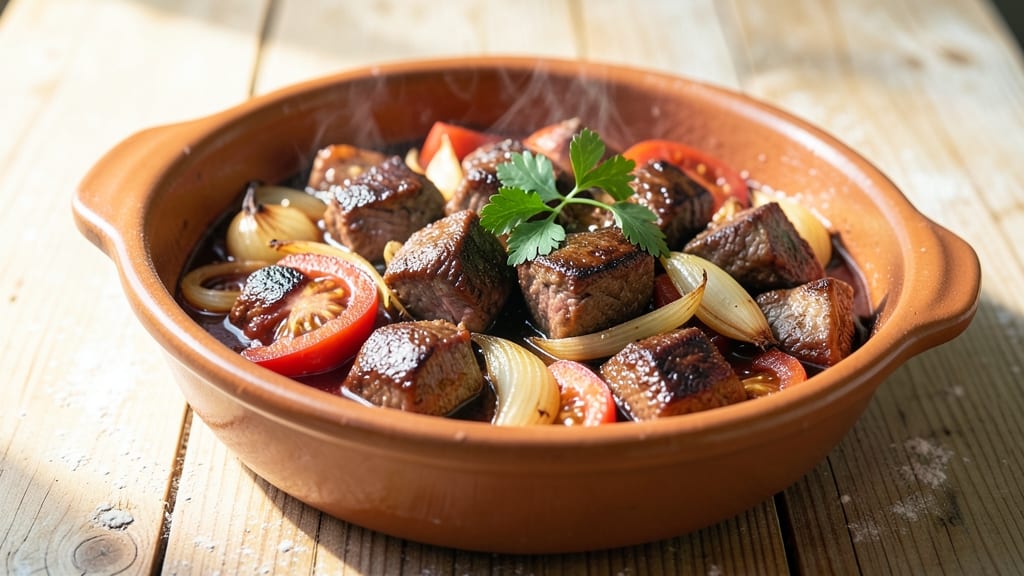
This beef stifado recipe delivers the rich, slow-braised comfort of traditional Greek cuisine right to your kitchen. The deep flavors come from red wine, tomatoes, and aromatic spices that meld together over hours of gentle simmering.
I've perfected this version to balance authenticity with modern convenience—no fancy techniques required, just patience and a few simple ingredients.
The secret lies in the slow braising process, where tough beef becomes fork-tender while absorbing the complex flavors of the sauce. We start with properly browned meat for depth, then build layers of sweetness from tomatoes and acidity from wine.
The result is a deeply satisfying stew that's perfect for chilly evenings or family gatherings.
By the time you're done, you'll have a pot of hearty beef stifado with tender meat, thickened sauce, and all the comforting flavors of home cooking.
The aroma alone will have everyone anticipating dinner. Serve it with crusty bread, orzo, or potatoes to soak up every last drop of that flavorful sauce.
This recipe maintains the traditional essence while offering flexibility for modern kitchens. The slow cooking method makes it ideal for meal prep, and the rich flavors develop even more overnight. Let's create this classic dish that brings warmth and tradition to your table.
Ingredients for beef stifado
The heart of this beef stifado lies in these simple yet powerful ingredients.
| Ingredient | Amount | Notes |
|---|---|---|
| Beef Chuck Roast 🥩 | 2 lb | Cut into 1.5-inch cubes |
| Red Wine 🍷 | 1 cup | Dry, bold variety like Cabernet |
| Canned Crushed Tomatoes 🍅 | 28 oz | High-quality, no salt added |
| Yellow Onion 🧅 | 1 whole | Diced, medium size |
| Garlic Cloves 🧄 | 4 cloves | Minced, fresh preferred |
| Olive Oil 🫒 | ¼ cup | Extra-virgin for richness |
| Tomato Paste 🍅 | 2 tbsp | Smooth, no sugar added |
| Dried Oregano 🌿 | 1 tbsp | Crumbled, not ground |
| Ground Cinnamon 🌶️ | ½ tsp | Freshly ground preferred |
| Allspice Berries 🌿 | 4 whole | Crushed lightly, not powdered |
| Bay Leaves 🍃 | 2 whole | Fresh if possible |
| Beef Broth 💧 | 2 cups | Low-sodium preferred |
| Salt 🧂 | 1 ½ tsp | Kosher or sea salt |
| Black Pepper 🌶️ | ½ tsp | Freshly cracked |
The beef is non-negotiable—chuck roast gives you that melt-in-your-mouth texture after hours of braising. Costco or Whole Foods usually carry it pre-cut, but if you're buying a whole roast, ask your butcher to cube it for you. The red wine should be something you'd drink—Cabernet Sauvignon or Merlot work perfectly. For the tomatoes, Muir Glen or Rao's are my go-tos, but any high-quality no-salt-added brand will do. The allspice berries? Penzeys or bulk spice markets have them whole, which is key—they release flavor differently than powdered allspice.
No red wine? Beef broth with a splash of balsamic vinegar works in a pinch. Fresh oregano is ideal, but dried at half the amount gets you close. Short on tomato paste? Extra crushed tomatoes will do, though it won't thicken the sauce as much. The cinnamon and allspice are what give this dish its signature warmth—don't skip them. If you can't find whole allspice berries, crush your own from ground allspice (just pulse it in a spice grinder for 10 seconds). The bay leaves? Fresh ones add a subtle floral note, but dried work fine too.
This stew tastes even better the next day—plan ahead. The sauce thickens as it cools, so you might need to add a splash of water or broth when reheating. Keeps in the fridge for 5 days and freezes beautifully for 3 months. I always make double batches and freeze half—nothing beats coming home to a ready-made meal. Just thaw overnight in the fridge before reheating.
Why You'll Love This Recipe
- One-Pot Magic: I swear by this recipe when I don’t want to deal with multiple dishes. The beef chuck roast practically cooks itself in the same pot as the onions and tomatoes—just brown it, add the wine and garlic, and let it simmer. Honestly, the cleanup is almost as good as the meal.
- Wine-Infused Richness: That red wine doesn’t just add color—it deepens the flavor into something dangerously addictive. The slow simmer lets the garlic and onions caramelize, while the tomatoes keep it from drying out. Between us, this is the kind of dish that makes you pour another glass.
- Weeknight to Dinner Party: I make this when I’m feeding my family on a Tuesday, but it’s also the star of my holiday table. The same simple method works whether you’re serving four or twelve—just scale the wine and tomatoes. My in-laws think it’s fancy; my kids think it’s their favorite. Win-win.
- Budget-Friendly Leftovers: A chuck roast stretches for days, and the flavors only get better after the first night. I freeze portions for lazy nights, and the wine reduces into a glossy sauce that reheats like a dream. Not the prettiest, but the taste makes up for it—every time.
Step-by-step instructions for beef stifado
Here's how to create a rich, slow-braised beef stew with deep wine and tomato flavors.
Sear the Beef Chuck Roast
Heat the 0.25 cup olive oil in a large Dutch oven over medium-high heat until shimmering. Add the 2 lb beef chuck roast cut into 1.5-inch cubes and sear for 4-5 minutes per side until deeply browned. This step develops the deep, caramelized flavors that form the base of your stifado.
Work in batches if needed to avoid overcrowding the pan. The beef should be golden brown with some crisp edges—this ensures maximum flavor extraction. Once seared, transfer the beef to a plate and set aside temporarily.
Build the Flavor Base
In the same Dutch oven, add the 1 whole yellow onion that's been diced and cook for 5-6 minutes until softened and lightly caramelized. Stir in the 4 cloves minced garlic cloves and cook for 30 seconds until fragrant—this prevents the garlic from burning.
Add the 2 tbsp tomato paste and stir for 1 minute to cook it down slightly. This thickens the base and adds depth. Then pour in the 1 cup red wine, scraping up any browned bits from the bottom of the pan. Let it simmer for 3-4 minutes until reduced by about half.
Combine and Simmer the Stew
Return the seared beef to the Dutch oven. Stir in the 28 oz canned crushed tomatoes, 2 cups beef broth, 1.5 tsp salt, and 0.5 tsp black pepper. Add the 1 tbsp dried oregano, 0.5 tsp ground cinnamon, 4 lightly crushed allspice berries, and 2 whole bay leaves. Bring to a gentle boil, then reduce heat to low and cover partially.
Simmer for 2.5-3 hours until the beef is fork-tender and easily pulls apart. The sauce should thicken naturally as it cooks. Here's the thing—don't skip the partial covering. It allows steam to escape while keeping the liquid level steady, preventing a watery stew.
Finish and Adjust Seasoning
Once the beef is tender, uncover the pot and increase heat to medium to reduce the sauce slightly for 10-15 minutes. Taste and adjust seasoning with additional salt or pepper if needed. The sauce should coat the back of a spoon but remain rich and velvety.
Remove the bay leaves and allspice berries before serving. This stew tastes even better the next day as flavors meld further. Serve hot with crusty bread or over buttered egg noodles to soak up every last bit of that luxurious sauce.
Pro Tips For Making Beef Stifado
- Brown the Chuck Twice: I learned this the hard way—skimp on browning, and your stifado tastes like stewed beef, not rich, caramelized perfection. First sear the roast in a cold pan until deeply browned, then remove it, crank the heat to high, and toss in the onions and garlic. Let them blacken slightly before deglazing. That second burst of heat pulls all the flavor out of the pan.
- Deglaze with Wine First: Pour the red wine in before adding the crushed tomatoes—this stops the alcohol from cooking off too fast. Let it simmer for 3-4 minutes until it reduces by half. Then add the tomatoes, and you’ll get a deeper, more integrated flavor instead of a sharp wine taste lingering. (Yes, even if you’re impatient like me.)
- Crush Garlic, Don’t Mince: Whole garlic cloves burn and turn bitter; crushed garlic blends smoothly into the sauce. Use the flat side of a knife or your palm to smash 6-8 cloves into a paste before cooking. This isn’t the prettiest method, but it’s the tastiest—no bitter aftertaste, just mellow garlic flavor throughout.
- Simmer Low and Long: Stifado needs time—at least 2.5 hours on low heat, covered, to tenderize the chuck. After the first hour, check the sauce; if it’s too thin, uncover and reduce it by 10-15 minutes. The meat should pull apart easily, and the sauce should coat the back of a spoon. Skipping this step leaves you with tough beef and watery sauce. (Your future self will thank you.)
Flavor customization for this dish
Spice Level Boost
For a bolder kick, add 1 tsp smoked paprika with the other spices and ½ tsp cayenne pepper when combining ingredients. I also like adding 2-3 slices of fresh ginger (removed before serving) for a warm, spicy depth that pairs beautifully with the wine.
This version works especially well if you enjoy the heat from Greek dishes like moussaka. 🌶️
Sweet-Tangy Twist
Balance the richness with 1 tbsp honey or maple syrup when adding the tomatoes and broth. The sweetness enhances the wine's acidity while complementing the allspice and cinnamon.
For extra tang, stir in 1 tbsp balsamic vinegar at the end of cooking. This variation feels especially appropriate for holiday gatherings where crowd-pleasing flavors matter. 🍯
Herb Variations
Swap the oregano for 1 tbsp fresh thyme leaves or 1 sprig rosemary (remove before serving) for a more complex herbal profile. I've also experimented with ½ tsp ground cloves alongside the cinnamon for a spiced wine cabinet vibe.
These variations work particularly well if you're serving the stifado with game meats like venison or lamb. 🌿
Umami Depth
For an extra layer of savory richness, add 2 tbsp soy sauce or 1 tbsp Worcestershire sauce when combining all ingredients. The umami boost complements the wine beautifully and adds complexity that pairs well with the tomatoes.
I recommend this version if you're serving the dish with mushrooms or tofu for a vegetarian adaptation. 🍄
Citrus Brightness
Finish with the zest and juice of 1 lemon or 1 orange during the final 10 minutes of cooking. The citrus cuts through the richness while adding a refreshing contrast. This variation works especially well with seafood or when serving the stifado over orzo or couscous. 🍊
Smoky Char
For a smoky twist, add 1 tbsp smoked sea salt when seasoning and finish with ½ tsp liquid smoke (just before serving). This variation mimics the flavors of a wood-fired cookout and pairs beautifully with grilled vegetables or cornbread. The smoky notes complement the wine and allspice beautifully. 🔥
Nutrition facts
Frequently asked questions
Can I use a slow cooker for beef stifado?
Brown the beef first in a skillet, then transfer everything to your slow cooker. Cook on low for 7-8 hours or high for 4-5 hours until tender. The slow cooker method actually enhances the flavors since it simmers gently for hours. Just add ½ cup water if the sauce gets too thick during cooking.
What's the best way to store and reheat leftover stifado?
Store in an airtight container in the fridge for up to 5 days or freeze for 3 months. To reheat, transfer to a pot with 2-3 tablespoons of broth or water and simmer on low heat for 10-15 minutes until heated through. The sauce will thicken as it reheats, so you may need to add more liquid if it becomes too stiff.
Why does my stifado sauce turn out too thin?
This usually happens when the beef releases too much liquid during cooking. To fix it, simmer uncovered for 10-15 extra minutes to reduce the sauce. For future batches, try using 1 tablespoon cornstarch mixed with 2 tablespoons water and stir it in during the last 5 minutes of cooking. Also ensure you're using the right cut of beef—chuck roast is ideal as it stays tender while releasing flavor.
Can I make stifado with chicken or pork instead of beef?
Yes, but the cooking time and cut of meat will differ. For chicken thighs, use 2 pounds bone-in, skin-on and cook for 1.5-2 hours until tender. For pork shoulder, use 2 pounds and cook for 2.5-3 hours. The wine and tomato base will still shine, but the meat's fat content will affect the sauce's richness. Adjust salt accordingly—pork often needs less.
What sides pair best with beef stifado?
Classic pairings include crusty bread or fresh orzo to soak up the sauce. For a heartier meal, serve with roasted potatoes or steamed green beans. Traditional Greek sides like gemista (stuffed tomatoes) or spanakopita also complement beautifully. The wine-rich sauce works especially well with polenta or buttered egg noodles for a comforting texture contrast.