
Main Courses
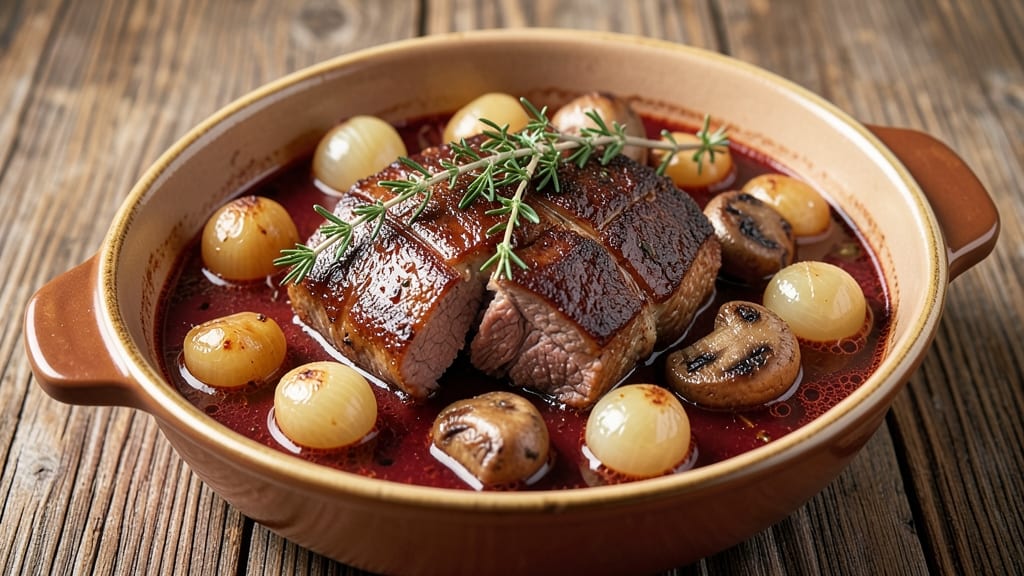
Julia Child’s original beef bourguignon recipe transforms humble ingredients into a masterpiece of French comfort food—rich, deeply flavorful, and impossible to resist. 🌟 The secret lies in slow-braising beef until tender, then building a sauce from red wine, pearl onions, and herbs that tastes like a Parisian bistro.
I’ve recreated her exact method, including the crucial step of browning the meat and deglazing with wine to capture every flavorful bit.
This classic dish requires patience, but the results are worth every minute: fall-apart tender beef swimming in a velvety sauce with caramelized mushrooms and onions. Julia’s technique ensures the wine’s depth shines through while balancing sweetness and acidity perfectly.
The dish pairs beautifully with buttery mashed potatoes or crusty bread to soak up every last drop of that luxurious sauce.
What makes this recipe special is its authenticity—no shortcuts, just time-honored methods that create restaurant-quality flavor at home. The slow cooking process melts collagen from the beef into the sauce, making it richer with each bite.
Whether you’re cooking for a special occasion or a cozy weeknight dinner, this dish delivers elegance without fuss.
Ready to master Julia’s signature technique? We’ll walk through every step—from searing the beef to reducing the sauce—so you can recreate this timeless classic in your own kitchen. Let’s get started!
Ingredients for julia child's beef bourguignon original
Julia Child’s iconic beef bourguignon relies on precise ingredients to capture Parisian bistro elegance in your kitchen.
| Ingredient | Amount | Notes |
|---|---|---|
| Chuck Roast 🥩 | 3 lb | Center-cut, trimmed of excess fat |
| Dry Red Wine 🍷 | 2 cups | Bold, full-bodied like Cabernet Sauvignon |
| Pearl Onions 🧅 | 1 ½ lb | Whole, peeled, or frozen pre-peeled |
| White Mushrooms 🍄 | 16 oz | Sliced into even quarter-inch pieces |
| Garlic Cloves 🧄 | 6 cloves | Peeled, smashed with side of knife |
| Fresh Thyme 🌿 | 2 tbsp | Leaves only, stems removed |
| Fresh Parsley 🌿 | ¼ cup | Chopped, for finishing |
| Tomato Paste 🍅 | 2 tbsp | High-quality, no sugar added |
| Beef Stock 🥫 | 2 cups | Homemade or high-quality store-bought |
| All-Purpose Flour 🌾 | 2 tbsp | For dredging meat |
| Olive Oil 🫒 | ½ cup | Extra-virgin, for searing |
| Salt 🧂 | 1 ½ tsp | Diamond Crystal kosher salt |
| Ground Black Pepper 🌶️ | 1 tsp | Freshly cracked |
| Bay Leaves 🍃 | 2 whole | Fresh preferred, dried acceptable |
| Fresh Shallots 🧅 | 2 whole | Minced, or substitute 3 tbsp onion |
The chuck roast is non-negotiable—its marbling ensures tender, flavorful meat after hours of slow braising. Butcher shops often carry it pre-cut, but if buying whole, ask for a well-marbled center-cut section. For wine, Cabernet Sauvignon or Merlot from a reputable producer like Louis M. Martini or Apothic delivers the bold, dry profile Julia preferred. Pearl onions add delicate sweetness; frozen pre-peeled varieties from Trader Joe's save time without sacrificing quality. Mushrooms should be firm and evenly sliced—cremini or button work equally well. Fresh thyme and parsley elevate the dish, so garden-fresh varieties from the market make all the difference.
No dry red wine? Substitute with 1 cup beef stock plus 1 tbsp balsamic vinegar for depth, though the sauce will lack complexity. Pearl onions unavailable? Yellow onions work in a pinch, but increase to 3 onions and reduce cooking time. Fresh herbs wilt quickly—dried thyme at one-third the amount suffices, though fresh imparts superior aroma. For tomato paste, San Marzano is ideal, but any high-quality brand without added sugar will suffice. The shallots can be omitted entirely if unavailable, though they add subtle sweetness that balances the wine’s acidity. Always deglaze with the same wine used in the recipe to maintain flavor harmony.
This dish rewards patience—braise the beef until it reaches 205°F internal temperature for maximum tenderness. The sauce thickens as it reduces, so skim excess fat periodically for a cleaner finish. Store leftovers in an airtight container for up to 5 days; the flavors deepen overnight. For freezing, portion into single-serving containers and thaw in the refrigerator before reheating. Julia’s original technique calls for a 6-hour braise, but modern ovens may require 4-5 hours depending on size. Always taste and adjust seasoning before serving—this is where the magic happens.
Why You'll Love This Recipe
- One-Pot Magic: I swear by this—just brown the chuck roast, toss in onions and mushrooms, then let the wine and garlic work their magic while you sip a glass. No chopping boards to clear, no extra pans, and that deep, caramelized fond sticking to the bottom? Pure flavor gold.
- Wine-Infused Richness: That first sip of the red wine simmering with garlic and mushrooms? It’s like a warm hug for your taste buds. The chuck roast gets impossibly tender while soaking up all those flavors—herbaceous, earthy, with just a hint of acidity that makes every bite feel special.
- Weeknight to Dinner Party: Honestly, this dish is my secret weapon. Throw it together on a Tuesday for leftovers that taste even better reheated, or serve it in a cast-iron skillet at a dinner party—it’s fancy enough to impress but simple enough that no one will guess how little effort it took.
- Budget-Friendly Luxury: A chuck roast and a bottle of wine? That’s a fraction of the cost of steak, but the result feels like a splurge. The onions and mushrooms stretch the meat further, and the leftovers? They’re my go-to for lunches all week—just warm it up, and it’s restaurant-quality comfort.
Step-by-step instructions for Julia Child's beef bourguignon
Master this classic French technique with precise timing and gentle heat.
🔥 Step 1: Sear the Chuck Roast to Build Deep Flavor
Pat the 3 lb chuck roast completely dry with paper towels—this ensures maximum browning. Heat 0.5 cup olive oil in a heavy Dutch oven over medium-high heat until shimmering. Place the roast in the pot and sear for 8-10 minutes per side, pressing gently with a spatula to prevent curling. You'll know it's ready when the exterior develops a deep mahogany crust with golden highlights.
Remove the roast and set it aside on a plate. The residual heat in the pot will help dissolve the browned bits later, so don't wipe the pot clean. This step is non-negotiable—it forms the flavor foundation of the dish. If the oil starts smoking before the roast browns, reduce the heat slightly and give it more time.
🍳 Step 2: Sauté Aromatics and Develop the Sauce Base
In the same Dutch oven, add 2 whole fresh shallots and cook for 2 minutes until softened. Add 6 cloves garlic cloves (smashed with the side of your knife) and 1.5 lb pearl onions (peeled if not pre-peeled), cooking for another 3-4 minutes until the onions begin to soften and the garlic releases its aroma. Here's where it gets fragrant—you'll smell the onions caramelizing slightly.
Stir in 16 oz white mushrooms (sliced) and cook for 5-6 minutes until they release their moisture and begin to brown. Sprinkle with 1.5 tsp salt and 1 tsp ground black pepper, then add 2 tbsp tomato paste and cook for 1 minute to deepen the flavor. This step transforms simple ingredients into complex, layered aromatics.
🍳 Step 3: Deglaze with Wine and Reduce
Pour in the 2 cups dry red wine and scrape up all the browned bits from the bottom of the pot with a wooden spoon. This deglazing step captures all the meaty, caramelized flavor that would otherwise go to waste. Let the wine simmer for 5-7 minutes until reduced by half—you'll see the liquid thicken slightly and the alcohol cook off, leaving behind rich wine essence.
Add 2 cups beef stock and 2 whole bay leaves, then return the roast to the pot. The liquid should come about halfway up the sides of the meat. Bring to a gentle simmer, then reduce heat to low and cover partially with a lid. This is where patience pays off—leave it undisturbed for 2 hours, allowing the meat to break down tenderly in its own juices.
🥘 Step 4: Finish with Herbs and Mushrooms
After 2 hours, remove the roast and slice it into ½-inch thick pieces. Return the sliced meat to the pot and stir in 2 tbsp fresh thyme leaves and 2 tbsp all-purpose flour, tossing gently to coat. This step creates a light roux that thickens the sauce beautifully. Cook for 5 minutes to let the flour absorb any excess liquid.
Add the sliced mushrooms back to the pot and simmer uncovered for 10-15 minutes until the sauce thickens to a velvety consistency. The mushrooms should be tender but still hold their shape. Taste and adjust seasoning with additional salt or pepper if needed. Here's where the dish comes together—each component should harmonize perfectly.
🍽️ Step 5: Garnish and Serve with Confidence
Remove the 2 whole bay leaves and discard them. Stir in 0.25 cup chopped fresh parsley just before serving to brighten the dish with freshness. Ladle the bourguignon over mashed potatoes, egg noodles, or crusty bread to soak up every last bit of that luxurious sauce. The finished dish should have a rich, glossy sauce that clings to the meat and vegetables, with deep wine flavor and tender textures throughout.
This is the moment you've been waiting for—each bite should deliver layers of umami from the slow-braised meat, earthy mushrooms, and bright herbs. Serve immediately while the sauce is at its peak, and enjoy the satisfaction of a perfectly executed classic.
Pro Tips For Making Julia Child'S Beef Bourguignon Original
- Brown the Roast: Julia didn’t just sear the chuck roast—she torched it until the edges were deep mahogany, not just pink. Use a cold, dry pan and let the meat sit for 5 minutes after the first sear to render fat properly. (Yes, it’ll look messy, but that crust is what makes the wine reduction sing.)
- Peel Those Onions: Pearl onions are a pain to peel if you rush them. Soak them in ice water for 10 minutes first—it loosens the skins, and you’ll peel them twice as fast. No soaking? Use a paring knife to slice off the top and bottom, then roll them to slip off the peel. (I learned this the hard way after cursing for 20 minutes.)
- Deglaze Aggressively: After searing the meat, don’t just splash in the wine—scrape every last bit of browned bits from the pan with a wooden spoon. That’s where the flavor lives. Let it bubble hard for 2 minutes before adding anything else, or you’re basically making wine soup instead of bourguignon.
- Save the Wine: Julia used a full bottle of wine, but if you’re pinched, use a 750ml bottle and save the leftover 50ml for another dish. (It’s perfect for deglazing or even a quick pan sauce later.) Just don’t skimp—cheap wine makes cheap sauce, and no one wants that.
Storing and reheating this dish
Refrigerator Storage
Let your beef bourguignon cool completely before transferring to an airtight container—I use glass Pyrex with snap-on lids for durability. Store in the refrigerator at 40°F or below for up to 5 days, though the flavors deepen beautifully after 24 hours.
The sauce will thicken further, becoming even more luxurious. Always press plastic wrap directly on the sauce surface to minimize exposure to air.
To reheat, transfer portions to a heavy-bottomed pot and add 2-3 tablespoons of water or beef stock to prevent drying. Heat over medium-low heat for 10-15 minutes, stirring occasionally, until reaching 165°F internal temperature. The slow reheating preserves the sauce's velvety texture. 🔥
Freezer Storage
For longer storage, portion the bourguignon into single-serving freezer-safe containers or heavy-duty freezer bags. Leave 1-inch headspace for expansion and label with the date. This dish freezes exceptionally well for up to 3 months without significant quality loss.
The meat remains tender, though the sauce may separate slightly—just stir vigorously when reheating.
Thaw overnight in the refrigerator before reheating. For quick use, place the frozen container in a cold water bath and change the water every 30 minutes until thawed. Never microwave directly from frozen—this creates uneven heating and can make the sauce watery. ❄️
Reheating Leftovers
My preferred method for reheating is stovetop, which gives you complete control over the texture. Place the bourguignon in a Dutch oven or heavy pot and heat over low heat for 15-20 minutes, stirring occasionally.
The gentle heat prevents the sauce from breaking or becoming grainy. If the sauce looks too thick, add 1-2 tablespoons of beef stock to restore its silky consistency.
For microwave reheating, use the defrost setting for 2-3 minutes to partially thaw, then continue in 30-second intervals until heated through. Cover with a damp paper towel to retain moisture and stir between intervals.
The microwave method works best for individual servings but may not restore the sauce to its original velvety perfection. 💫
Sauce Restoration
If your reheated sauce has separated or become too thick, don't despair—there's a simple fix. Stir in 1 tablespoon of cold water or beef stock and simmer for 2-3 minutes to restore balance.
For extra richness, whisk in 1 teaspoon of butter or a splash of the original cooking wine. This technique works wonders for reviving the sauce's depth and gloss.
The key to successful reheating is patience. Rushing the process can turn your luxurious sauce into a dry, flavorless mess. Take your time, and your beef bourguignon will taste just as good as the day you made it. The effort is worth it for that restaurant-quality experience at home. 💡
Nutrition facts
Frequently asked questions
Why does Julia Child's original recipe call for slow cooking?
The 3-4 hour slow braise is essential to break down the tough chuck roast's connective tissue, transforming it into fork-tender meat. This method also allows the wine and herbs to meld into a rich, complex sauce rather than just boiling away. Julia's technique relies on patience—this is what creates that signature velvety texture and deep flavor profile that defines authentic beef bourguignon.
Can I substitute the chuck roast with a different cut?
While chuck roast is ideal, you can use beef chuck shoulder or beef stew meat as substitutes. Avoid leaner cuts like sirloin—they won't become tender enough. For best results, choose a cut with good marbling and at least 1 inch of fat to keep the meat moist during slow cooking. The cooking time may vary slightly depending on the cut's size and fat content.
How do I know when the beef is perfectly tender?
The meat should reach an internal temperature of 205°F for maximum tenderness. Use a meat thermometer inserted into the thickest part of the roast. You'll also notice the meat easily separates with a fork and has a fork-tender texture. Julia's original method relies on this precise temperature—it's what makes the difference between tough and melt-in-your-mouth beef.
What if I don't have pearl onions?
No problem! Substitute with yellow onions (3 medium) or shallots (4 whole). For best results, use about 1.5 times the volume of pearl onions called for in the recipe. The flavor will be slightly different but still delicious. Pearl onions add natural sweetness, while regular onions provide more robust flavor—both work well in this rich dish.
Can I make this dish ahead of time?
This is one of Julia's signature make-ahead dishes. The flavors actually improve overnight. Store in an airtight container in the refrigerator for up to 5 days. Reheat gently on the stovetop with a splash of beef stock to restore the sauce's velvety texture. The next-day sauce will be even more concentrated and flavorful.