
Main Courses
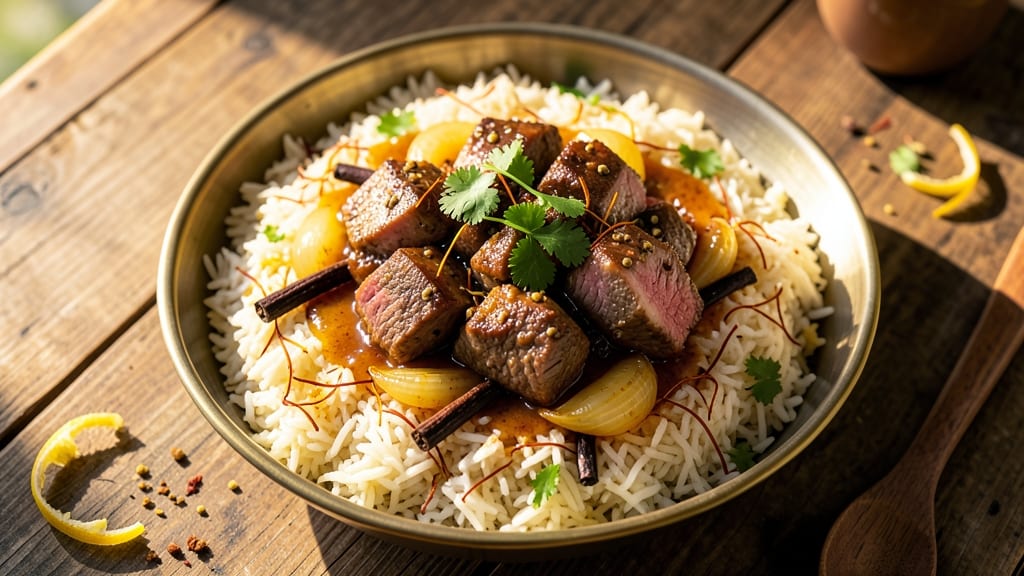
This authentic beef biryani recipe transforms a weeknight into a celebration of fragrant spices and tender meat, layer by layer. The secret lies in slow-marinated beef, saffron-infused basmati rice, and the delicate balance of whole spices that build flavor as they cook.
I perfected this version after years of studying regional techniques—where the rice stays distinct yet absorbs the meat’s rich, spiced gravy without turning mushy.
What sets this apart is the dum cooking method, where the sealed pot traps steam and spices, creating melt-in-your-mouth rice with a subtle char on the edges. No pressure cooker? No problem—we’ll adapt the timing for stovetop or oven, ensuring the same restaurant-quality results.
The marinade alone—yogurt, ginger, garlic, and a blend of warm spices—transforms tough beef into fork-tender pieces that fall apart at the first bite.
By the time you serve it, your table will be draped in the aroma of cardamom, cinnamon, and saffron, with layers of basmati rice, caramelized onions, and beef bathed in a golden, spiced gravy.
The fried onions on top add crunch, while fresh mint and cilantro brighten every bite. This is biryani as it’s meant to be shared—generous, aromatic, and deeply satisfying.
The best part? Leftovers reheat beautifully, making it ideal for meal prep or feeding a crowd. Whether you’re hosting a dinner party or craving a taste of home, this recipe delivers the authentic experience without compromising on simplicity. Let’s get started—your taste buds will thank you.
Ingredients for authentic beef biryani
Sixteen ingredients, one unforgettable dish—where saffron meets spice and tender beef becomes magic.
| Ingredient | Amount | Notes |
|---|---|---|
| Beef Chuck Roast 🥩 | 2 ½ lb | Cut into 1.5-inch cubes |
| Plain Yogurt 🥛 | 1 cup | Full-fat, unsweetened |
| Basmati Rice 🍚 | 2 cups | Long-grain, uncooked |
| Saffron Threads 🌼 | ¼ tsp | Soaked in 2 tbsp warm water |
| Yellow Onions 🧅 | 3 whole | Thinly sliced for layers |
| Garlic Cloves 🧄 | 8 cloves | Finely minced |
| Ginger 🌿 | 2 tbsp | Fresh, grated |
| Ground Cumin 🌶️ | 1 tbsp | Toasted for depth |
| Ground Coriander 🌿 | 1 tbsp | Freshly ground preferred |
| Turmeric Powder 🧂 | ½ tsp | Bright yellow color |
| Cinnamon Sticks 🌿 | 2 whole | Lightly crushed |
| Cardamom Pods 🌿 | 8 whole | Lightly crushed |
| Cloves 🌿 | 4 whole | Lightly crushed |
| Bay Leaves 🌿 | 2 whole | Dried, fresh preferred |
| Fresh Cilantro 🌿 | ½ cup | Chopped, for garnish |
| Fresh Mint Leaves 🌿 | ¼ cup | Chopped, for garnish |
| Ghee or Butter 🧈 | ½ cup | For frying onions |
| Salt 🧂 | 1 ½ tsp | Adjust to taste |
| Water 💧 | 3 cups | For rice cooking |
The beef is non-negotiable—chuck roast gives you that melt-in-your-mouth texture. Look for well-marbled cuts at Whole Foods or your local butcher shop. If you're buying a whole roast, cube it yourself for even cooking. The yogurt should be full-fat (none of that non-fat stuff)—it tenderizes the beef and balances the spices. For the basmati rice, Indian Basmati from the bulk section is ideal—long grains that stay separate. Saffron is pricey, but a little goes a long way. Penzeys Spices sells it in small vials, perfect for occasional use.
No saffron? A pinch of turmeric plus a drop of food coloring (if you're feeling fancy) gets you close. Running short on cardamom? Cinnamon plus a dash of nutmeg mimics its warmth. The whole spices (cinnamon, cardamom, cloves) can be toasted in a dry pan for 30 seconds before grinding—trust me, it deepens the flavor. Fresh ginger and garlic are a must, but if you're in a pinch, bottled paste works in a bind. The fried onions? Use yellow onions for sweetness, and don't skip the ghee—it adds richness the butter can't match.
This dish tastes even better the next day, so make extra. Store in airtight containers for 4-5 days in the fridge or freeze for 3 months. Reheat gently with a splash of water to restore moisture. The dum cooking method means the pot becomes a flavor bomb—seal it tightly with foil or a lid, and let the steam work its magic. For leftovers, portion into containers with a side of rice and meat separate so you can reheat just what you need.
Why You'll Love This Recipe
- One-Pot Magic: I swear by this—just brown the beef, simmer the onions and spices, then layer in the rice and yogurt. No extra pots, no fuss. The beef practically falls apart on its own, and the rice soaks up all that rich flavor without a single grain left dry.
- Saffron Kiss: Between us, saffron makes everything feel special. Here’s what sold me—the way it blooms in the warm yogurt, turning the rice a golden hue while adding that unmistakable floral depth. Even a pinch transforms this into something that tastes like a restaurant dish, not a weeknight meal.
- Leftovers Reimagined: Honestly, I make this twice and save the second batch for lunches. The beef stays tender, the rice holds its shape, and reheating it? Just a splash of water and a quick steam—no soggy disaster here. My kids even ask for it cold in wraps the next day.
- Budget Feast: A chuck roast stretches further than you’d think, especially when marinated in yogurt overnight. I’ll be real: it’s my go-to for gatherings because it feeds a crowd without breaking the bank. Plus, basmati rice is cheap, and those saffron threads? A little goes a long way.
Step-by-step instructions for authentic beef biryani
Here's how to create layers of aromatic spice and melt-in-your-mouth beef just like in traditional kitchens.
Marinate the Beef for Maximum Flavor
In a large bowl, combine the 2.5 lb beef chuck roast cut into 1.5-inch cubes with 1 cup plain yogurt, 1 tbsp ground cumin, 1 tbsp ground coriander, 0.5 tsp turmeric powder, 1.5 tsp salt, 2 whole cinnamon sticks (lightly crushed), 8 whole cardamom pods (lightly crushed), 4 whole cloves (lightly crushed), and 2 whole bay leaves. Mix gently but thoroughly to coat the beef evenly.
Cover the bowl and refrigerate for at least 4 hours or overnight. This long marinating time tenderizes the beef and infuses it with the warm spices. The yogurt will create a protective barrier during cooking, keeping the meat juicy. I like to marinate overnight because it allows the flavors to meld completely—this is where the magic happens for authentic biryani.
Cook the Beef Until Fork-Tender
In a heavy-bottomed pot, heat 0.5 cup ghee or butter over medium-high heat. Add the marinated beef in a single layer and brown on all sides for about 5 minutes. This step is crucial for developing deep flavor through caramelization.
Once browned, reduce heat to low, cover the pot, and simmer for 1.5 to 2 hours until the beef is fork-tender. You'll know it's ready when a fork slides in easily and the meat pulls apart with minimal resistance. Keep the lid slightly ajar during the last 15 minutes of cooking to allow excess moisture to escape—this prevents the biryani from becoming soggy later.
Prepare the Saffron Rice Layer
While the beef cooks, prepare the rice. In a separate bowl, combine 2 cups basmati rice with 3 cups water, 0.25 tsp saffron threads (soaked in 2 tbsp warm water), and 1 tbsp salt. Let it soak for 20 minutes—this ensures even cooking and prevents the rice from becoming mushy.
Drain the rice well before using. In a heavy pot, heat 0.25 cup ghee or butter over medium heat and fry 1 whole yellow onion (thinly sliced) until golden brown. Remove the onions and set aside for layering. Add the drained rice to the pot and cook for 2 minutes, stirring constantly to separate the grains and coat them with the ghee.
Layer and Steam the Biryani
Preheat your oven to 350°F. In a large, heavy pot (or Dutch oven), spread half of the fried rice evenly on the bottom. Arrange half of the cooked beef on top, followed by half of the fried onions. Sprinkle half of the 0.5 cup fresh cilantro and 0.25 cup fresh mint leaves over this layer.
Repeat with the remaining rice, beef, onions, and herbs. The key here is to create even layers—this ensures each bite delivers perfect balance of rice and beef. Cover the pot tightly with a lid or aluminum foil and place it in the preheated oven. Bake for 25 minutes to allow the layers to steam and meld together.
Finish with Aromatic Garnish
Remove the biryani from the oven and let it rest for 10 minutes before serving. This resting period allows the flavors to settle and the steam to distribute evenly throughout the dish.
Garnish with the remaining cilantro and mint leaves, and serve immediately with the reserved fried onions sprinkled on top. The dish should be fragrant with warm spices, tender beef that falls apart easily, and perfectly fluffy basmati rice. Each bite should deliver layers of flavor—spiced beef, aromatic rice, and fresh herbs—just like in traditional biryani from South Asia. Enjoy with a side of raita or a simple cucumber salad to balance the richness.
Pro Tips For Making Authentic Beef Biryani
- Sear the Beef Properly: After slicing the chuck roast thinly against the grain, hit it with a screaming-hot pan—no crowding—and let those edges turn deep brown before touching it with anything else. I learned this the hard way: skipping the sear means your biryani will taste like stewed beef, not layered, aromatic perfection.
- Bloom the Saffron Right: Crush those saffron threads with the flat of your knife before soaking them in warm water—this releases the color and flavor faster. Then let it steep for at least 15 minutes; I’ve tried the "quick rinse" method, and it’s a crime against biryani.
- Layer Rice and Meat Separately: Don’t just dump everything in one pot. After parboiling the rice, spread half in the bottom of your heavy pot, then add the marinated beef, then the rest of the rice. The steam will cook it evenly without turning the beef rubbery—trust me, your future self will notice the difference.
- Use Whole Onions, Not Sliced: Peel and whole yellow onions into the pot with the beef during the slow cook. They’ll caramelize into sweet, jammy bits that cling to every grain of rice. Slicing them first means they’ll turn to mush and disappear—waste of good onion flavor.
Regional styles of this dish
Hyderabadi Style
Hyderabadi biryani takes the dish to luxurious heights with its signature dum cooking method and generous use of birista (a mix of fried onions, nuts, and dried fruits). The beef here is marinated with shahi jeera (caraway seeds) and kewra water (screw pine essence) for a floral aroma.
I love adding silver leaf (varak) and rose water to the rice for an extra touch of opulence. The dish is traditionally cooked in a handi, a heavy clay pot, but a Dutch oven works perfectly at home. 🌟
Lucknowi Awadhi
The Lucknowi version is all about rich, creamy gravy and delicate flavors. Unlike Hyderabadi, this biryani uses mutton (though beef works beautifully too) and incorporates kewra water and rose water in the marinade. The rice is often parboiled separately and then layered with the meat and fried onions.
A key difference is the use of less oil—just enough to keep the rice separate. I recommend adding saffron milk (saffron soaked in warm milk) to the rice for extra fragrance. 🥛
Pakistani Peshawari
Peshawari biryani is known for its hearty, spiced beef and whole spices that cook directly with the rice. This version often includes carrots, potatoes, and cashews layered with the beef and rice. The beef is marinated with yogurt, ginger-garlic paste, and a blend of whole spices like cardamom and cinnamon.
The dish is slow-cooked in a sealed pot, allowing the spices to infuse deeply. I like to add fried cashews on top for crunch. This style is perfect for feeding a crowd! 🍽️
Bengali Memoni
Memoni biryani, originating from Kolkata, is a seafood and beef hybrid but works wonderfully with just beef. The rice is cooked with saffron, cardamom, and a touch of rose water, while the beef is marinated with yogurt, ginger, garlic, and a blend of spices.
What sets it apart is the use of fried onions, cashews, and raisins layered between the rice and meat. The dish is often finished with a tadka (tempering) of ghee, cumin, and red chili. 🌶️
Nawabi Lucknowi Dum
This is the royal version of biryani, where the beef is slow-cooked with yogurt, ginger, garlic, and a blend of whole spices before being layered with partially cooked rice. The pot is sealed tightly and cooked on low heat, allowing the spices to meld into the meat and rice.
The dish is garnished with fried onions, nuts, and silver leaf. I recommend using basmati rice that’s been parboiled separately to maintain its texture. The result is a dish that’s fragrant, tender, and deeply flavorful—fit for a king! 👑
Nutrition facts
Frequently asked questions
Can I substitute beef with chicken or lamb?
While beef gives biryani its signature rich flavor, you can absolutely use chicken or lamb! For chicken, reduce the marinating time to 2-3 hours since it cooks faster. Lamb requires a longer marinade (6-8 hours) and simmering time (2.5-3 hours). The key is adjusting the cooking time to ensure tender meat that falls apart easily. For lamb, add 1 extra cinnamon stick and 2 extra cardamom pods to the marinade for deeper flavor.
What's the secret to perfectly fluffy rice?
The secret lies in soaking the rice for 20 minutes before cooking and using the right water ratio (1:1.5 rice-to-water). Never rinse basmati rice before cooking—this removes the starch that helps it stay separate. After draining, lightly toast the rice in ghee for 2 minutes to create a protective layer. The saffron infusion adds fragrance, but don't overlook the 10-minute resting period before serving—this lets steam redistribute for perfect texture.
Can I make biryani in a pressure cooker?
Yes! For a pressure cooker, layer the rice and beef as directed, then seal tightly and cook on medium heat for 4-5 whistles (about 20-25 minutes). After cooking, let the pressure release naturally for 10 minutes before opening. The high pressure creates steam that infuses flavors faster. For extra richness, add 2 tbsp ghee to the pot before sealing. Just avoid overcooking—the rice should be tender but not mushy.
Why does my biryani turn out soggy?
Soggy biryani usually happens from one of three issues: overcooking the rice, not draining it well before layering, or sealing the pot too tightly during cooking. Always drain rice thoroughly after soaking, and use a heavy pot with a tight-fitting lid. For oven cooking, place a tray of water in the oven to create steam, but don't let the biryani pot sit in water. If using stovetop, cook on low heat and let it steam uncovered for the last 5 minutes to evaporate excess moisture.
How do I make it extra flavorful without extra spices?
Boost flavor with these pro tips: Toast your whole spices (cumin, coriander, cardamom) in a dry pan for 30 seconds before grinding—they'll develop deeper aroma. Use ghee instead of butter for frying onions and cooking rice (its higher smoke point enhances nutty flavors). For the beef, brown it deeply on all sides before simmering to create a flavorful crust. Finally, let the biryani rest for 15 minutes after cooking—this lets the spices meld together for maximum impact.