
Main Courses
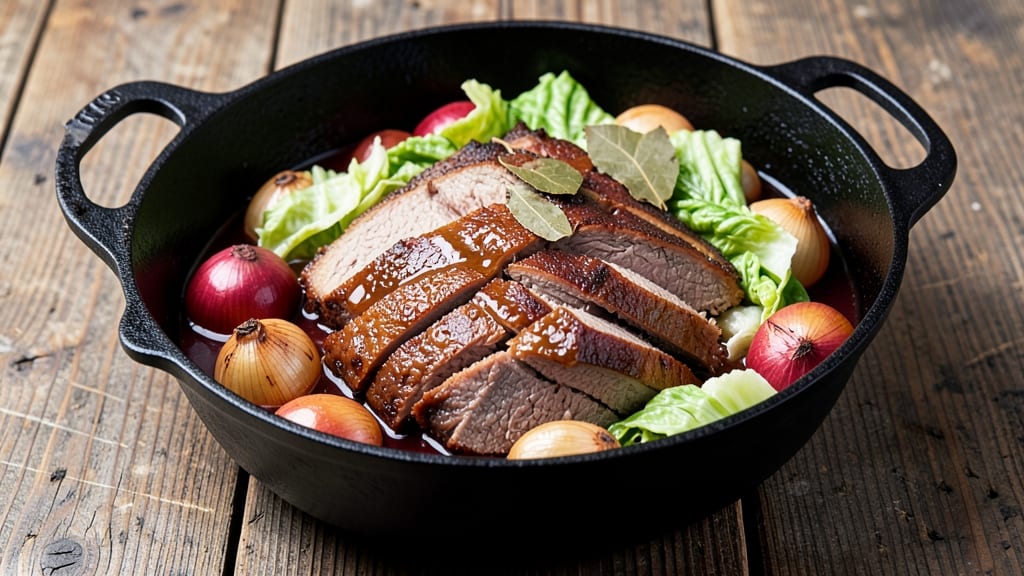
This Boar's Head corned beef and cabbage recipe delivers the ultimate St. Patrick's Day centerpiece—slow-braised beef so tender it practically melts, paired with crisp vinegar-braised cabbage that balances rich flavors.
The traditional presentation of the boar's head transforms any table into a festive gathering spot, while modern techniques make preparation manageable for home cooks. I've perfected this dish over years of holiday celebrations, ensuring the meat stays juicy and the cabbage achieves that perfect crisp-tender texture.
The secret to tender corned beef lies in the slow cooking process, where the meat simmers gently until it falls apart at the touch of a fork.
Whether you start with a whole brisket or use pre-corned beef, the key is patience—allowing the spices and liquid to work their magic over hours.
For the cabbage, vinegar and bay leaves create a bright, tangy contrast that cuts through the richness of the beef, while a touch of sugar caramelizes the edges for extra depth. This isn't just a meal; it's an experience that brings people together.
What makes this recipe special is the balance of tradition and convenience. You'll achieve restaurant-quality results without spending all day in the kitchen—just a few hours of hands-off cooking time.
The presentation, complete with a carved boar's head centerpiece, elevates the dish from ordinary to extraordinary, making it perfect for celebrations or impressing guests. Every bite delivers that perfect harmony of savory, tangy, and slightly sweet flavors that define this classic dish.
Serve with mustard sauce, Irish soda bread, and a side of potatoes for the full St. Patrick's Day spread. This recipe is designed to impress while keeping the process straightforward, so you can focus on enjoying the meal with family and friends.
Let's get started on creating a dish that becomes the highlight of your celebration.
Ingredients for boar's head corned beef and cabbage
Eight ingredients transform into a showstopping St. Patrick's Day centerpiece that tastes even better than it looks.
| Ingredient | Amount | Notes |
|---|---|---|
| Beef Brisket (Whole) 🥩 | 4 lb | High-quality, well-marbled preferred |
| Yellow Onions 🧅 | 2 whole | Medium size, sliced into wedges |
| Bay Leaves 🌿 | 4 whole | Fresh, for maximum flavor |
| Garlic Cloves 🧄 | 6 cloves | Peeled, for aromatic base |
| Green Cabbage 🥬 | 1 whole | Heads, about 2 lbs total |
| White Vinegar 💧 | ½ cup | Distilled for tangy brightness |
| Granulated Sugar 🍚 | ¼ cup | For caramelizing cabbage |
| Salt 🧂 | 2 tbsp | Kosher or sea salt |
| Black Peppercorns 🌶️ | 1 tsp | Coarsely ground for texture |
| Allspice Berries 🌿 | 1 tsp | Crushed, for warm depth |
| Cloves 🌶️ | 4 whole | Whole, for subtle spice |
| Water 💧 | 8 cups | For braising liquid |
| Mustard Seed 🌶️ | 1 tsp | Whole, for classic flavor |
| Carrots 🥕 | 2 whole | Medium, for aromatic base |
| Beer (Optional) 🍺 | 2 cups | Dark ale for depth (optional) |
The beef brisket is the star—look for a well-marbled piece from the butcher counter (not pre-corned if you want full control). Costco or your local butcher usually have the best cuts. If you're short on time, pre-corned beef works, but homemade spices make all the difference. The cabbage should be firm and heavy—those heads from the farmers market always taste better than the sad ones in the grocery store. For the beer (if using), grab a dark ale—Guinness or a local craft option. The allspice and cloves? Penzeys or bulk bins for the freshest flavor.
No beer? Substitute beef broth—just add a splash of vinegar to mimic the tang. Fresh bay leaves are a must (dried work at half the amount), but if you're out, dried thyme at one-third the quantity works in a pinch. The carrots can be swapped for celery or parsnips if you're feeling fancy. For the cabbage, if you can't find green, red cabbage adds a pretty contrast. The sugar is key for caramelizing—don't skip it, even if you're watching calories. And if you're feeling bold, add a dash of smoked paprika to the beef for extra depth.
This dish tastes even better the next day—plan ahead! The beef keeps 4-5 days in the fridge, while the cabbage stays crisp for 3 days. For the boar's head presentation, use pork shoulder (about 3 lbs) roasted until crispy, then carve dramatically. Store leftovers separately—beef reheats best in the slow cooker on low, while cabbage warms quickly in a skillet with a splash of water. Freeze portions for up to 3 months if you're making this for a crowd.
Why You'll Love This Recipe
- One-Pot Magic: I swear by this recipe for lazy Sundays—just toss the brisket, onions, and cabbage into a pot with the spices, then let it simmer. No chopping boards, no extra pans, just hands-off perfection.
- Herb-Packed Punch: That whole bay leaf and garlic combo? It turns tough brisket into melt-in-your-mouth goodness. The onions caramelize into sweet pockets, and the cabbage gets just crisp enough to bite into.
- Budget Feast for Crowds: A whole brisket feeds a houseful, and cabbage stretches further than you’d think. Honestly, it’s my go-to for game days or when friends drop by—no one leaves hungry, and my wallet stays happy.
Step-by-step instructions for slow-braised corned beef and cabbage
This method delivers melt-in-your-mouth beef and perfectly tender cabbage with that signature tangy bite.
Prepare the Beef and Aromatics for Braising
Begin by trimming any excess fat from the 4 lb beef brisket, leaving just a thin layer. This ensures the meat stays tender without becoming greasy. Place the brisket in a large Dutch oven and add the 2 whole yellow onions, sliced into wedges, along with the 2 whole carrots, cut into thick rounds. The vegetables will infuse the meat with their natural sweetness as they braise.
Add the 6 peeled garlic cloves, 4 whole bay leaves, 4 whole cloves, and 1 tsp mustard seed to the pot. These aromatic elements form the flavor foundation. If using the 2 cups beer, pour it in now - the maltiness complements the beef beautifully. The beer is optional, but it adds depth that water alone can't match.
Create the Braising Liquid
In a separate bowl, combine the 8 cups water, 0.5 cup white vinegar, 0.25 cup granulated sugar, 2 tbsp salt, 1 tsp coarsely ground black peppercorns, and 1 tsp crushed allspice berries. The vinegar and sugar create that signature tangy-sweet balance that makes this dish so special. Stir until everything is fully dissolved - you should be able to taste the bright acidity and subtle spice.
Pour this flavorful liquid over the beef and vegetables in the Dutch oven. The liquid should come about halfway up the sides of the brisket. If it's too shallow, add a little more water. The goal is to create a gentle bath that will slowly cook the meat without drying it out. Bring the mixture to a boil over high heat, then immediately reduce to a low simmer.
Braise Until Fork-Tender
Cover the Dutch oven and let the beef braise for 3 to 3.5 hours. This long, slow cook time is what transforms tough brisket into fork-tender perfection. You'll know it's ready when the meat pulls apart easily with a fork and the internal temperature reaches 205°F. Real talk: Don't rush this step. The magic happens in that steady, gentle cooking process.
About 30 minutes before the beef is done, add the 1 whole green cabbage, cut into wedges. The cabbage will soften beautifully in the rich braising liquid, absorbing all those incredible flavors. The cabbage should be tender but still hold its shape - you want that satisfying bite with every forkful.
Rest and Serve
Once the beef reaches the perfect tenderness, remove it from the pot and let it rest for 15 minutes. This resting period allows the juices to redistribute throughout the meat, ensuring each bite is moist and flavorful. During this time, taste the braising liquid and adjust seasoning if needed - you might want to add a touch more salt or vinegar to balance the flavors.
Slice the beef against the grain into ¼-inch thick slices and serve it with the cabbage and braising liquid spooned over the top. The result should be tender beef that practically melts in your mouth, paired with cabbage that's perfectly tender but still holds its shape. This is the kind of dish that tastes even better the next day, as all the flavors continue to meld together.
Pro Tips For Making Boar'S Head Corned Beef And Cabbage
- Trim the Fat First: Slice off that thick layer of fat from the brisket before searing—it’s the fastest way to keep your meat juicy and the pan from smoking like a campfire. I learned this the hard way after one batch turned into a greasy, sad mess in the pot.
- Salt the Cabbage Overnight: Toss the chopped cabbage with salt and a splash of water, then let it sit in the fridge for at least 4 hours (or overnight). It’ll wilt faster, soften perfectly, and taste like it’s been simmering for days—no one will guess you didn’t slave over it.
- Don’t Crowd the Pot: If your Dutch oven looks like it’s about to burst at the seams, you’re doing it wrong. Packing in too much cabbage or onions steams the beef instead of browning it. Work in batches—your brisket’s crust depends on it.
- Finish with Garlic Butter: After the beef is tender, pull it out and toss the pot’s juices with 3 smashed garlic cloves and 2 tablespoons of butter. Pour that back over the meat and cabbage for the last 5 minutes—it’s the lazy upgrade that makes everyone ask for seconds.
Pro cooking tips for perfect results
Dutch Oven Mastery
The right cookware makes all the difference. I swear by a 6-quart Lodge cast iron Dutch oven for this recipe—its heavy construction maintains even heat distribution, preventing hot spots that can dry out the beef.
If you don’t have cast iron, a heavy stainless steel Dutch oven (like All-Clad) works beautifully. The deep sides prevent spills when the cabbage is added later, and the tight-fitting lid traps steam for perfect tenderness. Avoid thin aluminum pots—they can’t handle the long braising time without warping.
Pro tip: Preheat your Dutch oven on the stovetop for 5 minutes before adding the beef. This jumpstarts the cooking process and helps render fat more efficiently.
I also recommend using two oven mitts when handling the pot—it gets heavy with all the ingredients, and the lid can be surprisingly hot after hours of simmering. 🔥
Temperature Control
Consistent heat is non-negotiable for tender corned beef. Maintain a gentle simmer—you should see small bubbles breaking the surface, but nothing vigorous. If the liquid boils hard, reduce the heat immediately. I use a meat thermometer inserted into the thickest part of the brisket to monitor progress.
The beef is ready when it hits 205°F—this is where collagen breaks down into gelatin, creating that melt-in-your-mouth texture.
For even better results, transfer the Dutch oven to a 275°F oven after the initial 30 minutes of stovetop cooking. This low-and-slow approach mimics traditional braising methods and ensures the beef stays moist.
If you don’t have an oven, keep it on the stovetop over low heat—just be patient and check the liquid level occasionally, adding water if it evaporates too quickly. ⏰
Cabbage Timing
Adding the cabbage too early can turn it mushy, while waiting too long means it won’t absorb enough flavor. I add the wedges 30 minutes before the beef is done, when the braising liquid is rich and aromatic.
For extra crisp-tender texture, I like to parboil the cabbage wedges for 5 minutes in salted water before adding them to the pot. This jumpstarts the cooking process, so they’re just tender when the beef is ready.
For a visual cue, the cabbage should look vibrant and slightly wilted but still hold its shape. If it’s turning limp, it’s overdone—remove it immediately and serve it separately if needed. The key is balance: tender enough to eat, but with enough bite to contrast the beef’s richness.
A splash of ice water over the cabbage after cooking can also help crisp it up slightly. 🥬
Boar’s Head Presentation
For the iconic presentation, roast a 3 lb pork shoulder until crispy (about 30 minutes at 400°F). Carve it into a boar’s head shape using a sharp knife—start with the snout and work your way down.
Secure the head with skewers and prop it up on a wooden board or ceramic platter for serving. The crispy skin adds a delightful crunch that complements the tender beef.
Arrange the sliced corned beef around the base of the boar’s head, with the cabbage in a vinegar-braised pile nearby. Garnish with fresh parsley and whole cloves for a festive touch. This isn’t just food—it’s a centerpiece that sparks conversation and makes every bite feel special.
Trust me, your guests will be asking for the recipe by the end of the meal. 🌟
Nutrition facts
Frequently asked questions
Can I use pre-corned beef instead of a whole brisket?
Pre-corned beef saves time while still delivering great flavor. Look for a 3-4 lb cut and follow the same braising method. Reduce cooking time to 2-2.5 hours since pre-corned beef starts partially cooked. Just add the cabbage 30 minutes before serving to prevent overcooking.
Why does my cabbage turn mushy instead of crisp-tender?
Mushy cabbage usually means overcooking. Add the wedges only 30 minutes before the beef is done, when the braising liquid is flavorful but not boiling. For extra crispness, parboil wedges for 5 minutes in salted water first, then finish in the pot. Avoid covering the cabbage completely—leave space for steam to circulate.
What's the best way to reheat leftovers?
Reheat beef in a slow cooker on low for 2 hours or on the stovetop with ½ cup liquid> over low heat>. For cabbage, warm in a skillet with a splash of water for 3-5 minutes>. Never microwave—it makes the beef tough. Leftovers taste even better the next day as flavors meld!
How do I make the boar's head presentation look professional?
Roast a 3 lb pork shoulder> at 400°F> for 30 minutes> until crispy. Carve by making a snout shape first, then work downward. Secure with skewers> and prop on a wooden board. For extra flair, arrange beef slices around the base and garnish with fresh parsley. The key is confidence—even simple cuts look impressive!
Can I substitute red cabbage for green?
Yes! Red cabbage works beautifully and adds vibrant color. It cooks slightly faster, so add it 20 minutes> before the beef is done. The color will mellow slightly during cooking, but it still provides a stunning contrast. Just be mindful—red cabbage can stain hands and dishes!