
Main Courses
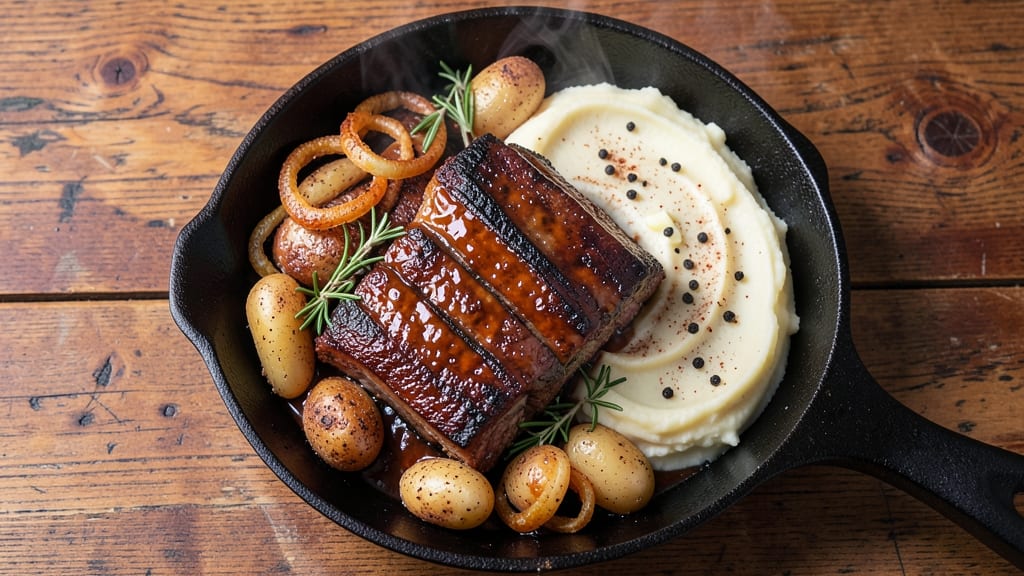
Southern beef short ribs recipe delivers that legendary fall-off-the-bone tenderness that makes every bite worth the wait. The secret lies in a slow braise that transforms tough cuts into melt-in-your-mouth perfection, with a rich, caramelized sauce that clings to every forkful.
I've perfected this method over years of testing—no shortcuts, just the deep, smoky flavors of true Southern comfort food.
This recipe starts with a dry rub of smoked paprika, brown sugar, and black pepper, creating a flavorful bark that develops during the braise. The ribs cook low and slow in a flavorful liquid—beer or broth—until they're so tender they practically disintegrate.
The result? A dish that's rich, satisfying, and packed with that unmistakable Southern soul.
What you'll end up with is a platter of glazed, caramelized ribs served with their own luscious sauce, perfect for feeding a crowd or treating yourself to a restaurant-quality meal at home.
The aroma alone will have everyone gathering around the table, and the first bite delivers on that promise of fall-apart tenderness.
Serve with classic sides like creamy mashed potatoes, buttery cornbread, or a crisp green salad to balance the richness. This is comfort food at its finest—simple ingredients, time-tested techniques, and results that taste like home. Let's get started on creating this Southern masterpiece.
Ingredients for southern beef short ribs
Six core ingredients transform tough beef short ribs into Southern melt-in-your-mouth perfection through slow braising.
| Ingredient | Amount | Notes |
|---|---|---|
| Beef Short Ribs 🥩 | 4 lb | Bone-in, 2-3 inches thick |
| Smoked Paprika 🌶️ | 2 tbsp | High-quality, not sweet |
| Light Brown Sugar 🍚 | ½ cup | Packed, for dry rub |
| Coarse Kosher Salt 🧂 | 2 tbsp | Diamond Crystal preferred |
| Freshly Ground Black Pepper 🌶️ | 1 ½ tbsp | Cracked peppercorns |
| Garlic Cloves 🧄 | 6 whole | Peeled, smashed |
| Yellow Onion 🧅 | 1 whole | Large, diced |
| Carrots 🥕 | 4 whole | Medium, sliced thick |
| Celery Stalks 🥬 | 4 whole | Cut into 2-inch pieces |
| Dry Red Wine 🍷 | 1 cup | Cabernet Sauvignon preferred |
| Beef Broth 💧 | 4 cups | Low-sodium, homemade or high-quality |
| Tomato Paste 🍅 | ½ cup | Squeeze tube or canned |
| Fresh Thyme Sprigs 🌿 | 4 whole | Leaves stripped |
| Fresh Bay Leaves 🌿 | 2 whole | Dried if unavailable |
| Unsalted Butter 🧈 | 2 tbsp | For finishing sauce |
The beef short ribs are the foundation—bone-in cuts with good marbling deliver the best results. Source them from Whole Foods or a trusted butcher; avoid pre-cut ribs from the supermarket meat counter, as they often lack the necessary fat. Look for 2-3 inch thick cuts with visible connective tissue. If shopping at Costco or Sam's Club, check the packaging date—freshness matters for that initial dry rub adhesion. The ribs should be bright red with a thin layer of fat covering them, not exposed lean meat. For optimal tenderness, don't trim excess fat unless absolutely necessary—it renders during cooking and contributes to the sauce's richness.
Substitutions should preserve the dish's soul. No smoked paprika? Use a blend of sweet paprika and a pinch of liquid smoke (start with 1/4 tsp). Dry red wine unavailable? Substitute with an equal amount of beef broth plus 1 tbsp balsamic vinegar. The tomato paste can be omitted entirely if you prefer a less tangy sauce, but it adds depth that's hard to replicate. For the aromatics, frozen carrots and celery work in a pinch, though fresh is ideal. The thyme and bay leaves can be swapped for 1 tsp dried thyme and 1 dried bay leaf, but fresh imparts a brighter flavor. If you're short on time, pre-cut the onion, carrots, and celery—just ensure they're roughly the same size for even cooking.
Proper storage extends this dish's magic. The dry rub can be pre-mixed and stored in an airtight container for up to 2 weeks in a cool, dry place. The braised ribs reheat beautifully—simmer in their sauce for 10-15 minutes on the stove or cover and bake at 325°F for 30 minutes. For longer storage, portion the ribs and sauce separately: ribs freeze for up to 3 months while the sauce keeps for 1 month in the fridge. When reheating, add a splash of water or broth to prevent drying out. The sauce thickens as it cools, so thin with broth or water if needed before serving. Leftovers make exceptional sandwiches or tacos the next day.
Why You'll Love This Recipe
- One-Pan Magic: I swear by this—just sear the ribs, sprinkle smoked paprika and brown sugar, and let the oven do the work. No flipping, no fussing, just hands-off perfection while you sip sweet tea or watch a ballgame.
- Sweet-Smoky Bomb: That combo of smoked paprika and brown sugar? It’s like Southern comfort in every bite—deep, caramelized crust with tender meat that falls apart. Honestly, I’ve had people ask for seconds before the plate even clears.
- Leftover Luxury: These ribs stay ridiculously good reheated—just a splash of water in the pan, 10 minutes in the oven. I make a double batch on Sundays because my kids beg for them all week (yes, even on Tuesdays).
- Budget Crowd-Pleaser: Short ribs stretch further than you’d think, and the spices cost next to nothing. Feed four for under $20, or stretch it into tacos, sandwiches, or hash for days. My wallet and my family thank me every time.
Step-by-step instructions for Southern beef short ribs
This method delivers melt-in-your-mouth tenderness with a deep, caramelized crust—no shortcuts, just Southern tradition perfected.
Prepare the Dry Rub and Sear the Ribs
In a small bowl, combine the 2 tablespoons smoked paprika, 0.5 cup light brown sugar, 2 tablespoons coarse kosher salt, and 1.5 tablespoons freshly ground black pepper. Mix thoroughly until the sugar crystals dissolve completely into the spices. This dry rub is the foundation of the deep, smoky-sweet flavor profile that defines Southern braised ribs.
Pat the 4 lb beef short ribs completely dry with paper towels—this ensures maximum contact with the rub and promotes better browning. Generously coat each rib with the dry rub, pressing it into the meat so it adheres evenly. Let the ribs sit at room temperature for 30 minutes while you prepare the Dutch oven. This step allows the rub to penetrate the meat and develop a better crust during searing.
Heat a heavy Dutch oven over medium-high heat until it's smoking hot. Working in batches if needed, add the ribs and sear for 3-4 minutes per side until deeply browned with a dark crust. Don't rush this step—the Maillard reaction happening here creates the complex flavors that carry through the braise. Once browned, transfer the ribs to a plate and set aside.
Sauté Aromatics and Build the Braising Base
In the same Dutch oven, reduce heat to medium and add 2 tablespoons unsalted butter. Once melted, add the 1 whole yellow onion, 4 whole carrots (sliced thick), and 4 whole celery stalks (cut into 2-inch pieces). Sauté for 8-10 minutes until the vegetables soften slightly and begin to caramelize—this builds depth of flavor into the braising liquid.
Add the 6 whole garlic cloves (smashed) and cook for an additional 1 minute until fragrant. Here's where the magic happens: Pour in the 1 cup dry red wine, scraping up any browned bits from the bottom of the pot with a wooden spoon. Let the wine simmer for 3-4 minutes until reduced by half—this concentrates the alcohol's flavor and prevents a harsh taste in the finished dish.
Stir in the 0.5 cup tomato paste and cook for 2 minutes until it darkens slightly. This step develops the sauce's richness and creates a velvety texture. Remove the pot from heat and set aside temporarily—we'll return to it after the ribs complete their initial braise.
Slow Braise Until Fork-Tender
Return the seared ribs to the Dutch oven, bone-side up. Add the 4 cups beef broth, 4 whole fresh thyme sprigs, and 2 whole fresh bay leaves. Bring the liquid to a gentle simmer, then reduce heat to low and cover tightly with a lid. The ribs need 2.5 to 3 hours of undisturbed braising time—this is where patience pays off.
After 2 hours, check for doneness by inserting a fork into the thickest part of a rib. The meat should be fork-tender with just slight resistance. If it's not quite there, continue braising for another 30 minutes to 1 hour. The ribs are done when they pull apart easily but still hold their shape—this indicates perfect tenderness without falling apart.
Here's the thing about braising: The ribs will continue cooking slightly as they rest, so don't overbraise. You want them to be tender but still hold their structure when served. If the liquid reduces too much during cooking, add ½ cup hot water to maintain adequate coverage.
Finish and Rest for Maximum Flavor
Once the ribs reach perfect tenderness, carefully transfer them to a serving platter. Strain the braising liquid through a fine-mesh sieve into a saucepan, discarding the solids. Return the liquid to medium heat and simmer for 5-7 minutes until slightly thickened—this creates a glossy, velvety sauce that clings beautifully to the ribs.
Remove the thyme sprigs and bay leaves from the braising liquid. Stir in the 2 tablespoons unsalted butter, swirling constantly until melted and incorporated. This final step adds richness and helps create a silky texture. Taste and adjust seasoning with additional coarse kosher salt or freshly ground black pepper if needed.
Return the ribs to the Dutch oven with the finished sauce and let them rest for 10 minutes before serving. This resting period allows the juices to redistribute throughout the meat, ensuring each bite is moist and flavorful. Serve the ribs hot, spooning the rich braising sauce over the top and passing additional sauce at the table.
Pro Tips For Making Southern Beef Short Ribs
- Brown the Bones First: Scrape off the silver skin from the bone before searing—it’s tough and won’t render like fat. Then, hit that meat with high heat until the bones turn deep brown, not just the surface. I used to rush this, and the ribs never got that rich, caramelized depth in the sauce later.
- Salt the Ribs Twice: Generously coat the ribs with coarse kosher salt before searing, then again after they’ve rested. The first layer seasons the meat; the second locks in moisture. Skip this, and your ribs taste flat, even if the sauce is perfect.
- Deglaze with Beer or Broth: After searing, don’t just toss in the smoked paprika and sugar—deglaze the pan with a splash of beer (or dark broth) first. It scrapes up all those browned bits, turning them into the base of your sauce. I learned this the hard way when my sauce was thin and pale.
- Sweat the Paprika: Toast the smoked paprika in a dry pan for 30 seconds until fragrant—it deepens the flavor without burning. Then, whisk it into the sugar and salt before adding liquid. Sounds weird, but it works: the sauce tastes more complex, like it’s been simmering for hours.
Common mistakes when making your southern beef short ribs
Over-Searing Risks
Rushing the sear is one of the biggest mistakes—those beautiful brown crusts hide a critical flaw. When you sear too quickly over high heat, the exterior burns before the interior develops that perfect crust. I’ve seen ribs turn into charred carbon instead of caramelized perfection.
Use medium-high heat and work in batches if needed. Let the ribs develop a deep, mahogany crust over 3-4 minutes per side, not a blackened exterior. 🔥
Skipping the Rest
I cannot stress this enough: Never skip the 10-minute rest after braising. The ribs continue cooking slightly as they rest, and the juices redistribute, ensuring every bite is moist.
Cutting into them too soon releases all that precious liquid, leaving you with dry, disappointing meat. Trust the process—this final step is what transforms good ribs into legendary ones.
Underestimating Braise Time
Patience is key with short ribs—they need that 2.5 to 3 hours of undisturbed braising to break down collagen into gelatin. I’ve seen home cooks pull ribs out too early because they’re impatient, only to end up with tough, chewy meat.
Use a fork test: If it slides in easily but the meat still holds its shape, it’s ready. If not, return it to the pot for another 30 minutes to 1 hour.
Ignoring the Sauce
The braising liquid isn’t just for cooking—it’s the soul of your dish. Skipping the step to strain and reduce the sauce means serving ribs with a thin, watery liquid instead of a rich, velvety glaze.
Simmer the strained liquid for 5-7 minutes to thicken it, then finish with 2 tablespoons butter for that luxurious mouthfeel. This is where the magic happens, and it’s worth the extra effort. ✨
Using the Wrong Cut
Not all beef cuts are created equal. Short ribs must be bone-in and 2-3 inches thick—anything thinner won’t develop the right texture. I’ve seen people use flat iron steak or even pork ribs by mistake, and the results are disastrous.
Stick to beef short ribs from a trusted butcher, and you’ll avoid the heartbreak of tough, flavorless meat. The bone also adds depth to the sauce, so don’t skip it!
Overcrowding the Pot
Stuffing too many ribs into your Dutch oven means they won’t sear properly—they’ll steam instead of develop that crucial crust. Work in batches if needed, and leave enough space between ribs for even browning.
A crowded pot also slows down the cooking process, leading to uneven doneness. Trust me, a little extra time searing in batches is worth the perfect crust. 💪
Nutrition facts
Frequently asked questions
How do I know when my beef short ribs are fully cooked?
Use the fork test: Insert a fork into the thickest part of a rib. If it slides in easily but the meat still holds its shape, they're done. The ribs should be fork-tender with just slight resistance, not falling apart completely. This usually takes 2.5 to 3 hours of braising time.
Can I use a slow cooker instead of a Dutch oven?
Brown the ribs first in a skillet, then transfer them to your slow cooker with all the braising ingredients. Cook on low for 8-10 hours or high for 5-6 hours. The texture will be slightly different but still delicious. Just reduce the braising liquid by 10-15 minutes on the stove after cooking to thicken the sauce.
What's the best way to reheat leftover braised ribs?
Place the ribs and sauce in a covered pot and simmer on low heat for 10-15 minutes, or cover and bake at 325°F for 30 minutes. Never microwave—it turns the meat rubbery. Add a splash of broth or water if the sauce seems too thick after reheating. The ribs reheat beautifully and taste just as good as day-old!
Can I make this recipe with boneless short ribs?
While possible, bone-in ribs develop richer flavor and a better sauce. If using boneless, reduce the braising time to 2 hours and check for doneness early. The meat will be more tender faster but may lack the depth of flavor from the bone marrow. For best results, stick with bone-in cuts and their natural cooking time.
How far ahead can I prepare the dry rub?
You can mix the dry rub ingredients up to 2 weeks in advance and store it in an airtight container. The spices won't lose potency, though freshly ground black pepper will be slightly more aromatic. For best flavor, use the rub within 1 week of mixing. Store in a cool, dry place away from direct sunlight.