
Soups & Stews
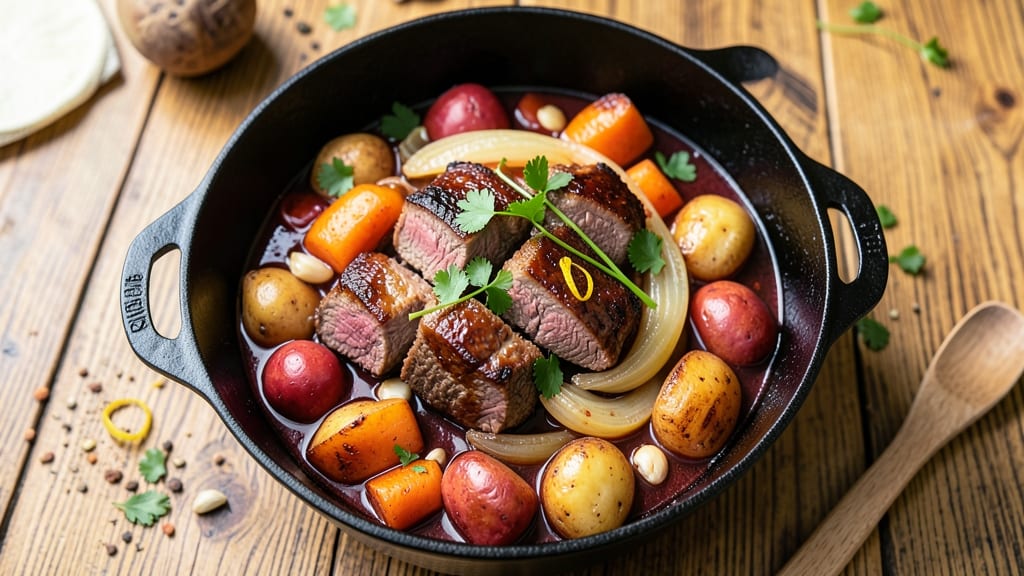
This American beef stew recipe delivers the hearty, comforting flavors of a classic Sunday dinner—deep, rich, and packed with tender beef and caramelized root vegetables.
The secret lies in slow-browning the beef and simmering it for hours in a red wine-infused broth, creating a sauce so velvety it coats every bite. I've perfected this version to balance tradition with modern convenience, whether you're using a Dutch oven or a slow cooker.
The foundation starts with properly searing the beef in batches to develop a deep, savory crust before deglazing with wine and broth. Carrots, potatoes, and onions caramelize slowly, transforming into sweet, tender morsels that melt in your mouth.
What sets this apart is the red wine reduction, which adds complexity without overpowering the beef's natural richness.
By the time it's done, you'll have a stew so hearty it feels like a hug in a bowl—perfect for chilly evenings or family gatherings.
The aroma alone will have everyone gathering around the table, and each spoonful delivers layers of flavor: tender beef, caramelized vegetables, and a sauce that's rich yet balanced. Serve it with crusty bread to soak up every last drop.
This recipe scales beautifully for crowds and reheats even better the next day. Whether you're cooking for one or feeding a houseful, the slow-simmered results are always restaurant-quality. Let's get started on this timeless classic.
Ingredients for american beef stew
Six hearty ingredients transform into a rich, wine-braised stew perfect for cozy evenings.
| Ingredient | Amount | Notes |
|---|---|---|
| Chuck Roast 🥩 | 3 lb | Well-marbled, cut into 1.5-inch cubes |
| Yellow Onions 🧅 | 2 whole | Chopped into 1/2-inch pieces |
| Carrots 🥕 | 4 whole | Cut into 1-inch chunks, peeled |
| Russet Potatoes 🥔 | 3 lb | Cut into 1.5-inch chunks, peeled |
| Garlic Cloves 🧄 | 6 cloves | Minced, fresh preferred |
| Dry Red Wine 🍷 | 1 cup | Bold variety like Cabernet Sauvignon |
| Beef Broth 💧 | 4 cups | Low-sodium preferred |
| Tomato Paste 🍅 | 2 tbsp | Smooth, not chunky |
| All-Purpose Flour 🌾 | 2 tbsp | For thickening sauce |
| Fresh Thyme 🌿 | 1 tbsp | Chopped leaves only |
| Fresh Rosemary 🌿 | 1 tbsp | Chopped, stems removed |
| Olive Oil 🫒 | 2 tbsp | Extra-virgin for browning |
| Salt 🧂 | 1 ½ tsp | Kosher or sea salt |
| Black Pepper 🌶️ | 1 tsp | Freshly ground |
| Bay Leaves 🍃 | 2 whole | Remove before serving |
The chuck roast is non-negotiable here—its fat marbling keeps the beef tender during the long simmer. Costco or Whole Foods carry excellent pre-cut chuck, but if you're buying a whole roast, ask the butcher to cube it for you. Look for pieces with visible marbling; this ensures juiciness. The potatoes and carrots should be firm and free of soft spots—organic varieties from the grocery store's produce section work perfectly. Fresh thyme and rosemary elevate the dish, so grab them from the store's refrigerated section, where they're kept freshest. If you're short on time, dried herbs work at one-third the amount, but fresh is ideal for that bright, aromatic punch.
No red wine? Beef broth with a splash of balsamic vinegar mimics the acidity and depth, though it won't have the same complexity. The tomato paste can be swapped for a small can of crushed tomatoes, but reduce it first to avoid a watery stew. If you're using a slow cooker, skip the initial browning step and add the flour directly to the pot—it'll still thicken the sauce, just a bit less dramatically. For extra richness, stir in a tablespoon of Worcestershire sauce at the end, but omit it if you're avoiding umami. The bay leaves add subtle earthiness, so don't skip them, but remember to fish them out before serving—nobody wants a leafy surprise!
This stew tastes even better the next day, so make a double batch if you're feeding a crowd. Store leftovers in an airtight container in the fridge for up to 5 days, or freeze portions for 3 months. To reheat, warm over medium heat on the stovetop, adding a splash of broth or water if it thickens too much. The flavors meld beautifully over time, so don't rush it. For meal prep, portion into individual containers—each serving makes a perfect lunch the next day, especially with a side of crusty bread to soak up the sauce.
Why You'll Love This Recipe
- Foolproof Prep: I swear by this—just sear the chuck roast, dump in chopped onions, carrots, and garlic, then let the slow cooker do the work. No fancy techniques, no stress.
- Deep, Rich Flavor: That chuck roast turns tender while the potatoes soak up the savory broth—crispy edges, creamy centers, and just enough garlic to make your kitchen smell like a cozy diner.
- Leftovers for Days: Between us, this stew only gets better after reheating. I make a double batch on Sunday, freeze half, and still have seconds the next night. Minimal effort, maximum payoff.
- Budget-Friendly Feast: A chuck roast stretches across meals, and the veggies are cheap but pack serious flavor. Honestly? This is how I feed my family well without breaking the bank—every time.
Step-by-step instructions for American beef stew
Here's how to create a rich, hearty stew with tender beef and caramelized vegetables.
Sear the Chuck Roast for Deep Flavor
Heat a large Dutch oven over medium-high heat and add 2 tablespoons olive oil. Working in batches, add the 3 lb chuck roast cut into 1.5-inch cubes, letting each piece develop a deep brown crust before removing to a plate. This searing step is crucial—it creates the Maillard reaction that builds complex flavors in your stew.
Don't rush this process. You're looking for golden brown color on all sides, which should take about 8-10 minutes total. Once all the beef is browned, return it to the pot and set aside temporarily. The fond that forms at the bottom of your Dutch oven will dissolve beautifully into the wine later.
Caramelize the Vegetables
In the same Dutch oven, add 2 whole yellow onions chopped into ½-inch pieces and 4 whole carrots cut into 1-inch chunks. Cook over medium heat for 8-10 minutes, stirring occasionally, until the onions are translucent and the carrots begin to soften. This slow cooking allows the natural sugars in the vegetables to caramelize, adding sweet depth to your stew.
Add the 3 lb russet potatoes cut into 1.5-inch chunks and cook for another 5 minutes, stirring occasionally. The potatoes should begin to soften slightly but shouldn't fully cook yet. This step ensures your vegetables develop maximum flavor before being submerged in the braising liquid.
Build the Braising Liquid
Sprinkle 2 tablespoons all-purpose flour over the vegetables and stir to coat them evenly. Cook for 1 minute to toast the flour slightly, which helps thicken the stew and adds a subtle richness. Pour in the 1 cup dry red wine and scrape up any browned bits from the bottom of the pot with a wooden spoon.
Add the 4 cups beef broth, 2 tablespoons tomato paste, 6 cloves minced garlic, 1.5 teaspoons salt, 1 teaspoon black pepper, 1 tablespoon chopped fresh thyme, 1 tablespoon chopped fresh rosemary, and the 2 whole bay leaves. Stir well to combine all ingredients and bring the mixture to a gentle boil.
Braise Until Tender
Return the browned beef to the pot and bring everything to a gentle simmer. The liquid should just barely bubble at the edges. Cover the pot and transfer it to a 325°F oven. Here's where patience pays off—braise the stew for 2.5-3 hours until the beef is fork-tender and pulls away from the bone easily.
Check the stew after 2 hours—if the potatoes aren't quite tender, return the pot to the stovetop and simmer uncovered for 15-20 minutes to thicken the sauce slightly. The vegetables should be soft enough to pierce with a fork but still hold their shape. The stew should be rich and deeply flavored, with the wine's acidity perfectly balanced by the meat's richness.
Finish and Serve
Remove the 2 whole bay leaves before serving. Taste the stew and adjust seasoning if needed—you might need a touch more salt or pepper to balance the flavors. The stew should be thick enough to coat the back of a spoon but still have a silky texture.
Serve the stew hot, ladling it over crusty bread or buttered egg noodles. Each bite should deliver tender beef, caramelized vegetables, and a complex sauce that's both rich and well-balanced. This stew tastes even better the next day, so consider making extra for leftovers—it's perfect for reheating and enjoying throughout the week.
Pro Tips For Making American Beef Stew
- Sear the Chuck Hard: I learned this the hard way—skipping the sear means flavorless beef. Get that roast screaming hot in a dry skillet (no oil needed) for 3-4 minutes per side until deep brown. The crust locks in juices and builds the stew’s depth—no one wants mushy, pale beef chunks.
- Cut Potatoes Uniformly: Russets break apart when overcooked, so slice them into 1-inch chunks before adding them to the stew. If they’re uneven, some will turn to mush while others stay hard. (Yes, even if you’re impatient like me.)
- Deglaze with Beer First: After browning the meat, splash in ½ cup of beer (or broth) immediately—it lifts all those stuck-on bits off the pan. Wait too long, and you’ll scrape up burnt residue. This is the thing that matters most for rich flavor without extra work.
- Add Carrots Last: Toss carrots in just 15 minutes before serving—otherwise, they turn to mush. I skip this when I’m lazy, but the dish is noticeably better when they’re still crisp with a bite. (Your future self will thank you.)
Health benefits of american beef stew
Protein Powerhouse
This beef stew delivers a substantial 40 grams of protein per serving, thanks to the chuck roast's lean yet flavorful meat. That's nearly 80% of the daily recommended intake for an average adult in just one bowl.
The slow-cooking process keeps the beef tender while preserving its muscle-building benefits, making this an excellent meal for athletes or anyone looking to maintain muscle mass. 💪
Rich in Iron
Beef is one of the best dietary sources of heme iron, which your body absorbs far more efficiently than plant-based iron. A 3-lb chuck roast provides about 12mg of iron per serving, which is 67% of your daily needs.
This mineral is crucial for energy production and preventing fatigue—perfect for those long winter evenings when you need a comforting, energizing meal.
Fiber from Veggies
The carrots, potatoes, and onions in this stew contribute 8 grams of dietary fiber per serving, supporting healthy digestion and keeping you full longer. Fiber also helps regulate blood sugar levels, making this a balanced meal that won't leave you crashing later.
The slow cooking process actually increases the fiber's solubility, enhancing its digestive benefits. 🥕
Heart-Healthy Fats
While beef contains saturated fat, the marbling in chuck roast provides monounsaturated fats that support heart health when consumed in moderation. The red wine used in the recipe adds polyunsaturated fats and antioxidants like resveratrol, which may help reduce inflammation.
Together, these fats create a rich, satisfying stew that's far more balanced than it might seem.
Vitamin Boost
This stew is packed with vitamin C from the onions and carrots, vitamin B12 from the beef, and potassium from the potatoes—all essential for immune function, nerve health, and proper muscle function.
The slow cooking process actually increases the bioavailability of these nutrients, making every spoonful more beneficial than you might expect. 💡
Low-Calorie Comfort
Despite its rich flavors, this stew is surprisingly moderate in calories—about 450 calories per serving—thanks to the lean beef and vegetable-heavy base. The wine and herbs add depth without significant calories, making it a satisfying yet balanced meal.
It's the perfect example of how comfort food can align with health goals when prepared thoughtfully.
Nutrition facts
Frequently asked questions
Can I substitute red wine in this beef stew recipe?
Yes, but you'll need to adjust for flavor and acidity. Use 1 cup beef broth + 1 tablespoon balsamic vinegar for a similar depth, though it won't have the same complexity. For a non-alcoholic version, try apple cider + 1 teaspoon red wine vinegar. The key is maintaining acidity to tenderize the meat properly.
How do I make this stew in a slow cooker?
Skip the searing step and add all ingredients (including flour) directly to the slow cooker. Cook on low for 7-8 hours or high for 4-5 hours, stirring once halfway. The sauce will be thinner, so reduce it on the stovetop before serving. For extra richness, add 1 tablespoon cornstarch mixed with water at the end.
Why did my stew turn out watery?
Watery stews usually happen from overcooking or insufficient thickening. If using a Dutch oven, simmer uncovered for 15-20 minutes at the end to reduce the liquid. For slow cookers, add 1 tablespoon cornstarch mixed with cold water at the end. Always check for tender beef first—overcooking breaks down the meat and releases more liquid.
Can I prepare this stew ahead of time?
This stew tastes even better the next day! Store in an airtight container in the fridge for up to 5 days or freeze for 3 months. Reheat gently on the stovetop, adding a splash of broth if needed. The flavors meld beautifully overnight, making it perfect for meal prep or holiday gatherings.
What's the best way to reheat leftovers?
Reheat slowly on the stovetop over medium-low heat to prevent curdling. Add 1-2 tablespoons broth or water if the stew thickens too much. Microwaving can make the sauce rubbery—always use stovetop heat. For frozen stew, thaw overnight in the fridge first, then reheat as usual.