
Main Courses
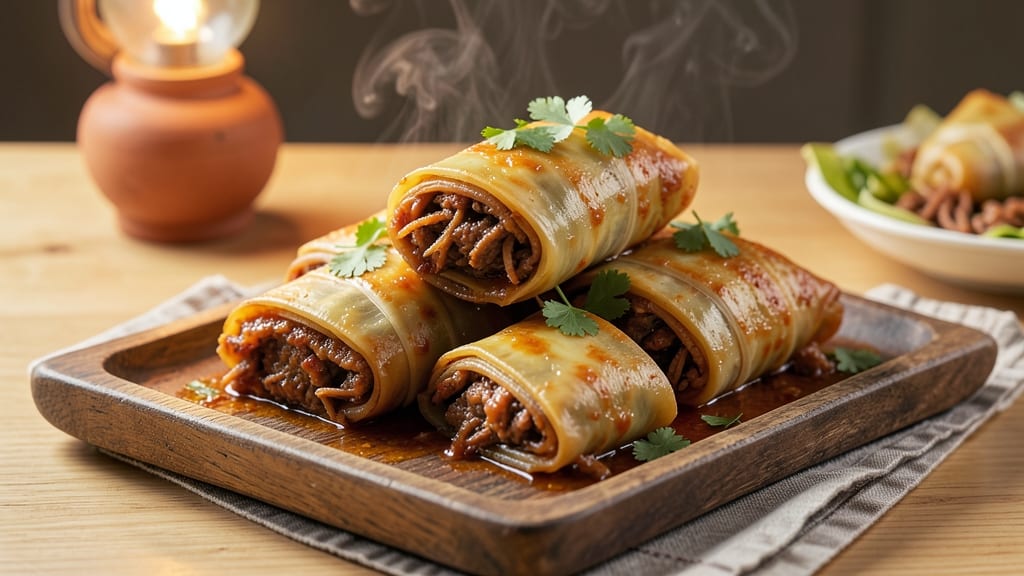
This authentic Mexican beef tamales recipe from scratch transforms your kitchen into a traditional Mexican cocina—where homemade masa, rich spiced beef, and tender corn husks create a dish steeped in heritage.
The secret lies in perfectly balanced masa dough, infused with achiote and lard for that signature golden hue and tender texture, while the beef filling simmers with cumin, bay leaf, and guajillo chiles until it melts in your mouth.
What sets these tamales apart is the layered technique: each masa packet is carefully filled with the savory beef mixture, then wrapped and steamed to achieve that iconic moist yet firm bite.
Unlike shortcut versions, this recipe demands patience—kneading the masa by hand, wrapping with precision, and steaming for hours—but the results are unmistakably restaurant-quality, with every flavor and texture intact.
The aroma alone—warm corn husks mingling with smoky spices and tender meat—will have your guests asking for seconds. These tamales are built for gatherings: make a double batch and freeze extras for future celebrations.
The key is in the details: using fresh masa harina, properly toasting the husks, and maintaining even steam pressure throughout.
Whether you're serving them at a fiesta or simply craving a taste of Mexico, this recipe delivers authenticity without compromise. The process may be labor-intensive, but the reward—a dish that carries generations of tradition—is worth every minute spent perfecting it.
Ingredients for authentic mexican beef tamales recipe from scratch
Twelve essential ingredients transform your kitchen into a Mexican cocina for authentic tamales.
| Ingredient | Amount | Notes |
|---|---|---|
| Masa Harina 🌽 | 4 cups | Maseca brand preferred for authenticity |
| Lard 🧈 | 1 cup | Leaf lard for best texture |
| Achiote Paste 🌶️ | 1 tbsp | Natural red coloring and flavor |
| Warm Water 💧 | 2 ½ cups | 100°F for ideal masa consistency |
| Corn Husks 🌿 | 24 whole | Medium-sized, soaked 2 hours |
| Beef Chuck Roast 🥩 | 3 lb | Well-marbled for juiciness |
| Guajillo Chiles 🌶️ | 6 whole | Stemmed and seeded |
| Dried Ancho Chiles 🌶️ | 3 whole | Stemmed and seeded |
| Garlic Cloves 🧄 | 8 cloves | Peeled and minced |
| White Onion 🧅 | 1 whole | Medium, chopped |
| Ground Cumin 🌿 | 2 tsp | Freshly toasted preferred |
| Bay Leaves 🍃 | 2 whole | Dried, crushed lightly |
| Salt 🧂 | 1 ½ tsp | Kosher salt preferred |
| Black Peppercorns 🌶️ | ½ tsp | Freshly cracked |
| Vegetable Oil 🫒 | 1 tbsp | For cooking onions |
The masa harina is non-negotiable—Maseca brand delivers the signature texture. Leaf lard, not vegetable shortening, creates that tender, melt-in-your-mouth quality. Penzeys Spices for achiote paste ensures vibrant color and authentic flavor. Soak the corn husks for at least 2 hours before using, and keep them covered in warm water. For the beef, chuck roast with good marbling is ideal—ask your butcher to trim excess fat. Guajillo and ancho chiles should be toasted lightly to deepen their smoky notes before soaking.
No achiote paste? Annatto seeds steeped in hot oil works as a substitute, though the flavor won't be identical. Short on time? Pre-toasted and soaked chiles from Mexico City Spice save hours of prep. The beef filling can be made a day ahead and refrigerated—just reheat gently before assembling. For extra authenticity, add a pinch of Mexican oregano to the spice mix. If you can't find leaf lard, vegetable shortening is the next best option, though the texture will be slightly different.
Masa dough keeps for 3 days in the fridge, covered tightly. The beef filling can be frozen for 3 months—portion it into containers before freezing. Soaked husks should be stored in their water, changed every 8 hours. Tamales reheat beautifully—steam for 15-20 minutes until heated through. For gatherings, double the recipe and freeze assembled tamales before steaming—just add 10 minutes to the steaming time when ready to serve.
Why You'll Love This Recipe
- No-Fuss Assembly: I swear by the masa harina’s magic—just mix, fold, and steam. The lard keeps it tender without fuss, and those corn husks? They’re pre-wrapped edible plates. Honestly, the hardest part is deciding whether to fold them like a burrito or a neat little parcel.
- Deep, Earthy Richness: That achiote paste is where it happens—a warm, slightly smoky depth that clings to every bite. The beef stays juicy, the masa gets that perfect crumbly-yet-moist texture, and the lard adds a quiet richness. It’s the kind of flavor that makes you slow down and savor.
- Party-Proof Perfection: Between us, these are my go-to for birthdays, holidays, or just because. They reheat beautifully, feed a crowd without stress, and even my picky uncle can’t resist. Plus, the leftovers? Still delicious the next day—just steam and serve.
- Budget-Friendly Feast: Masa harina and corn husks stretch further than you’d think. A single batch feeds six, and the ingredients won’t break the bank. I’ve made these for potlucks where everyone left with seconds—and no one asked for the recipe. (Okay, fine, they did.)
Step-by-step instructions for authentic Mexican beef tamales
Master the art of tamales with this traditional method—where homemade masa meets rich, spiced beef filling.
Prepare the Corn Husks
Soak all 24 whole corn husks in warm water for at least 2 hours to soften completely. This ensures they stay pliable when wrapping the tamales. Drain and set aside on a clean kitchen towel, keeping them covered with a damp towel to prevent drying out.
While the husks soak, prepare your work surface by laying out a clean cutting board or large plate. You'll need about 12 husks for the beef filling and 12 for the masa—though some may be used for extra layers during wrapping. Test a husk's pliability by gently pressing it; it should bend without cracking. If any remain stiff after soaking, return them to the warm water for another 15-20 minutes.
Make the Spiced Beef Filling
In a large skillet, heat 1 tablespoon vegetable oil over medium heat. Add the chopped white onion and cook for 5 minutes until translucent. Add the 8 minced garlic cloves and cook for another 1 minute until fragrant.
Add the 6 whole guajillo chiles and 3 whole dried ancho chiles (stemmed and seeded) to the pan. Toast them for 2 minutes, stirring constantly, until they darken slightly and release their aroma. Remove the chiles and transfer them to a bowl. Pour 1 cup of hot water over the chiles and let them steep for 15 minutes to soften.
In the same skillet, add the 3 lb beef chuck roast, cut into 1-inch cubes. Sear the beef for 5-7 minutes until browned on all sides. Add the 2 teaspoons ground cumin, 1.5 teaspoons salt, 0.5 teaspoon black peppercorns, and 2 crushed bay leaves. Pour the chile-infused water back into the skillet and bring to a simmer. Cover and cook for 1.5 hours until the beef is tender and easily shreds with two forks. Shred the beef and set aside to cool.
Prepare the Masa Dough
In a large mixing bowl, combine the 4 cups masa harina and 1 tablespoon achiote paste. Mix well to distribute the paste evenly. Gradually add the 2.5 cups warm water (about 100°F) while stirring with a wooden spoon or your hands. The dough should form a soft, pliable ball that holds together when pressed.
If the dough feels too dry, add 1 tablespoon of warm water at a time until it reaches the right consistency—it should be moist but not sticky. If it's too wet, knead in 1 tablespoon of masa harina until it firms up. Cover the bowl with a damp towel and let the dough rest for 15 minutes to hydrate fully.
In a separate small saucepan, melt the 1 cup lard over low heat until fully liquid. Stir the lard into the masa dough, mixing until fully incorporated. The dough should become slightly glossy and more cohesive. Divide the dough into 12 equal portions (about ½ cup each) and set aside on a plate.
Assemble and Steam the Tamales
Line a large pot with a steamer basket or fill it with 2 inches of water, bringing it to a gentle boil. While the water heats, take one portion of masa dough and flatten it into a 4-inch circle on a corn husk. Spread 2-3 tablespoons of the beef filling over the masa, leaving a ½-inch border around the edges. Fold the husk over the filling, sealing the edges tightly with a small amount of dough to prevent leaks.
Repeat this process with the remaining dough and filling, arranging the tamales upright in the steamer basket, seam-side down. Cover the basket with a clean towel and steam the tamales for 60-75 minutes over medium-high heat, ensuring the water does not boil vigorously—this prevents the tamales from becoming waterlogged.
Check for doneness by carefully opening one tamale. The masa should be firm and slightly springy to the touch, and the filling should be hot throughout. If the masa feels undercooked, steam for another 10-15 minutes. Once done, let the tamales rest for 5 minutes before serving to allow the filling to set.
Pro Tips For Making Authentic Mexican Beef Tamales Recipe From Scratch
- Soften the Lard First: Skip the cold lard straight from the fridge—it’ll make your masa dough fight you. Warm it in a bowl over hot (not boiling) water until it’s soft but not liquid, then mix it into your masa. This ensures even distribution and a tender texture without greasy pockets.
- Boil Husks Just Enough: Over-boiling husks turns them mushy and hard to handle. Drop them in a pot of water for 10–15 minutes until pliable but still firm—like a fresh tortilla. Drain and soak in warm water while you work; soggy husks = messy filling.
- Mix Achiote Paste with Lard: Stir the achiote paste into the warm lard before adding it to the masa. This prevents clumpy, uneven color and flavor—your tamales will have that signature golden hue and depth of taste instead of looking like someone forgot the seasoning.
- Steam at 200°F, Not 350°F: Too-hot steam cooks the outside too fast, leaving the center dry. Use a steamer with a tight lid and keep the heat low—200°F is ideal. If your oven doesn’t go that low, prop the door open 2 inches; consistency matters more than speed.
Essential equipment for this dish
Steamer Essentials
You’ll need a large stockpot with a steamer basket (or a dedicated tamale steamer) that can hold all 12 tamales without crowding. I use a 10-quart stainless steel pot from All-Clad—it distributes heat evenly and prevents hot spots.
If you don’t have a basket, layer clean kitchen towels over the pot’s rim to create a makeshift steamer. The key is maintaining gentle steam—never let the water boil vigorously, or your tamales will turn soggy. 💧
Masa Workstation
A clean cutting board or large plate is non-negotiable for shaping the masa. I cover mine with parchment paper for easy cleanup and to prevent sticking. Keep a small bowl of warm water nearby to dampen your hands while working—this prevents the dough from drying out.
A wooden spoon or dough scraper helps flatten the masa evenly, and a rolling pin (or even a clean wine bottle) works for smoothing thicker spots. 🍽️
Husk Prep Tools
Soaking husks requires a large bowl big enough to submerge all 24 husks without overlapping. I use a glass measuring bowl (like the OXO Good Grips line) because it’s easy to monitor water temperature.
A slotted spoon helps drain husks efficiently, and a clean kitchen towel keeps them pliable while you work. For sealing tamales, keep a small bowl of leftover masa dough handy—it’s the best adhesive for tight, leak-proof wraps. 🌿
Lard Handling
Melt the 1 cup lard in a small saucepan over low heat—never high, or it’ll burn. I use a heavy-bottomed pan (like Le Creuset) to prevent splattering. Once melted, let it cool slightly before mixing into the masa.
A rubber spatula helps incorporate the lard evenly, and a digital kitchen scale ensures precise dough portions. Store any leftover lard in an airtight container in the fridge for up to 3 months. 🧈
Spice Toasting Setup
Toast the guajillo and ancho chiles in the same skillet used for the beef—this maximizes flavor extraction. A fine-mesh strainer (like OXO’s Good Grips) catches seeds and stems when straining the chile-infused water.
For grinding spices, a mortar and pestle works best for cumin and peppercorns, but a spice grinder speeds up the process. Keep a small bowl nearby to catch any stray seeds or debris. 🌶️
Assembly Station
Arrange your soaked husks, masa portions, and beef filling in three separate bowls within arm’s reach. A sharp chef’s knife (I use Wüsthof) helps trim husks to size, and a pastry brush lightly dampens stubborn edges for sealing.
For efficiency, work in batches—assemble 4 tamales at a time, then steam them in two rounds if needed. A timer ensures even cooking, and a meat thermometer (like ThermoWorks Smoke) checks internal temp for perfection. ✨
Nutrition facts
Frequently asked questions
Can I substitute vegetable shortening for lard in the masa?
You can use vegetable shortening, but the texture will be slightly different. Lard gives tamales their signature tender, melt-in-your-mouth quality. If substituting, use ½ cup vegetable shortening + ½ cup neutral oil for a closer texture. The masa will be slightly firmer but still delicious. For best results, stick with leaf lard if possible.
How do I know when the corn husks are properly soaked?
Husks are ready when they bend easily without cracking—like a soft leather. Test by gently pressing one; it should flex without resistance. Soak for at least 2 hours, changing the water after 1 hour to prevent bitterness. If any remain stiff, return them to warm water for another 15-20 minutes. Never use dried or brittle husks—they won't hold the filling.
Can I make the beef filling ahead of time?
The filling keeps well in an airtight container in the fridge for 3 days or freezer for 3 months. Reheat gently on the stove before assembling tamales—just warm to 165°F and stir occasionally. For best texture, avoid reheating in the microwave, as it can make the filling dry.
Why did my tamales turn out dry?
Dry tamales usually mean one of three things: oversteaming, insufficient lard in the masa, or using too much filling. Steam for 60-75 minutes max—check at 60 minutes to avoid overcooking. Ensure your masa has 1 cup lard (not oil or shortening), and leave a ½-inch border of masa around the filling. If they're still dry, try steaming with 1 cup less water in the pot.
What's the best way to reheat leftover tamales?
Steam is always best! Place tamales in a steamer basket over 1 inch of simmering water and cover for 15-20 minutes until heated through. For a quick fix, wrap tamales in foil and reheat at 350°F for 10-12 minutes. Avoid microwaving—it creates a rubbery texture. Serve with warm salsa roja or crema to revive their flavors.