
Soups & Stews
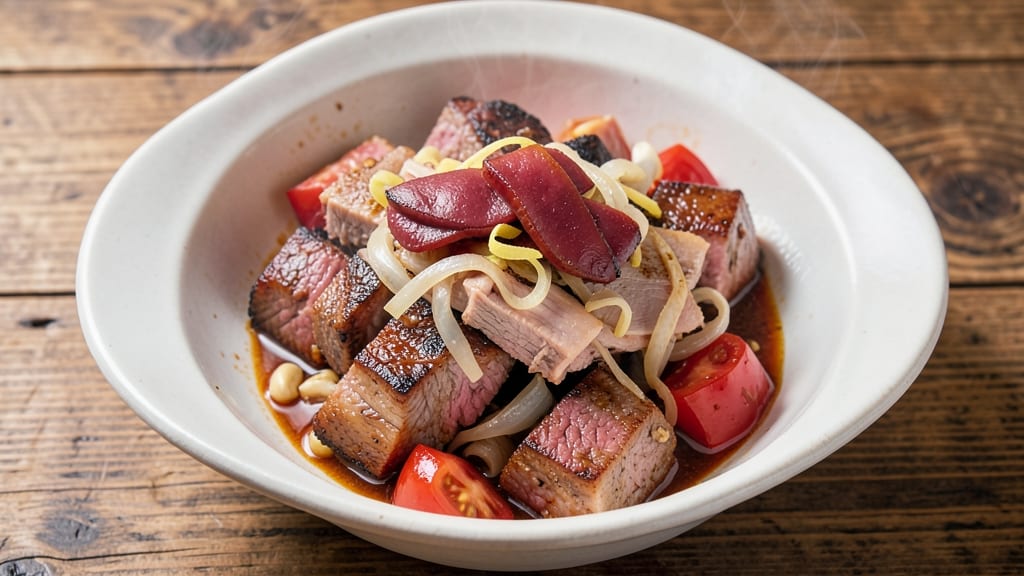
This beef batchoy recipe brings the soul of Filipino street food into your kitchen with its aromatic broth, tender beef, and delicate egg ribbons. The dish starts with a rich, savory broth simmered for hours, packed with beef, pork, and offal that melts into tender perfection.
What makes batchoy special is the way the egg is swirled into silky ribbons right in the wok, creating a dish that's as visually stunning as it is flavorful.
The heart of this recipe lies in the broth—slow-cooked with garlic, ginger, and spices until deeply flavorful. You'll work with a mix of beef, pork, and offal (like liver and tripe), each adding its own texture and depth to the dish.
The noodles are boiled just until tender, then tossed with the sizzling ingredients for that signature wok-fired finish.
What you'll end up with is a steaming bowl of batchoy that's rich, hearty, and full of layers of flavor—tender beef, savory offal, and delicate egg ribbons all swimming in a fragrant broth.
The dish is traditionally served with crispy garlic fried rice on the side, but you can also enjoy it as-is for a satisfying meal.
This recipe stays true to its roots while offering flexibility—whether you want to keep it traditional or make it lighter by reducing the fat. Let's get cooking and bring the flavors of the Philippines to your table.
Ingredients for beef batchoy
Rich broth, tender meats, and silky egg ribbons—this is your batchoy shopping list.
| Ingredient | Amount | Notes |
|---|---|---|
| Beef Chuck Roast 🥩 | 1 ½ lb | Cut into 1-inch cubes |
| Pork Shoulder 🐖 | 1 lb | Cut into 1-inch cubes |
| Beef Liver 🍖 | ½ lb | Trimmed and sliced thin |
| Beef Tripe 🥩 | ½ lb | Cleaned and sliced thin |
| Garlic Cloves 🧄 | 12 cloves | Minced for broth |
| Fresh Ginger 🌿 | 2 tbsp | Grated, peeled |
| Onion 🧅 | 1 whole | Chopped, yellow or red |
| Tomatoes 🍅 | 4 whole | Ripe, quartered |
| Batchoy Noodles 🍜 | 1 package | 12 oz, fresh or dried |
| Large Eggs 🥚 | 4 whole | Fresh, room temperature |
| Vegetable Oil 🫒 | ½ cup | For wok-frying |
| Fish Sauce 🍶 | 2 tbsp | Red Boat preferred |
| Soy Sauce 🥢 | 2 tbsp | Light or dark |
| Black Peppercorns 🌶️ | 1 tsp | Freshly cracked |
| Salt 🧂 | 1 tsp | Kosher or sea salt |
The beef and pork are the stars here, so look for well-marbled cuts at your butcher. Filipino markets often carry pre-cut beef chuck and pork shoulder, but most grocery stores will have them too. If you can't find tripe, substitute extra beef or pork—just be sure to slice it thin. The liver should be bright red, not grayish. For the broth, garlic and ginger are non-negotiable—they build the aromatic base. I like to toast the garlic slightly in oil before adding it to the broth for extra depth. Red Boat fish sauce is the gold standard, but any good-quality brand will work.
No tripe? Use extra beef or pork—just slice it paper-thin. No fish sauce? Soy sauce plus a pinch of sugar gets you close. The noodles can be fresh or dried—if using dried, cook them al dente since they'll finish in the wok. For the eggs, room temperature is key—they'll swirl better. The broth can be made ahead and reheated—it actually tastes better the next day as flavors meld. If you're avoiding offal, double the beef and pork and add mushrooms or extra vegetables for texture.
Broth keeps for 3-4 days in the fridge or 3 months frozen. The noodles? Use within 2 days if fresh. For the eggs, crack them into a small bowl first—it makes swirling easier. This dish reheats beautifully—just warm the broth and toss in the noodles and eggs at the end. Portion the broth into containers so you can reheat just what you need. The leftovers taste even better the next day, so make extra if you can.
Why You'll Love This Recipe
- I’ll be real: This recipe begs to be made in bulk. The next day, the beef chuck roast shreds like butter for sandwiches, the pork shoulder becomes a quick stir-fry, and even the tripe reheats beautifully in a pan with a splash of soy sauce. My freezer is always stocked with portions—I just thaw and go.
- Here’s what sold me: You’re feeding a crowd for the price of two steaks. Tripe and liver might sound fancy, but they’re dirt cheap at the butcher’s, and the pork shoulder stretches across multiple meals. Plus, the broth? So rich you’ll want to bottle it. Not just filling—ridiculously filling.
Step-by-step instructions for beef batchoy
Here's how to make this rich, sizzling noodle dish with perfectly tender beef and silky egg ribbons.
Prepare the Meat Mixture
In a large bowl, combine the 1.5 lb Beef Chuck Roast and 1 lb Pork Shoulder, both cut into 1-inch cubes. Add the 0.5 lb Beef Liver and 0.5 lb Beef Tripe, both sliced thin. Mix in the 12 cloves Garlic Cloves (minced), 2 tbsp Fresh Ginger (grated), 1 whole Onion (chopped), 4 whole Tomatoes (quartered), 2 tbsp Fish Sauce, 2 tbsp Soy Sauce, 1 tsp Black Peppercorns (cracked), and 1 tsp Salt. Use your hands to massage the mixture for 2-3 minutes until all ingredients are evenly distributed. This step ensures every bite is packed with flavor.
Let the meat mixture sit at room temperature for 15 minutes while you prepare the rest. This allows the flavors to meld and the meat to cook more evenly in the wok. If you're short on time, you can skip this step, but the flavor will be slightly less cohesive.
Cook the Batchoy Noodles
Bring a large pot of water to a rolling boil and add the 1 package Batchoy Noodles. Cook according to package instructions until al dente—usually 3-4 minutes for fresh noodles or 5-6 minutes for dried. Drain and rinse briefly under cold water to stop the cooking process. Toss the noodles with 1 tbsp Vegetable Oil to prevent sticking. Keep them covered until ready to use.
Batchoy noodles should have a slight bite to them when you bite into them—this texture is key to the dish. If they feel too soft, cook them for an additional 1-2 minutes before draining. Overcooked noodles will turn mushy when combined with the hot meat mixture.
Wok-Fry the Meat Mixture
Heat a large wok or skillet over high heat until it's smoking. Add the 0.5 cup Vegetable Oil and swirl to coat the bottom. Once the oil is shimmering, add half of the meat mixture in a single layer. Let it sear undisturbed for 2-3 minutes until the edges start to brown and crisp. Use a spatula to gently flip the meat, then add the remaining mixture. Cook for an additional 3-4 minutes, stirring occasionally, until the meat is deep brown and fully cooked through.
This high-heat cooking method is essential for developing the rich, caramelized flavors that define batchoy. If the meat releases too much liquid, reduce the heat slightly to prevent steaming. The goal is to create a sizzling, aromatic base for your noodles.
Combine Noodles and Create Egg Ribbons
Push the cooked meat mixture to one side of the wok. Add another 1 tbsp Vegetable Oil to the empty space and let it heat up. Crack the 4 whole Large Eggs into a small bowl, then quickly pour them into the hot oil. Using a spatula, gently push the eggs around the wok in swift, circular motions to create thin, silky ribbons. Once the eggs are mostly set but still slightly runny in the center, mix them into the meat.
Add the cooked noodles to the wok and toss everything together vigorously for 1-2 minutes until the noodles are evenly coated in the meat and egg mixture. The residual heat will finish cooking the eggs and noodles perfectly. Taste and adjust seasoning with additional Fish Sauce or Soy Sauce if needed.
Serve Immediately
Transfer the batchoy to serving plates and let it rest for 1-2 minutes—just enough time to let the flavors meld together. Serve immediately while everything is hot and sizzling. The combination of tender beef, silky egg ribbons, and chewy noodles creates a symphony of textures and flavors in every bite.
For an authentic touch, garnish with extra cracked Black Peppercorns and serve with a side of sliced green onions or chili sauce for those who like a bit of heat. This dish is best enjoyed fresh, so don't wait too long before serving!
Pro Tips For Making Beef Batchoy
- Parboil the Tripe: I learned this the hard way—skipping the 15-minute parboil leaves tripe tough as boot leather. Use a big pot of water with a splash of vinegar (it tenderizes) and a pinch of salt, then drain before adding it to the batchoy. Trust me, your future self will notice the difference when it melts in your mouth.
- Sear in Batches: Crowding the pan turns beef chuck and pork shoulder into greasy sludge. Work in 2-inch-thick layers, let the first batch get a deep crust (3-4 minutes), then move it to a plate before adding the next. Yes, it takes patience, but that crust is what makes batchoy sing.
- Garlic: Pound It: Whole garlic cloves just sit there like decorative rocks. Crush them with the flat side of your knife or smash them with the bottom of a pan—this releases flavor into the oil. I was skeptical until I tried it; now I refuse to skip it.
- Liver Last, 2 Minutes: Toss beef liver in at the very end and cook it just until it’s just done—no longer. Overcook it, and it turns to rubber. Two minutes is all it needs, and it’ll add richness without turning the whole dish bitter. (Your knife will thank you too.)
Health benefits of this dish
Protein Powerhouse
Batchoy delivers a serious protein boost with its beef, pork, and offal combination—each serving packs about 35-40 grams of protein. The beef chuck and pork shoulder provide lean muscle-building protein, while the liver adds iron-rich nutrition.
This makes it perfect for post-workout meals or anyone needing a protein-packed dinner. 💪
Iron-Rich Offal Benefits
The beef liver and tripe in batchoy make this dish an excellent source of iron and B vitamins. Just ½ lb of liver provides nearly 50% of your daily iron needs, supporting energy levels and red blood cell production.
The tripe adds collagen for gut health and skin elasticity. I notice my energy levels stay steady when I include offal in my meals.
Balanced Nutrition
While rich in protein and iron, batchoy also offers complex carbohydrates from the egg noodles and healthy fats from the vegetable oil used in cooking. The egg ribbons add complete protein with all essential amino acids.
For a lighter version, I sometimes reduce the oil by 20% and add extra vegetables like bell peppers or spinach.
Digestive Benefits
The combination of ginger and garlic in the broth provides natural anti-inflammatory properties that aid digestion. The tripe contains gelatin which supports gut health, while the egg provides choline for liver function.
This dish actually helps my digestion better than many other heavy meals. The broth's umami flavors also stimulate saliva production, making it easier to digest.
Customizable for Dietary Needs
You can easily adapt batchoy to be lower in fat by using leaner cuts of beef and reducing the oil to ¼ cup. For a vegetarian version, substitute tofu and mushrooms for the meat while keeping the egg ribbons.
The dish remains satisfying while becoming more balanced. I've made a chicken batchoy version that's just as flavorful but with half the fat.
Energy-Boosting Flavors
The combination of fish sauce, soy sauce, and black peppercorns creates a flavor profile that's both savory and slightly spicy. These ingredients help stimulate circulation and metabolism, making batchoy a surprisingly energizing meal.
The ginger in the broth also helps with nausea and digestion. It's one of those dishes that makes me feel both satisfied and revitalized after eating.
Nutrition facts
Frequently asked questions
What makes batchoy different from regular beef noodle soup?
Batchoy stands out with its wok-fired egg ribbons and sizzling meat mixture tossed with noodles at the last minute. Unlike traditional beef noodle soup that simmers everything together, batchoy's high-heat cooking creates crispy edges on the meat and silky egg strands that melt into the dish. The broth is also more aromatic from the caramelized garlic and ginger.
Can I make batchoy without offal (liver and tripe)?
Substitute the 0.5 lb liver and tripe with an extra 1 lb beef and pork, sliced thin. For texture, add ½ lb mushrooms or extra vegetables. The dish will still be flavorful—just slightly less rich in iron. Many modern versions skip offal entirely for a lighter profile.
How do I get the perfect egg ribbons in batchoy?
Use room-temperature eggs and a very hot wok with oil shimmering before adding them. Crack eggs into a small bowl first, then quickly pour into the wok and swirl rapidly with a spatula in one direction. The key is high heat and constant motion—stop when eggs are mostly set but still slightly runny. Practice makes perfect!
Can I make batchoy broth ahead of time?
Yes! The broth actually tastes better the next day as flavors deepen. Cook the meat mixture as directed, then refrigerate in an airtight container for up to 3 days or freeze for 3 months. Reheat gently before adding fresh noodles and eggs. For extra flavor, add a splash of fish sauce when reheating.
What's the best way to serve batchoy?
Serve immediately with crispy garlic fried rice on the side and garnish with sliced green onions or chili sauce for heat. For presentation, arrange the egg ribbons artistically over the noodles. Traditionally, it's eaten with chopsticks and a spoon—use the spoon to scoop up the broth and noodles together.