
Soups & Stews
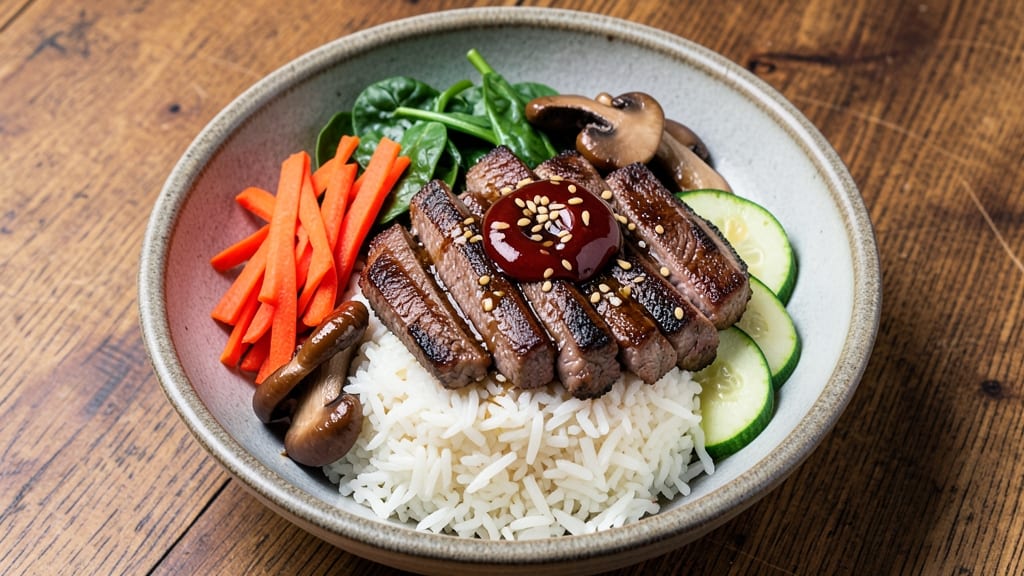
This beef bibimbap bowl recipe delivers the perfect balance of textures and flavors—crispy wok-seared beef, silky jasmine rice, and vibrant stir-fried vegetables all coming together in a harmonious bowl.
The key lies in the technique: high-heat searing for the beef creates a caramelized crust, while quick stir-frying preserves the vegetables' bright colors and crisp-tender bite. What sets this dish apart is the gochujang sauce, which ties everything together with its signature sweet-spicy depth.
What makes this recipe work is the combination of traditional methods and modern adaptability. You'll start with thinly sliced beef marinated in soy and sesame, then sear it in a hot wok until it develops that coveted crust.
The vegetables—carrots, zucchini, spinach, and shiitake mushrooms—are stir-fried separately to maintain their individual textures, ensuring each bite offers a satisfying contrast. The dish is completed with steamed jasmine rice and a drizzle of gochujang sauce, which adds the perfect tangy-sweet finish.
By the time you assemble the bowl, you'll have a dish that's as visually stunning as it is delicious. The vibrant colors of the vegetables create a beautiful contrast against the white rice, while the crispy beef adds a satisfying crunch.
The gochujang sauce not only enhances the flavors but also brings everything together into a cohesive, restaurant-quality meal. This recipe is designed to be both impressive and approachable, making it perfect for weeknight dinners or special occasions.
The best part? You can customize it to your liking. Swap in your favorite vegetables, add a fried egg on top for extra richness, or adjust the spice level in the gochujang sauce to suit your taste.
Once you try this beef bibimbap bowl, you'll see why it's a staple in Korean cuisine—and why it deserves a place on your dinner table.
Ingredients for beef bibimbap bowl
Crispy beef, silky rice, and vibrant veggies—this bowl packs restaurant-quality flavor in every bite.
| Ingredient | Amount | Notes |
|---|---|---|
| Beef Ribeye Steak 🥩 | 1 ½ lb | Thinly sliced against grain |
| Jasmine Rice 🍚 | 2 cups | Uncooked, long-grain |
| Carrots 🥕 | 2 medium | Julienned into matchsticks |
| Zucchini 🍆 | 2 medium | Sliced into half-moons |
| Baby Spinach 🌱 | 4 cups | Packed, roughly chopped |
| Shiitake Mushrooms 🍄 | 8 whole | Stems removed, sliced |
| Gochujang Sauce 🌶️ | ½ cup | Store-bought or homemade |
| Soy Sauce 🥢 | ¼ cup | For beef marinade |
| Sesame Oil 🫒 | 1 tbsp | Toasted, for flavor |
| Vegetable Oil 🫒 | ½ cup | High smoke point preferred |
| Minced Garlic 🧄 | 4 cloves | Freshly minced |
| Sesame Seeds 🌾 | 1 tbsp | Toasted, for garnish |
| Salt 🧂 | 1 ½ tsp | Kosher or sea salt |
| Black Pepper 🌶️ | ½ tsp | Freshly ground |
| Sugar 🍚 | 1 tbsp | White granulated |
The beef is where the magic happens. Ribeye delivers the perfect marbling for that caramelized crust—sirloin works too, but ribeye's fat keeps it juicy. Slice it paper-thin against the grain for maximum tenderness. Costco or Whole Foods carry pre-sliced beef for bibimbap, but if you're slicing yourself, a sharp knife and steady hand make all the difference. Look for cuts with good marbling, not lean slices. The jasmine rice should be long-grain and fragrant—Lotus Foods or Tilda brands are my go-to for that authentic texture.
Vegetables should be bright and crisp—no wilted spinach or rubbery carrots. For the carrots and zucchini, julienne them uniformly so they cook evenly. Baby spinach is ideal, but regular spinach works if you chop it finely. Shiitake mushrooms should be fresh, not dried—they add an earthy depth that's essential. No gochujang in your pantry? Mix 3 tbsp soy sauce + 1 tbsp sriracha + 1 tbsp honey as a quick substitute. The sesame oil is non-negotiable—toasted, not the cheap clear kind—it carries the nutty aroma that ties everything together.
Prep ahead whenever possible. The beef marinade keeps for 2 days in the fridge, and the veggies can be stir-fried a day ahead—just reheat gently to maintain crispness. The gochujang sauce thickens when chilled, so stir it before using if it's been refrigerated. Store leftovers in airtight containers for 3-4 days, but honestly? This tastes even better the next day as flavors meld. For extra richness, add a fried egg on top when serving—trust me, it's worth the extra minute.
Why You'll Love This Recipe
- One-Pan Magic: I swear, this is the kind of recipe where you can have dinner on the table without turning your kitchen into a warzone. Sear the ribeye, toss the veggies in the same pan, and boom—minimal cleanup, maximum flavor.
- Juicy, Savory Crunch: That ribeye stays tender with a perfect crust, and the quick-pickled carrots and zucchini add a bright, crunchy bite. Honestly, the first time I mixed it all with the fried egg, I nearly licked the bowl.
- Lunchbox Hero: Between us, this is my go-to for meal prep. The rice keeps well, the beef stays flavorful, and the veggies hold up better than sad desk salads. Pack it in a container, and you’ve got a lunch that’ll make coworkers jealous.
- Budget Flex: Ribeye might sound fancy, but a single steak stretches across two bowls—no waste. Swap in cheaper cuts if needed, and the rest of the ingredients are pantry staples. Solid meal for half the takeout price.
Step-by-step instructions for beef bibimbap bowl
Here's how to assemble the perfect harmony of textures and flavors in your wok-seared beef bibimbap.
Marinate and Slice the Beef Ribeye Steak
In a bowl, combine the 1.5 lb beef ribeye steak with 0.25 cup soy sauce, 1 tbsp sugar, 1.5 tsp salt, and 0.5 tsp black pepper. Gently massage the marinade into the meat, coating every surface. Let it rest at room temperature for 30 minutes—this ensures even cooking and maximum flavor penetration.
While the beef marinates, carefully slice it thinly against the grain using a sharp knife. You want strips about ¼-inch thick—this creates tender, bite-sized pieces that'll caramelize beautifully in the wok. Keep the sliced beef in the marinade until ready to cook, and don't skip this resting time; it makes all the difference in texture.
Prepare the Jasmine Rice Foundation
Rinse the 2 cups jasmine rice thoroughly under cold water until the water runs clear—this removes excess starch and prevents gummy rice. Drain well and transfer to a pot with 4 cups water (or follow package instructions). Bring to a boil, then reduce heat to low, cover, and simmer for 15 minutes.
Turn off the heat and let the rice steam, covered, for another 10 minutes. The residual heat will finish cooking it perfectly. Fluff with a fork and transfer to a serving dish. The rice should be tender but still slightly firm—this is crucial for the perfect bibimbap texture. Keep it warm until ready to assemble.
Wok-Sear the Beef and Vegetables
Heat 0.5 cup vegetable oil in a wok or large skillet over high heat until shimmering. Working in batches, add the marinated beef and sear for 1-2 minutes per side until deep golden brown and cooked to your preferred doneness. Remove and set aside, keeping warm.
In the same wok, add 2 tbsp vegetable oil and stir-fry the 2 medium carrots (julienned), 2 medium zucchini (half-moons), and 8 sliced shiitake mushrooms over high heat for 3-4 minutes until just tender-crisp. Add the 4 cloves minced garlic and cook for 30 seconds until fragrant. Transfer to a bowl and toss with 1 tbsp sesame oil. The vegetables should retain their vibrant colors and slight crunch.
Assemble the Bibimbap Bowls
Divide the cooked jasmine rice evenly among 4 bowls. Create small wells in the center of each bowl and place a portion of the wok-seared beef in each. Arrange the stir-fried vegetables around the beef, creating a colorful, balanced presentation. Add the 4 cups baby spinach on top of the vegetables—it'll wilt slightly from the heat of the rice.
Drizzle each bowl with 2 tbsp gochujang sauce (about 0.125 cup total) and a few drops of sesame oil. Sprinkle generously with 1 tbsp sesame seeds for added crunch and nutty flavor. The gochujang adds that signature Korean warmth while balancing the dish's fresh, vibrant vegetables.
Serve with Fresh Garnishes
Just before serving, add a final drizzle of sesame oil and a pinch of black pepper to each bowl. The oil enhances the aroma, while the pepper adds a subtle kick. Serve immediately while everything is still warm and the flavors are at their peak.
This dish is all about the contrast—silky rice, tender beef, crisp-tender vegetables, and that spicy-sweet gochujang sauce. Mix everything together right before eating to enjoy the full symphony of textures and flavors. Each bite should deliver a perfect balance of heat, umami, and freshness.
Pro Tips For Making Beef Bibimbap Bowl
- SEAR RIBEYE FAST: Get that pan screaming hot—cast iron or stainless steel—before adding the beef, and work in batches if needed. I learned the hard way that a crowded pan steams instead of sears, leaving you with gray, sad meat instead of caramelized crust.
- CUT ZUCCHINI THIN: Slice those zucchini paper-thin with a mandoline or sharp knife, then pat them dry with a towel. Thick slices turn mushy when stir-fried, and no one wants soggy zucchini in their bibimbap.
- SALT RICE LATER: Skip the salt in the water—Jasmine rice absorbs enough from the beef drippings and veggies later. Over-salting the rice upfront makes the whole bowl taste like a sad, briny soup.
- STIR-FRY IN STAGES: Cook the spinach first (it wilts fast), then pull it out. Add carrots and zucchini next, and only toss in the beef at the very end—hot meat cools everything down, and you’ll end up with al dente veggies and cold meat.
Best sauces and condiments for these flavors
Gochujang Sauce
The star of any bibimbap bowl is the gochujang sauce, a fermented chili paste that brings sweet, spicy, and umami depth. For authentic flavor, use Maesil Gochujang or Buldak Gochujang—these brands deliver that signature tangy-sweet balance.
If you're short on time, mix 3 tbsp gochujang, 1 tbsp honey, 1 tbsp rice vinegar, and 1 tsp sesame oil for a quick version. Always stir before using, as it thickens when chilled. 🌶️
For extra richness, add a drizzle of sesame oil to the sauce before serving. This enhances the nutty aroma and ties all the flavors together. If you prefer less heat, reduce the gochujang by half and add 1 tbsp maple syrup to balance the spice.
Trust me, the right sauce makes or breaks this dish!
Sesame Oil
Never skip the toasted sesame oil—it’s the secret to that authentic Korean aroma. Use Kadoya or La Choy brands for the best flavor. Add 1 tbsp to the stir-fried vegetables and a few drops to each bowl before serving.
The oil should be toasted, not the cheap, clear kind—it makes all the difference in taste and aroma. A light drizzle right before eating releases the full nutty flavor.
Spicy Mayo
For a modern twist, serve a side of spicy mayo made with mayonnaise, 1 tsp gochujang, and ½ tsp sriracha. This creamy, tangy condiment cuts through the richness of the beef and adds a fun, crunchy texture when mixed into the bowl.
I like to make a small batch and keep it chilled in the fridge for up to 5 days. It’s a crowd-pleaser, especially for picky eaters!
Kimchi
Add a spoonful of kimchi to your bowl for extra tang and probiotic benefits. Look for napa cabbage kimchi with a bright red color—Hana Gochujang or Chungju brands are my go-to. The acidity balances the sweetness of the gochujang and adds a refreshing crunch.
If you’re short on time, even store-bought kimchi works in a pinch. Just add a ¼ cup per bowl for the best flavor.
Extra Crunch
For texture lovers, top your bibimbap with crispy fried shallots or toasted sesame seeds. I like to toast 1 tbsp sesame seeds in a dry pan over medium heat for 1-2 minutes until golden.
The extra crunch contrasts beautifully with the silky rice and tender beef. A sprinkle of black sesame seeds adds a deeper, nuttier flavor—perfect for those who love bold textures.
Nutrition facts
Frequently asked questions
Can I use ground beef instead of ribeye steak?
Ground beef works perfectly for a quicker version, but the texture will be different. Use 80/20 lean-to-fat ratio for juiciness and form it into small patties before cooking. Sear them in the same wok until browned, then slice into strips. For best results, add 1 tsp minced garlic + ½ tsp grated ginger to the marinade to enhance flavor.
How do I make this dish less spicy?
Reduce the gochujang by half and add 1 tbsp honey or maple syrup to balance the heat. For extra mildness, mix 1 tbsp soy sauce + 1 tsp sugar as a substitute. You can also serve extra rice on the side to dilute the spice when mixing everything together.
What's the best way to reheat leftovers?
Reheat in a skillet over medium heat with 1 tsp sesame oil for 2-3 minutes, stirring gently to restore crispiness. Avoid microwaving—it makes the rice mushy. For extra flavor, add a splash of water and cover for 1 minute to steam the veggies back to life.
Can I prepare this ahead of time?
Yes! Marinate the beef overnight for deeper flavor. Cook the rice and vegetables a day ahead, then refrigerate separately. Reheat components individually before assembling. The sauce can be made 2 days ahead—just stir before using. Pro tip: Keep the beef and veggies in separate containers to maintain texture.
What if I don't have a wok?
Use a large skillet or cast-iron pan—just make sure it's well-heated before cooking. A griddle works too! The key is high heat for that signature caramelized crust. For extra crispiness, cook in batches and don't overcrowd the pan.