
Main Courses
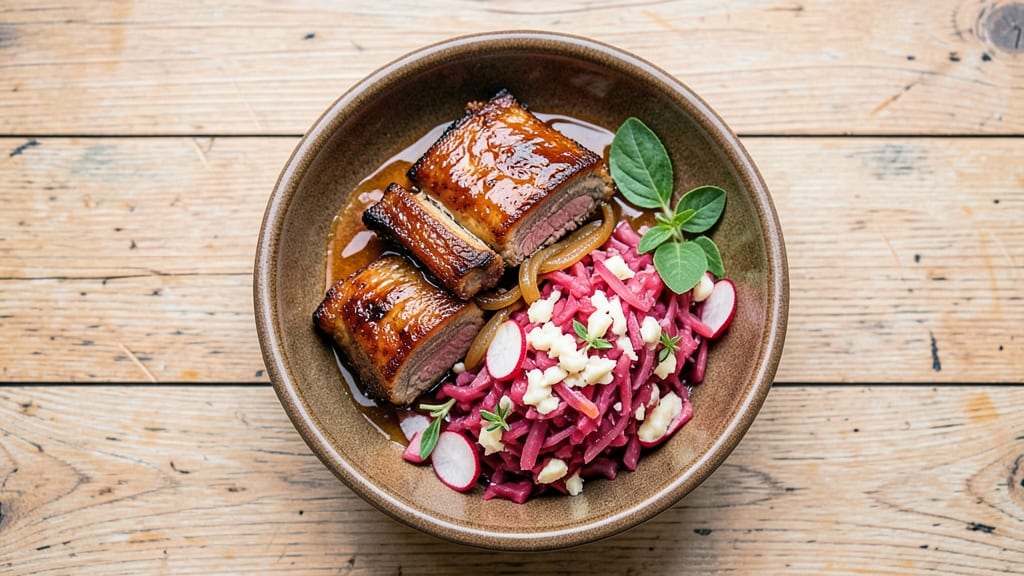
This beef short ribs and sauerkraut recipe delivers deep, caramelized flavors that transform tough cuts into melt-in-your-mouth perfection. The tangy crunch of sauerkraut cuts through the richness, creating a balance that's both comforting and sophisticated.
I developed this method after years of experimenting with braising techniques, and it never fails to impress—whether for a weeknight dinner or a special occasion.
The secret lies in slow-braising the ribs at a steady temperature, allowing the collagen to break down into tender, fork-tender meat. A simple dry rub of salt, pepper, and garlic builds flavor without overwhelming the natural richness of the beef.
Meanwhile, the sauerkraut adds a bright, fermented tang that brightens every bite, while aromatics like onions and bay leaves infuse the dish with depth.
By the time you serve this dish, you'll have perfectly tender short ribs with a glossy, caramelized surface and sauerkraut that's softened just enough to soak up the rich braising liquid.
The sauce reduces into a velvety consistency, coating every bite with layers of umami and sweetness. This is the kind of meal that feels indulgent yet balanced, hearty yet refined.
Whether you're using a Dutch oven for classic results or an Instant Pot for convenience, this method ensures restaurant-quality short ribs with minimal effort.
The beauty of this recipe is its versatility—serve it with crusty bread to soak up the sauce, or pair it with roasted potatoes for a complete meal. Let's get cooking!
Ingredients for beef short ribs and sauerkraut
Rich, caramelized beef meets tangy sauerkraut—just 14 ingredients for restaurant-quality comfort.
| Ingredient | Amount | Notes |
|---|---|---|
| Beef Short Ribs 🥩 | 3 lb | Bone-in, cut into 2-inch pieces |
| Yellow Onions 🧅 | 2 whole | Cut into 1-inch chunks |
| Garlic Cloves 🧄 | 6 cloves | Smashed, not minced |
| Fresh Thyme 🌿 | ¼ cup | Leaves only, stems removed |
| Bay Leaves 🍃 | 2 whole | Fresh preferred |
| Sauerkraut 🥬 | 1 lb | Drained, rinsed if too sour |
| Beef Broth 💧 | 2 cups | Low-sodium preferred |
| Red Wine 🍷 | 1 cup | Dry, like Cabernet Sauvignon |
| Tomato Paste 🍅 | 2 tbsp | Squeeze tube preferred |
| Dark Brown Sugar 🍯 | 2 tbsp | For caramelized depth |
| Kosher Salt 🧂 | 1 ½ tbsp | Diamond Crystal preferred |
| Freshly Ground Black Pepper 🌶️ | 1 tsp | Cracked peppercorns |
| Extra-Virgin Olive Oil 🫒 | ¼ cup | For searing ribs |
| All-Purpose Flour 🌾 | ½ cup | For dusting ribs |
The beef is everything here. Bone-in short ribs with good marbling are non-negotiable—Costco or Whole Foods carry the best cuts. Look for ribs with a vibrant red color and visible fat. I always ask the butcher to cut them into 2-inch chunks, which saves time. If you're buying a whole packer, sear them first before braising to lock in juices. The sauerkraut? Bubba's or Rehr's from the refrigerated section—avoid the canned stuff, it's watered down. For the wine, any dry red works, but Cabernet Sauvignon adds depth without overpowering.
No red wine? Beef broth with a splash of balsamic vinegar works in a pinch. Fresh thyme is ideal, but dried at one-third the amount gets you close. The tomato paste can be swapped for crushed tomatoes if you prefer, though paste gives better thickness. For the sugar, dark brown is key—light brown lacks the caramel notes. If your sauerkraut tastes too sour, rinse it quickly under cold water to mellow the flavor. The flour is just for dusting—no need to measure precisely, just toss the ribs in it before searing.
This dish tastes even better the next day, so make extra. Store leftovers in the fridge for 5 days or freeze for 3 months. The sauce thickens as it cools, so add a splash of broth when reheating. I always portion the ribs and sauerkraut separately—the sauerkraut keeps its crunch better that way. For serving, toast some crusty bread to soak up the rich sauce. Leftovers? Perfect for sandwiches or fried rice the next day.
Why You'll Love This Recipe
- Same recipe, different vibes: throw it together for a lazy Tuesday or impress guests with minimal effort. The ribs are forgiving (even if you overcook them slightly), and the sauerkraut adds that just-right crunch.
- One-Pan Magic: I swear by this recipe when I’m too tired to scrub pots—just sear the ribs, toss in onions and garlic, then let the oven do the work. The thyme and bay leaves infuse everything while you’re watching a movie.
- Rich, Tangy Harmony: That first bite? The short ribs melt like butter, while the sauerkraut’s sharp tang cuts through the richness—like a hug from your grandma’s kitchen. Honestly, I’ve never met a combo this satisfying.
- Weeknight to Dinner Party: Same recipe, different vibes: throw it together for a lazy Tuesday or impress guests with minimal effort. The ribs are forgiving (even if you overcook them slightly), and the sauerkraut adds that just-right crunch.
Step-by-step instructions for braised beef short ribs with sauerkraut
Here's the method that transforms tough short ribs into melt-in-your-mouth perfection with a tangy sauerkraut finish.
Prepare the Ribs for Maximum Flavor
Pat the 3 lb beef short ribs completely dry with paper towels—this ensures a proper sear. In a large bowl, combine the 0.5 cup all-purpose flour, 1.5 tbsp kosher salt, 1 tsp freshly ground black pepper, and 0.25 cup fresh thyme leaves. Toss the ribs in this mixture until evenly coated, shaking off any excess.
Here's the thing—this dry brine isn't just seasoning. It creates a crust that locks in juices while developing deep flavor. Let the coated ribs sit at room temperature for 30 minutes while you prep the rest. This step prevents cold spots in the meat and helps create that signature bark.
Sear the Ribs for Rich, Caramelized Depth
Heat a Dutch oven over medium-high heat until smoking hot. Add the 0.25 cup extra-virgin olive oil and swirl to coat the bottom. Working in batches (you'll need two rounds), add the rib pieces and let them sear undisturbed for 3-4 minutes per side until deeply browned. This isn't just cooking—it's building flavor through the Maillard reaction.
Don't rush this step. You want those ribs to develop a dark mahogany crust. If your pan gets crowded and the temperature drops, work in smaller batches. Transfer the seared ribs to a plate as you go, keeping them warm. The residual heat will continue cooking them slightly while you build the braising liquid.
Build the Braising Foundation
In the same Dutch oven, add the 2 whole yellow onions cut into 1-inch chunks and the 6 smashed garlic cloves. Cook for 5 minutes until the onions soften and begin to caramelize—this sweetens the base of your sauce. Stir occasionally to prevent burning.
Add the 2 tbsp tomato paste and cook for 1 minute, stirring constantly. This creates a thick paste that forms the backbone of your braising liquid. Pour in the 1 cup red wine and scrape up all the browned bits from the bottom with a wooden spoon. Let this simmer for 3-4 minutes until reduced by half, intensifying the flavors.
Braise Until Fork-Tender
Return all the ribs to the Dutch oven. Add the 2 whole bay leaves, 2 cups beef broth, and 2 tbsp dark brown sugar. Bring to a gentle simmer, then cover and transfer to a 325°F oven for 2.5 hours. Here's where patience pays off—the ribs need time to break down into tender perfection.
Check the liquid level occasionally and add ½ cup hot water if it drops below halfway up the ribs. The ribs are done when they easily pull apart with two forks. The sauce should be rich and slightly thickened from the rendered collagen. If it's too thin, uncover and simmer for another 10 minutes to reduce.
Finish with Sauerkraut and Serve
Increase oven temperature to 375°F. Drain and rinse the 1 lb sauerkraut if it's too sour, then squeeze out excess moisture. Spread the sauerkraut evenly over the ribs in the Dutch oven. Return to the oven for 20-25 minutes until the sauerkraut softens and the tops brown slightly.
Remove from the oven and let rest for 10 minutes before serving. The ribs should be fork-tender with a glossy, caramelized sauce clinging to them. The sauerkraut adds that perfect tangy crunch that cuts through the richness. Serve with crusty bread to soak up every last bit of that incredible sauce.
Pro Tips For Making Beef Short Ribs And Sauerkraut
- Brown the Ribs Hard: Don’t just sear—get those short ribs deep golden, even if it takes 10 minutes per side. I used to rush this, and the sauce never stuck right. High heat, cast iron or heavy skillet, and let the fat render. That crust locks in flavor when you braise later.
- Slice Onions Thin: Sauerkraut needs onions that melt, not chew. Cut those yellow onions paper-thin—almost translucent—so they soften fast and blend into the tang. A sharp knife and quick crosswise slices save your hands and your patience.
- Deglaze with Sauerkraut Juice: After browning the ribs, scrape up every last bit with a splash of sauerkraut juice (yes, drain some first). That liquid has acidity and depth—skip the wine or beer shortcut. It cuts through the richness and keeps the sauce bright.
- Add Thyme Late: Toss the fresh thyme in during the last 10 minutes of cooking. I learned this after burning it into oblivion early on. You want the aroma to hit your nose at the end, not turn the sauce bitter. Same goes for bay leaves—remove them before serving.
Flavor customization for these flavors
Sweet-Savory Balance
Add 1 tbsp honey or maple syrup to the braising liquid during the final 30 minutes of cooking. This sweetens the sauce beautifully, especially if your red wine is dry.
The caramelization from the honey enhances the ribs' depth while balancing the sauerkraut's tang. For extra richness, stir in 1 tsp vanilla bean paste alongside the honey. 🍯
Spicy Kick
Boost heat by adding 1 tbsp smoked paprika to the dry rub or ½ tsp cayenne pepper to the braising liquid. For a smoky depth, include 1 chipotle pepper in adobo sauce (minced) when building the braising foundation.
The heat contrasts perfectly with the sauerkraut's cool tang, creating a dynamic flavor profile.
Umami Boost
Enhance the sauce with 1 tbsp soy sauce or 1 tsp fish sauce during the final 15 minutes of braising. These ingredients deepen the umami notes, complementing the beef's natural richness.
For an extra layer, add 1 tbsp Worcestershire sauce when deglazing the pan with wine. The umami complexity makes every bite more satisfying. 💫
Herb Variations
Swap out thyme for rosemary or sage> for a different herbal profile. Fresh rosemary pairs beautifully with the richness of the ribs, while sage adds a subtle earthiness. For a brighter twist, include 1 tbsp fresh parsley at the end of cooking—it adds freshness that cuts through the richness.
Creamy Twist
Stir in ½ cup heavy cream or ½ cup Greek yogurt during the final 10 minutes of braising to create a velvety sauce. This adds a luxurious texture that contrasts with the sauerkraut's crunch.
For a lighter option, use ½ cup coconut milk instead. The creaminess balances the tangy fermented flavors beautifully.
Cheesy Finish
Top the ribs with ½ cup shredded Gruyère or sharp cheddar during the final 5 minutes of baking with the sauerkraut. The cheese melts into the sauce, adding a rich, savory depth.
For a smoky option, use smoked Gouda—it pairs exceptionally well with the caramelized ribs and tangy sauerkraut. 🧀
Nutrition facts
Frequently asked questions
Can I use bone-in or boneless short ribs for this recipe?
Bone-in short ribs are ideal—they add incredible flavor and texture, plus the bones contribute to the rich braising liquid. If you must use boneless, they'll cook faster (about 1.5 hours instead of 2.5 hours) and may need extra liquid to prevent drying. For best results, trim excess fat and sear them longer to develop flavor.
How do I know when the short ribs are fully tender?
Ribs are done when they easily pull apart with two forks and the meat slides off the bone. For extra assurance, cut into a piece—the center should be fork-tender with no pink remaining. If using a meat thermometer, aim for 203°F in the thickest part. The sauce should also thicken noticeably from the rendered collagen.
Can I make this recipe in a slow cooker or Instant Pot?
For a slow cooker, brown ribs first, then transfer everything (except sauerkraut) to the pot and cook on low for 8 hours. Add sauerkraut in the last 30 minutes. For an Instant Pot, sear ribs, then cook on high pressure for 45 minutes with natural release. Sauerkraut goes in during the last 10 minutes of natural release. The Instant Pot version finishes faster but may need extra liquid.
What if my sauerkraut tastes too sour?
Rinse it thoroughly under cold water and squeeze out excess moisture before adding to the dish. For extra insurance, simmer the sauerkraut with 1 tsp sugar for 5 minutes to mellow the acidity. If using store-bought sauerkraut with added vinegar, you may need to adjust seasoning with a pinch more salt or a splash of broth to balance flavors.
How can I make this dish ahead of time?
This recipe actually tastes better the next day! Cook the ribs and sauce as directed, then refrigerate for up to 5 days. Reheat gently on the stove, adding a splash of broth if the sauce thickens too much. For serving, warm the sauerkraut separately in a pan with a little butter for 5 minutes to restore its crunch. Freeze for up to 3 months—just thaw overnight in the fridge.