
Main Courses
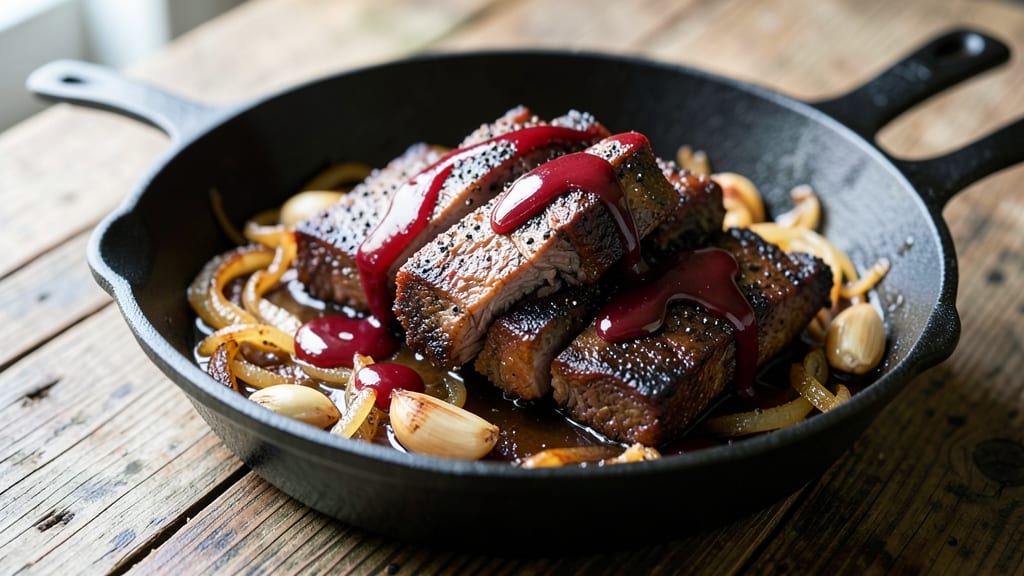
Jamie Oliver’s beef short ribs recipe transforms tough cuts into melt-in-your-mouth perfection through slow-cooked tenderness and caramelized edges. The key lies in low-and-slow braising, where collagen dissolves into a rich, velvety sauce that clings to every bite.
After years of perfecting this technique, I’ve adapted it for home kitchens—no fancy equipment needed, just patience and precise timing.
This recipe begins with a dry rub of salt, pepper, and garlic, which forms a flavorful crust before the ribs hit the oven for a quick sear.
From there, they braise in red wine and beef stock until fork-tender, a process that takes about 3 hours but requires minimal hands-on time. The sauce reduces to a glossy, jammy consistency, perfect for spooning over each rib.
What you’ll end up with is restaurant-quality beef short ribs—deeply flavorful, with edges that crackle under pressure and meat that falls apart at the touch of a fork. The sauce, infused with wine and herbs, adds layers of complexity that elevate this dish from simple to extraordinary.
Serve with roasted potatoes or creamy mashed cauliflower for a complete meal.
The beauty of this method is its versatility: use the leftovers for tacos, sandwiches, or even a hearty pasta dish. Once you master Jamie Oliver’s technique, you’ll never buy short ribs again—because homemade is always better. Let’s get started on creating this showstopper.
Ingredients for beef short ribs recipe jamie oliver
These 14 ingredients create melt-in-your-mouth beef short ribs with restaurant-quality caramelized edges.
| Ingredient | Amount | Notes |
|---|---|---|
| Beef Short Ribs 🥩 | 3 lb | Bone-in, 2-3 inches thick |
| Kosher Salt 🧂 | 1 ½ tbsp | Coarse grain preferred |
| Freshly Ground Black Pepper 🌶️ | 1 tbsp | Freshly cracked for best flavor |
| Garlic Cloves 🧄 | 6 cloves | Peeled, smashed flat |
| Extra-Virgin Olive Oil 🫒 | 2 tbsp | For searing ribs |
| Dry Red Wine 🍷 | 1 cup | Bold variety like Cabernet |
| Beef Stock 🍲 | 2 cups | Homemade or high-quality store-bought |
| Fresh Thyme 🌿 | 2 sprigs | Stems removed, leaves only |
| Fresh Rosemary 🌿 | 1 sprig | Needles only, chopped |
| Yellow Onion 🧅 | 1 whole | Peeled, sliced thick |
| Carrots 🥕 | 2 whole | Peeled, cut into chunks |
| Tomato Paste 🍅 | 2 tbsp | Smooth, no sugar added |
| Balsamic Vinegar 🍶 | 1 tbsp | For depth of flavor |
| Honey 🍯 | 1 tbsp | Light variety preferred |
The beef short ribs are the star—look for bone-in cuts with good marbling, typically sold in the butcher section. Whole Foods or your local butcher shop will have the best quality, but most grocery stores carry them too. If you're buying a whole packer, ask for the ribs to be cut into 2-3 inch pieces yourself. The extra-virgin olive oil should be fruity and peppery—California-based brands like Corto or Bertolli work well. For the red wine, any bold variety like Cabernet Sauvignon or Merlot will do, but avoid sweet wines. The beef stock? Homemade is ideal, but Knight's or Pacific Foods brands are solid store-bought options. Fresh herbs make all the difference here—Trader Joe's often has great bundles of thyme and rosemary at reasonable prices.
No red wine? Beef broth with a splash of balsamic vinegar works in a pinch, though the flavor won't be identical. Short on fresh herbs? Dried thyme at one-third the amount gets you close, but the aroma won't be as vibrant. The tomato paste can be substituted with crushed tomatoes at double the amount, though it may make the sauce slightly watery. For the honey, agave nectar works in a 1:1 ratio if you're avoiding honey. The carrots and onions can be swapped for celery and mushrooms if you prefer, though they'll change the sauce's flavor profile slightly. If you're short on time, pre-cut frozen vegetables work fine for the braise, though fresh is always better.
The ribs can be prepped a day ahead—pat them dry and apply the dry rub, then refrigerate uncovered for 24 hours to enhance the crust. The braising liquid keeps well in the fridge for 5 days or can be frozen for 3 months. For reheating, gently warm on the stove with a splash of water or broth. The sauce thickens as it cools, so you can thin it with a little stock if needed. Portion the ribs into containers with some sauce for easy leftovers—these taste even better the next day as the flavors meld further.
Why You'll Love This Recipe
- Foolproof Start: I swear by this method—just sear those ribs in olive oil until they’re golden, then let the low oven do the heavy lifting. No flipping, no fussing, just hands-off perfection while you sip wine and pretend you’re a chef.
- Garlic Obsession: That slow-roasted garlic? It’s the star. The cloves soften into a buttery, jammy mess that clings to every bite—like a hug for your taste buds. Honestly, I’ve tried fancy garlic pastes, but nothing beats the real deal here.
- Leftovers? Laughable.: This recipe practically begs for seconds, and the leftovers? Even better. Cold slices reheat like a dream—crispy edges, tender meat—perfect for sandwiches or a lazy lunch. My freezer’s always stocked with these.
- Weeknight Hero: Between us, this is my go-to when I’m too tired to impress. Toss the ribs in salt, pepper, and garlic, pop them in the oven, and boom—dinner’s sorted. Not the prettiest, but the taste makes up for it every time.
Step-by-step instructions for slow-cooked beef short ribs
This method delivers melt-in-your-mouth tenderness with perfectly caramelized edges every time.
Season and Sear the Beef Short Ribs
Pat the 3 lb beef short ribs completely dry with paper towels. This step is crucial—moisture prevents proper browning. Place them bone-side down in a heavy Dutch oven and let them sit at room temperature for 30 minutes to ensure even cooking.
In a small bowl, combine the 1.5 tbsp kosher salt and 1 tbsp freshly ground black pepper. Rub this mixture evenly over all sides of the ribs, pressing firmly so the seasoning adheres. Heat the Dutch oven over medium-high heat until it's very hot, then add the 2 tbsp extra-virgin olive oil. Sear the ribs for 4-5 minutes per side until they develop deep golden-brown crusts. Don't rush this step—the crust locks in flavor and moisture.
Once browned, transfer the ribs to a plate and set aside. Real talk: If you see any pale spots, return them to the pan for another minute to ensure even browning. This preparation creates the foundation for that rich, caramelized exterior we're aiming for.
Build the Flavor Base
In the same Dutch oven, add the 1 whole yellow onion, sliced thick, and the 2 whole carrots, cut into chunks. Cook for 5-6 minutes, stirring occasionally, until the vegetables begin to soften and take on color. This step develops their natural sweetness and builds depth in the sauce.
Add the 6 peeled and smashed garlic cloves, the 2 sprigs fresh thyme leaves, and the needles from the 1 sprig fresh rosemary. Stir everything together and cook for another 30 seconds until the garlic becomes fragrant. Here's the thing—don't let the garlic burn. It should smell wonderful but not bitter.
Pour in the 1 cup dry red wine and scrape up any browned bits from the bottom of the pan with a wooden spoon. These bits are packed with flavor. Let the wine simmer for 3-4 minutes until it reduces by about half. This reduction concentrates the wine's flavor and forms the base for our rich sauce.
Slow-Cook Until Fork-Tender
Return the seared ribs to the Dutch oven, bone-side up. Add the 2 cups beef stock, ensuring the ribs are mostly submerged. Bring everything to a gentle simmer, then cover and transfer to a preheated 300°F oven. This low-and-slow approach is key—it breaks down the connective tissue for melt-in-your-mouth tenderness.
Cook for 3 hours, then carefully flip the ribs. Add the 2 tbsp tomato paste, 1 tbsp balsamic vinegar, and 1 tbsp honey, stirring to combine. The tomato paste adds umami depth, the balsamic vinegar brings acidity, and the honey balances with subtle sweetness. Return to the oven and cook for another 2-3 hours until the ribs are fork-tender and easily pull apart.
Your oven might run hot, so start checking at the 4.5-hour mark with an instant-read thermometer. The ribs are done when they reach an internal temperature of 205°F and a knife slides in with minimal resistance. This long cook time transforms tough cuts into luxurious, fall-apart bites.
Reduce the Sauce and Serve
Once the ribs are perfectly tender, remove them from the Dutch oven and transfer to a serving platter. Tent loosely with foil and let them rest for 10 minutes. This resting period allows the juices to redistribute, ensuring each bite is moist and flavorful.
Return the sauce to the stove over medium-high heat and simmer uncovered for 10-15 minutes until it thickens slightly. If the sauce becomes too thick, whisk in a splash of water or beef stock to reach your desired consistency. The sauce should coat the back of a spoon but still be saucy enough to drizzle over the ribs.
Slice the ribs against the grain into ½-inch thick portions and serve immediately, generously spooning the reduced sauce over the top. The contrast of tender meat with the rich, caramelized sauce is what makes this dish truly special. Pair with crusty bread or roasted potatoes to soak up every last drop of that luxurious sauce.
Pro Tips For Making Beef Short Ribs Recipe Jamie Oliver
- SEAR IN BATCHES: Don’t crowd the pan—this isn’t a buffet. Cook the short ribs in two heats if needed, giving each piece space to brown properly. I learned this the hard way when my first batch turned out pale and sad instead of deep, caramelized perfection.
- PESTLE THE GARLIC: Skip mincing—crush the whole cloves with the flat side of your knife or a pestle. This releases more flavor into the oil without burning, and it’s way faster. (Yes, even if you’re impatient like me.)
- SALT THE RIBEYE SIDE: Focus the salt on the meaty side of the bone, not the fatty cap. The fat renders beautifully, but the seasoning needs to cling to where it matters most. Trust me, you’ll taste the difference when you cut in.
- BASTE WITH THE FAT: Once the ribs hit the oven, spoon that rendered fat over them every 20 minutes—it’s the shortcut to tender, sticky results. I used to skip this, and the ribs were dry by the end. Now? They’re melt-in-your-mouth.
Flavor customization for beef short ribs recipe jamie oliver
Spice-Forward Variations
For a bold kick, add 1 tbsp smoked paprika and ½ tsp cayenne pepper to the dry rub before searing. This creates a smoky, slightly spicy crust that pairs beautifully with the rich braising liquid.
I love finishing with a sprinkle of chopped chipotle peppers in adobo mixed into the sauce at the end for extra depth. 🌶️
If you prefer warm spices, swap the rosemary for 1-inch cinnamon stick and 2 star anise pods during the braising phase. These aromatic spices infuse the sauce with subtle sweetness, balancing the meat’s richness. Remove them before serving to avoid bitterness.
Umami Boosters
For maximum depth, add 2 tbsp soy sauce or 1 tbsp fish sauce to the braising liquid. These ingredients enhance the sauce’s savory profile without overpowering the beef. I also recommend adding 1 tbsp miso paste when reducing the wine—it dissolves beautifully and adds a velvety texture. 🍜
A quick umami hack is to toast 1 tbsp sesame seeds in the Dutch oven after searing the ribs, then whisk them into the sauce at the end. The nutty aroma complements the wine and beef perfectly, adding an unexpected but delicious twist.
Sweet and Tangy Twists
For a sweet-savory balance, increase the honey to 2 tbsp and add 1 tbsp Dijon mustard to the braising liquid. The mustard cuts through the richness while the extra honey caramelizes into the sauce, creating a glossy, slightly sticky finish. 🍯
Try a fruit-infused sauce by adding ½ cup red wine reduction (simmered with 1 cup frozen cherries and 1 tsp vanilla extract) to the braising liquid. The fruit’s acidity brightens the dish, while the vanilla adds warmth. Strain before serving to keep the sauce smooth.
Herb and Vegetable Swaps
Replace the carrots and onions with 2 cups sliced mushrooms and 1 cup fennel bulbs for an earthy, anise-forward flavor. The mushrooms add umami, while the fennel introduces a subtle licorice note that pairs wonderfully with the wine. 🌿
For a herb-forward variation, add 4 sprigs fresh tarragon or 2 sprigs fresh sage to the braising liquid. Tarragon adds a light anise-like aroma, while sage brings a woodsy depth. Remove the stems before serving to avoid bitterness.
Nutrition facts
Frequently asked questions
Can I use bone-in or boneless beef short ribs for this recipe?
This recipe is designed for bone-in beef short ribs, as the bone adds natural flavor and helps tenderize the meat. However, if you must use boneless, look for thick-cut pieces (at least 2 inches) to ensure proper cooking time. Boneless ribs will cook slightly faster, so check for doneness at 3.5 hours instead of 4-5 hours.
What's the best way to store leftovers?
Store ribs and sauce separately in airtight containers for up to 4 days in the fridge. The sauce can be frozen for 3 months—thaw and reheat gently on the stove. For reheating, warm ribs in the oven at 300°F for 20 minutes with a splash of stock to prevent drying.
How do I know when the ribs are fully tender?
Ribs are done when they reach 205°F internally and a fork or knife slides in with minimal resistance. The meat should pull apart easily, and the edges should be caramelized but not burnt. If you don't have a thermometer, do the tender test: gently press with tongs—they should feel very soft.
Can I make this in a slow cooker instead of the oven?
Yes! After searing, transfer ribs and all ingredients to a 6-quart slow cooker. Cook on Low for 8 hours or High for 5-6 hours, then add the tomato paste, balsamic, and honey during the last 1 hour. The sauce will be thinner but still delicious—reduce it on the stove afterward.
What if my sauce turns out too thin or too thick?
For a thinner sauce, whisk in 1-2 tbsp beef stock while heating. For a thicker sauce, simmer uncovered for 5-10 extra minutes or mix 1 tsp cornstarch with 1 tbsp water and stir in at the end. The ideal sauce should coat the back of a spoon but still be pourable.